Greens Hold Key Lower Saxony Cities as AfD Loses Runoffs
Municipal results in Lower Saxony point to resilient incumbency, tactical centrist consolidation and limited executive reach for the AfD.
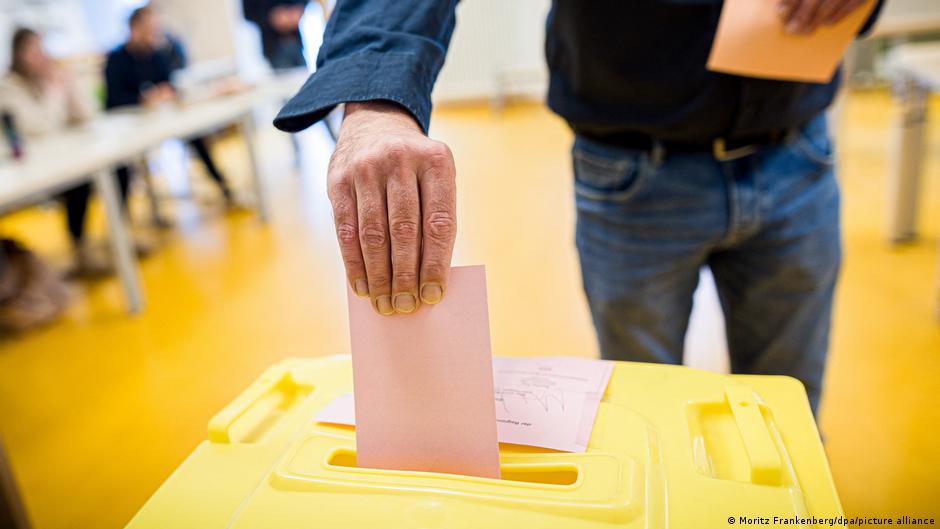
The far-right Alternative for Germany failed to convert its first-round showing into executive control in Lower Saxony’s municipal runoffs, a result that carries strategic implications beyond local government. Voters in 123 municipalities cast ballots on Sunday, September 27, choosing mayors and other local leaders in a second round that tested whether the AfD could translate broader support into control of city halls.
The AfD had candidates competing for three leadership posts: in Salzgitter, a city of about 100,000 residents, and in the smaller towns of Munster and Bockenem, with populations of about 15,000 and 9,000 respectively. In all three contests, the party lost by wide margins, underscoring the gap between protest-party vote share and the operational coalitions needed to win executive office.
For business and institutional observers, the vote offers a useful reading of local political risk in one of Germany’s important federal states. The headline is not simply that the AfD lost; it is that established and independent candidates were able to consolidate support decisively in runoffs, preserving a governance environment dominated by mainstream parties and locally rooted incumbents.
Incumbency and Coalition Discipline Shape the Map
In Salzgitter, Christian Democratic Union politician Frank Klingebiel, who has served as lord mayor since 2006, won 74.72 percent of the vote. AfD candidate Patricia Mair received 25.3 percent. The result suggests a strong premium on continuity and administrative familiarity in a city where voters faced a stark second-round choice.
Munster produced an even clearer result. Independent candidate Anna Adamczak won 80.5 percent, while the AfD’s Christoph Weynand received 19.5 percent. In Bockenem, independent candidate Jens Luer took 69.6 percent against 30.4 percent for AfD contender Felix Mull. Across the three races, the AfD’s challenge was not ballot access alone, but its limited ability to broaden beyond a defined political base when faced with a single opponent.
In all three contests where the AfD sought executive office, rival candidates secured commanding majorities in the second round.
The outcome matters for corporate strategy because municipal leaders influence planning, permitting, infrastructure, public procurement and local economic positioning. Companies weighing investment decisions often look less at headline party polling than at the predictability of local administration. These results point to continuity in the municipalities at stake, with mainstream or independent leadership retaining control.
The Greens delivered one of the most important political wins in Hanover, the administrative capital and largest city in Lower Saxony. Belit Onay of Alliance 90/The Greens, who has held the post since 2019, retained the mayoralty after defeating Social Democratic Party candidate Axel von der Ohe in the runoff. For the Greens, holding Hanover is strategically significant: large urban centers are central to the party’s governing profile, policy agenda and talent pipeline.
The party also gained in Oldenburg, the state’s third-largest city, where Green candidate Jascha Rohr was elected as the new head of the city. He defeated Ulf Prange of the SPD, who ran for the party instead of Juergen Krogmann, lord mayor since November 2014. In Goettingen, Lower Saxony’s fifth-largest city, Green candidate Onyeka Oshionwu won against Ehsan Kangarani of the CDU.
Mainstream Parties Retain Operational Control
The Social Democrats also preserved a major executive foothold. In Braunschweig, the second-largest city in the federal state, SPD politician Thorsten Kornblum retained the post of lord mayor after the second round. Kornblum, who has led the city since November 2021, defeated Maximilian Pohler of the CDU. The result gives the SPD continuity in a large urban administration even as the broader first-round vote showed the party trailing the CDU statewide.
In Osnabrueck, the fourth-largest city in the region, CDU politician Katharina Poetter held onto the mayoralty by defeating Volker Bajus of the Greens. Poetter has also led the city since November 2021. Together with Klingebiel’s victory in Salzgitter, the CDU’s results reinforce its position as a durable force in local executive politics, particularly where incumbent leadership and administrative experience are central campaign assets.
The broader municipal election held on September 13 had already shown the CDU in first place. According to figures available on September 14, the party led by German Chancellor Friedrich Merz received 27.2 percent of the vote. The SPD followed with 24.6 percent, while the AfD placed third with 15.9 percent. The Greens received 14.1 percent, followed by The Left with 6 percent.
That distribution shows a competitive but fragmented landscape. The CDU remains the largest force, the SPD retains substantial depth, and the Greens are capable of defending and gaining significant city-level posts. The AfD’s 15.9 percent first-round showing gives it visibility, but the runoff results indicate that visibility has not yet translated into executive capture in the municipalities it contested.
Turnout also deserves attention. According to the electoral commission’s data on September 14, turnout stood at 64.6 percent, 7.6 percentage points higher than in the 2021 state elections. Higher participation can change the economics of local campaigns: it rewards parties with broad mobilization capacity, resilient local networks and candidates who can appeal beyond core supporters.
The AfD also faced institutional constraints. Four AfD candidates were denied admission to the elections because of doubts about their commitment to Germany’s constitutional order. The AfD’s state organization is under observation by the domestic intelligence agency as a right-wing extremist grouping, a designation the party is challenging in court.
For companies, investors and policy teams tracking Germany’s subnational politics, the Lower Saxony results suggest that local political competition remains intense but institutionally anchored. The AfD can secure meaningful vote shares, yet its path to municipal executive power remains constrained by runoff dynamics, rival consolidation and scrutiny from constitutional authorities. Meanwhile, the Greens’ wins in Hanover, Oldenburg and Goettingen strengthen their urban management credentials, while the CDU and SPD continue to hold key administrative positions across the state.