Trump Signals Iran Talks as Strait of Hormuz Dispute Tests U.S. Leverage
Washington and Tehran appear headed for another round of negotiations as rival deal structures expose competing strategic priorities.
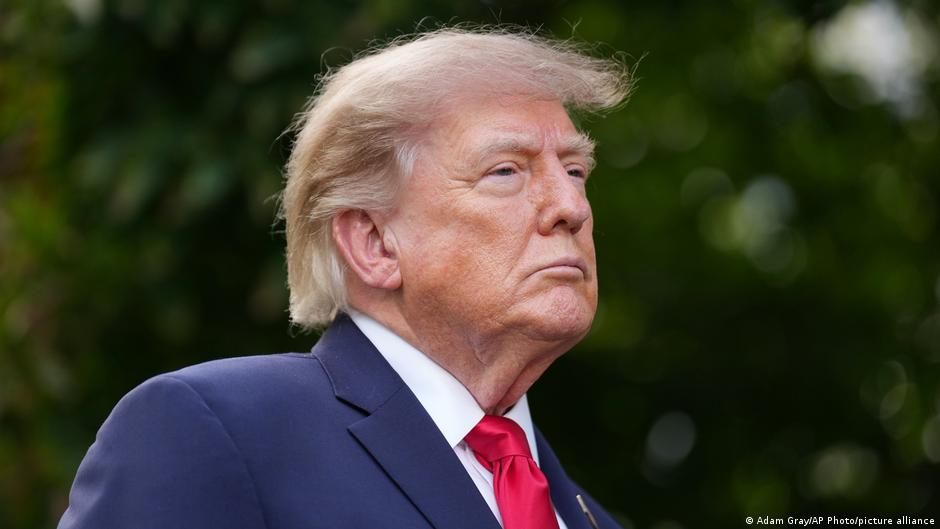
President Donald Trump expects negotiations with Iran to resume in the coming days, even after rejecting Tehran’s proposed seven-day plan to reopen the Strait of Hormuz. His comments point to a high-stakes bargaining phase in which Washington is trying to convert immediate pressure on Iranian trade and maritime access into broader concessions on Iran’s nuclear program.
Trump said in a telephone interview with Axios on Sunday, September 27, that he expected new talks with Iran in the coming week. The statement followed several days of signals from Tehran that it wanted to restore vessel traffic through the Strait of Hormuz under defined conditions and return to talks on a longer-term settlement of the conflict.
“They want to make a deal, but it is not the deal I want to make,” Trump said, adding that Iran had “overestimated” its position.
For business and energy markets, the significance lies less in the existence of talks than in the widening gap between the two sides’ preferred transaction. Tehran is seeking a narrower arrangement focused on reopening the Strait of Hormuz and ending the U.S. maritime blockade. Washington is insisting on a broader package that would include concessions on Iran’s nuclear program, according to Axios.
A Deal Structure With Strategic Asymmetry
The emerging negotiating framework resembles a distressed corporate negotiation in which one party wants liquidity relief while the other seeks structural changes. Iran’s immediate objective is to restore a critical operating channel: maritime movement through Hormuz, relief for Iranian ports, and the easing of constraints on oil exports and frozen assets. The U.S. position, as described in the report, is to use that urgency to demand a wider strategic settlement.
Trump’s remarks suggest that the White House sees Tehran as negotiating from a weakened position. He said Iran wants a deal because it is sustaining “crushing losses,” but described Tehran’s proposed terms as unacceptable. That framing matters for the next phase of talks: Washington appears to be treating access to the strait not as a standalone concession but as leverage in a larger security bargain.
Two regional sources cited by Axios, who requested anonymity, also confirmed expectations that talks would resume. They expected Qatari mediators, who had previously participated in meetings involving representatives of Washington and Tehran, to meet as early as September 28 with Iranian Foreign Minister Abbas Araghchi and U.S. presidential special envoy Stephen Witkoff.
Qatar’s role underscores the importance of intermediaries in managing a negotiation where both sides must maintain public red lines. For Tehran, direct concessions on its nuclear program would carry political and strategic costs. For Washington, accepting a narrow maritime deal after military and economic pressure would risk appearing to settle for operational relief without addressing the broader threat assessment.
Energy, Shipping and Competitive Pressure
The Strait of Hormuz is not merely a diplomatic issue; it is a chokepoint with direct implications for shipping, insurance, energy pricing and corporate risk management. The source article does not provide market figures, but the logic for companies exposed to the Gulf is clear: uncertainty over the strait raises the premium on logistics planning and intensifies pressure on firms tied to oil flows, marine transport and regional supply chains.
Iran’s reported proposal included restoring ship traffic through the strait within a week if certain conditions were met and resuming talks on a long-term settlement. Media accounts cited in the source said the conditions included an end to fighting on all fronts, including Lebanon; lifting the blockade on Iranian ports; unfreezing Tehran’s assets; and removing restrictions on Iranian oil exports.
That list shows why Washington rejected the offer. From a U.S. management perspective, accepting those terms would have delivered Iran immediate economic relief while leaving unresolved the nuclear issue that the administration wants embedded in any final agreement. In dealmaking terms, Tehran offered a phased operating restart; Washington is demanding enterprise-level restructuring.
On September 26, Trump said he had rejected Iran’s proposal. He argued that Tehran wanted the strait opened immediately because of severe losses and said that while he liked making deals, this one would be unacceptable. The White House’s posture indicates that it wants any reopening of Hormuz to be tied to a broader concession set, rather than treated as a humanitarian, commercial or technical de-escalation measure alone.
Military Optionality as Negotiating Leverage
The negotiation also sits under the shadow of possible renewed U.S. strikes. Asked by Axios whether he was considering resuming strikes on Iran, Trump replied that he is “always thinking about it.” That answer preserves military optionality and increases pressure on Tehran, but it also introduces uncertainty for counterparties, allies and businesses attempting to assess the stability of any prospective agreement.
The Wall Street Journal had earlier reported, citing unnamed sources, that Trump rejected Iran’s proposal and told aides he intended to resume bombing the country after the November congressional midterm elections. According to the WSJ sources cited in the Russian-language article, Trump views a new military operation as “highly likely” because he is skeptical that Tehran is ready to meet his demand for a full abandonment of its nuclear program.
Those reported comments complicate the management of negotiations. If Tehran believes Washington is preparing for renewed military action regardless of talks, it may have less incentive to make major concessions. Conversely, if the threat is seen as credible, it could push Iranian officials to seek faster relief through intermediaries. The outcome depends on whether both sides believe the other is still pursuing a negotiable settlement rather than positioning for escalation.
For corporate leaders, the immediate takeaway is that the diplomatic process remains active but fragile. Talks may resume in the coming week, potentially through Qatari mediation, yet the two parties are not aligned on the scope of a deal. Iran wants to prioritize maritime access and relief from blockade conditions; the U.S. wants a broader agreement that reaches into the nuclear file.
That mismatch is the central business risk. A narrow Hormuz arrangement could stabilize shipping and energy channels quickly, but Washington’s rejection shows it is unwilling to separate operational relief from strategic concessions. A broader agreement could reduce long-term geopolitical risk, but it is harder to execute and more exposed to breakdown. As negotiations approach, markets and companies will be watching not only whether the parties meet, but which definition of a deal becomes the basis for serious bargaining.