Germany Sends Eurofighters to Latvia as NATO Air Policing Gains Business Weight
The short deployment underscores how Baltic security needs are reshaping defense planning, alliance burden-sharing and aerospace demand in Europe.
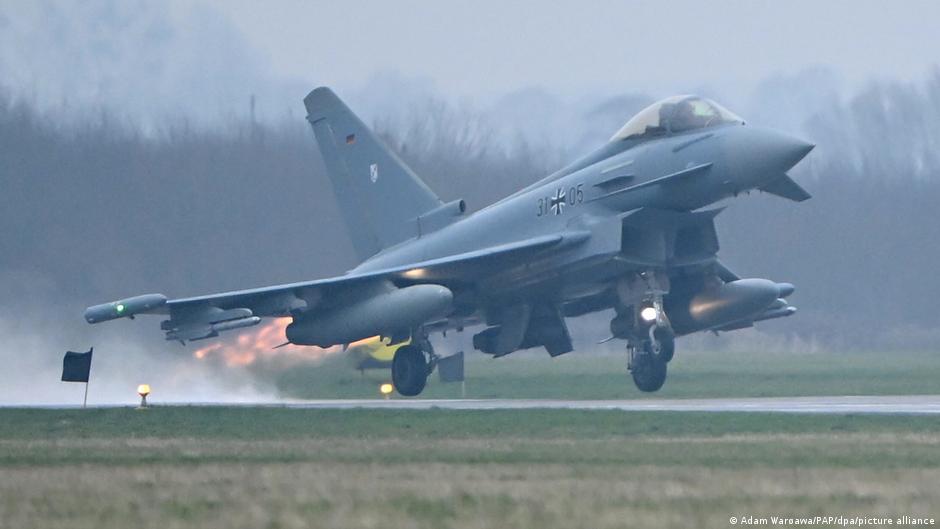
Germany has deployed four Eurofighter combat aircraft to Latvia for just over a week, positioning them at the Lielvarde military airfield in central Latvia to help secure the country’s airspace during parliamentary elections scheduled for October 3. Latvia’s defense ministry announced the move on Thursday, September 24, describing the deployment as support for NATO’s integrated air and missile defense system.
The aircraft were transferred by the Bundeswehr from the 74th Tactical Air Wing at Neuburg an der Donau air base. For Berlin and Riga, the mission is operationally short, but strategically meaningful: it reflects how the Baltic region’s security environment is driving more frequent, visible and politically sensitive use of NATO air assets.
Latvia requested support from NATO allies against the backdrop of repeated airspace violations involving the Baltic states, according to the dpa news agency. The deployment comes as governments on NATO’s northeastern flank continue to adjust to a security landscape transformed by Russia’s full-scale war against Ukraine.
Latvian Prime Minister Andris Kulbergs thanked Germany for its “readiness to help and close cooperation,” calling the deployment “a concrete sign of NATO solidarity” and of the alliance’s shared commitment to protecting Latvian airspace and the Latvian public.
A Short Mission With Long-Term Strategic Signals
From a business and defense-management perspective, the Latvian deployment is another data point in Europe’s broader shift from episodic reassurance measures toward more continuous air defense readiness. NATO has guarded the airspace of Estonia, Latvia and Lithuania since the three Baltic states joined the alliance in 2004. Those countries do not maintain the same fighter-aircraft capacity as larger NATO members, making rotational deployments a core part of regional defense operations.
What has changed is the frequency and urgency of the threat environment. Since the start of Russia’s full-scale war against Ukraine, drones have repeatedly entered the airspace of the Baltic states. In August, NATO fighters shot down a drone that violated Latvian airspace. Such incidents increase political pressure on governments to demonstrate readiness, while also strengthening the case for higher defense expenditure, upgraded air surveillance, and deeper procurement coordination across Europe.
For Germany, sending Eurofighters to Latvia allows Berlin to reinforce its role as a security provider in Eastern Europe at a time when alliance members are closely scrutinizing burden-sharing. The mission also demonstrates the practical value of maintaining deployable fighter units that can be moved quickly from domestic bases to allied territory. That readiness has implications for maintenance cycles, pilot availability, logistics support and long-term fleet-management decisions.
Defense Industry Implications
The Eurofighter platform sits at the center of Europe’s combat-aircraft industrial base, involving major aerospace and defense companies across several countries. While this Latvian deployment is not a procurement announcement, missions of this kind shape the operating environment in which defense budgets and acquisition priorities are set. More air-policing rotations, more drone incursions and more demand for integrated air and missile defense all support the strategic rationale for sustained investment in fighter aircraft, radar systems, munitions, ground support and interoperability tools.
For aerospace suppliers, the Baltic air-policing mission highlights a pattern increasingly familiar across NATO: political leaders are asking armed forces to maintain high visibility and rapid response while also modernizing. That combination puts pressure on defense ministries to balance immediate operational deployments against longer-term recapitalization. Aircraft deployed abroad require maintenance, spare parts, trained crews and host-nation infrastructure. Each rotational mission therefore has a supply-chain and services dimension, even when the public discussion centers on deterrence.
Latvia’s use of Germany’s support also illustrates how smaller NATO members leverage alliance structures rather than duplicating all capabilities domestically. For Riga, the business logic of collective defense is straightforward: external fighter deployments provide high-end security capacity that would be expensive and time-consuming to build independently. For larger NATO members, the arrangement can strengthen political influence, support defense-industrial continuity and validate investments in deployable forces.
Management Choices Inside NATO
The deployment also reflects a management challenge inside the alliance: how to allocate scarce advanced assets across competing security demands. Fighter aircraft are needed for national defense, training, quick-reaction alert duties, overseas deployments and NATO missions. Decisions to send aircraft to Latvia, even temporarily, require coordination across military planners, political leaders and logistics teams.
The timing around parliamentary elections adds another layer. Protecting airspace during an electoral period carries political symbolism as well as operational significance. It signals that NATO treats democratic processes in frontline member states as part of the broader security architecture. It also gives Latvian leaders a visible example of allied support at a moment when public confidence and state resilience matter.
Prime Minister Kulbergs’ public thanks to Germany on X underlined that diplomatic value. His message framed the deployment not simply as a military measure, but as evidence of close cooperation and shared responsibility for Latvian security. In NATO terms, such messaging is part of deterrence: adversaries are meant to see that an incursion into one member’s airspace becomes an alliance concern.
Competitive Landscape for European Security
The mission fits into a larger competitive landscape in which European defense companies, governments and NATO planners are responding to a more contested air domain. Drones, missiles and aircraft incursions have made airspace control a higher political priority. The result is likely to be continued attention to layered defense: fighter aircraft, air-defense systems, sensors, command-and-control networks and cross-border data sharing.
Germany’s Eurofighters are also scheduled to take on a longer-term NATO airspace surveillance role from Estonian territory starting in December 2026 under the NATO Air Policing mission. Through March 2027, five Eurofighter aircraft and flight crews are expected to be stationed at Amari air base in northwestern Estonia. That planned deployment suggests that the current Latvian mission is not an isolated response, but part of a broader operating rhythm on NATO’s northeastern flank.
For corporate leaders in the defense sector, the strategic message is clear: European air security is becoming a sustained market driver rather than a temporary crisis response. Governments are demanding readiness, resilience and interoperability, while voters and political leaders are watching how quickly allies respond to incidents near NATO borders. The Eurofighter deployment to Latvia is brief in calendar terms, but it sits within a long-cycle shift in defense planning, procurement strategy and alliance management.