Zelensky Says Putin Is Spreading War as Ukraine Targets Russia’s War Economy
At the UN General Assembly, Ukraine’s president framed Moscow’s oil sector, manpower losses and AI-enabled warfare as strategic business risks.
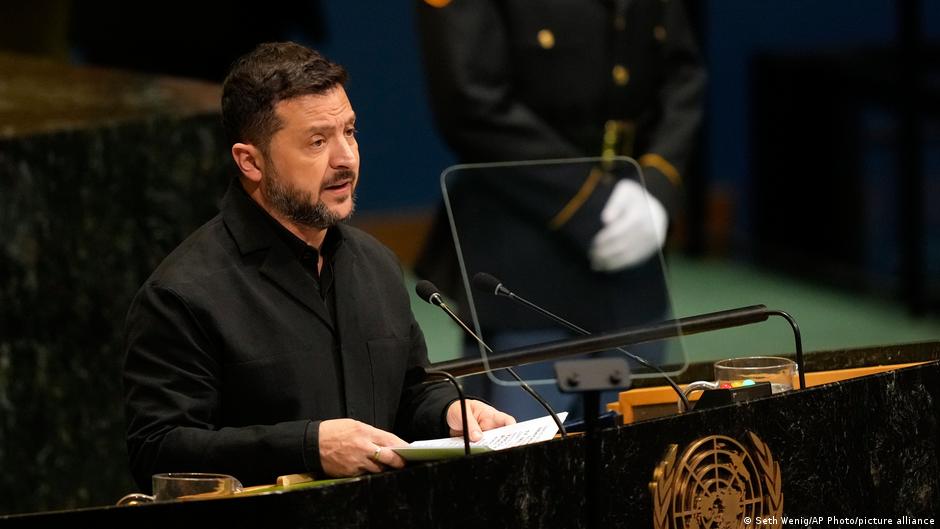
Ukrainian President Volodymyr Zelensky used his address to the UN General Assembly in New York on Wednesday, September 23, to recast Russia’s war not only as a military threat but as a systemic risk spreading through global politics, energy markets and future security architecture. His message was blunt: Russian President Vladimir Putin, he said, is the “patient zero” from whom the idea of war is spreading around the world.
For business leaders, investors and policymakers, the speech underscored how Ukraine is positioning its strategy around a central management objective: degrading Russia’s capacity to finance and prolong the war. Zelensky argued that wherever the “idea of war” spreads, it brings “only pain, instability, new risks and, of course, new crises.” In his framing, stopping Russia is no longer only a battlefield question. It is an issue of interrupting the operating model that allows the Kremlin to convert commodity revenue, industrial capacity and manpower into sustained military pressure.
“He must not be allowed to act and must not be given the opportunity to spread this evil further,” Zelensky said, referring to Putin.
Pressure on Russia’s Oil-Driven War Model
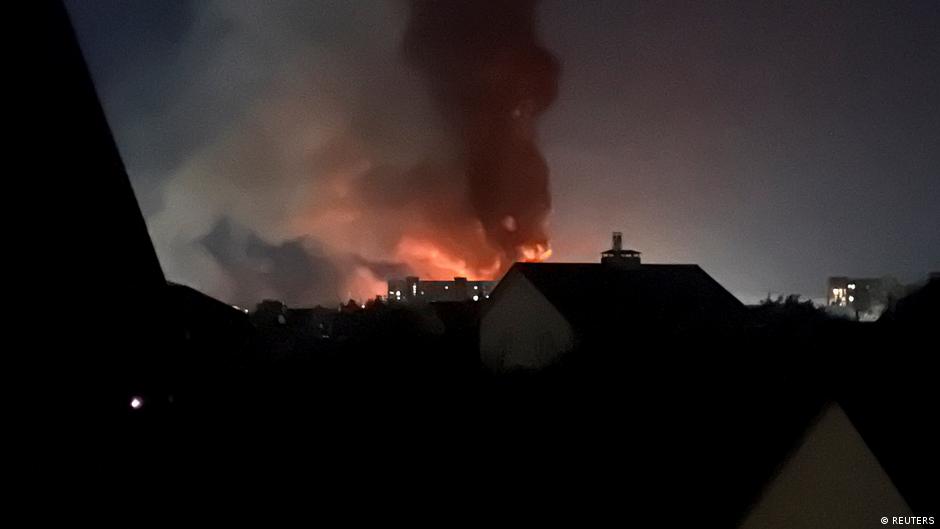
A significant part of Zelensky’s address focused on Russia’s oil industry, long one of the pillars of Moscow’s fiscal strength and geopolitical leverage. The Ukrainian president said that, for the first time in Russia’s history, what he described as the country’s “pride” — its oil industry — is operating “on its last legs.”
That claim was presented as a strategic assessment rather than a symbolic insult. Russia’s permanent seat on the UN Security Council and its status as a major oil exporter have traditionally reinforced its international standing. Zelensky argued that the current strain on the sector represents a humiliating setback for a state that has tied national prestige and external influence to hydrocarbon exports.
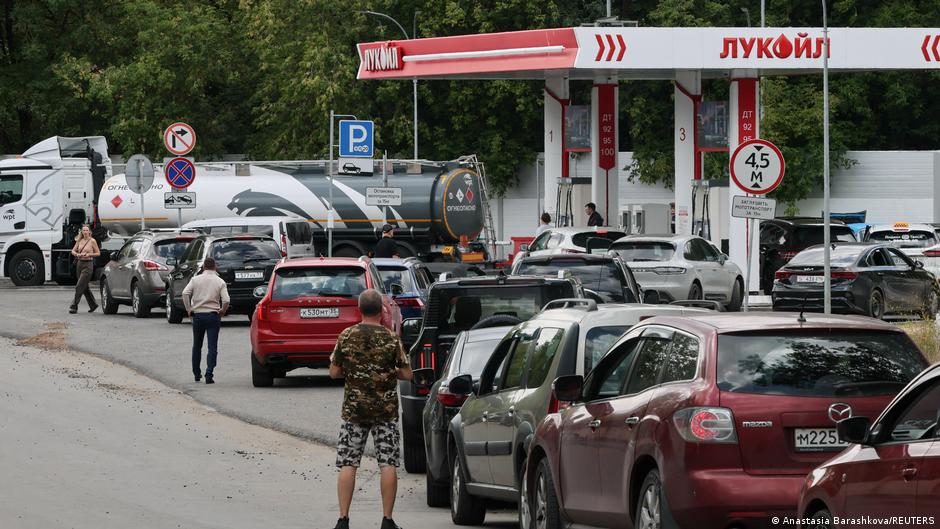
At the same time, he emphasized that Ukraine is not treating oil itself, gasoline, diesel fuel, refineries or ports as ends in themselves. The target, he said, is Russia’s ability to fund the war and extend it. That distinction is important in corporate and geopolitical terms. Ukraine is signaling that its campaign is directed at the revenue-generating infrastructure and logistics underpinning Russia’s military enterprise, rather than at commodities as such.
This approach reflects a wider strategic logic familiar to business observers: disrupt the cash flow, production chain and financing base of a rival’s core operation. In this case, the “operation” is Russia’s war effort. Zelensky’s remarks suggested that Kyiv sees energy infrastructure as a critical lever in changing Moscow’s cost-benefit calculation.
Energy Retaliation and Winter Risk
Zelensky also addressed the risk of another winter campaign against Ukraine’s energy grid and heating systems. If Russia continues to attack Ukraine’s energy system and heating infrastructure, he said, Kyiv will seek to ensure that Russia’s “General Frost” switches sides this winter, a reference to the possibility of retaliatory strikes.
The comment points to a potentially escalating cycle around energy infrastructure. For Ukraine, preserving heat and power is essential not only to civilian resilience but also to industrial continuity, logistics and public-sector operations. For Russia, the threat of reciprocal pressure raises the prospect that its own energy assets could face greater operational disruption during the coldest months.
From a business-risk perspective, the statement highlights how energy infrastructure has become a competitive battlefield. Refineries, ports, grids and heating systems are no longer merely national utilities or industrial assets; they are strategic nodes in a war economy. Any sustained disruption can affect export volumes, domestic supply, fiscal revenues and the political management of public expectations.
Manpower Losses and Strategic Rationality
Zelensky also cited heavy Russian battlefield losses. He said that from January through August, Russia’s armed forces lost 248,964 people on the battlefield in Ukraine. He framed the figure as evidence of the scale of human expenditure behind Moscow’s territorial objectives.
“Putin pays 248 people for every kilometer. Does anyone still consider him rational?” Zelensky asked.
The comment was designed to challenge the premise that Russia’s leadership is acting within conventional strategic limits. In business terms, Zelensky was questioning the sustainability of a model in which the marginal cost of advancement is extraordinarily high. He also noted that citizens of 47 other countries are fighting on the Russian army’s side and are also dying on the battlefield, widening the conflict’s human and political footprint beyond Russia and Ukraine.
That internationalization matters for the competitive landscape surrounding the war. It suggests that Russia is drawing on foreign manpower networks while Ukraine continues to court support from governments, defense industries and international institutions. The conflict is therefore not only a bilateral contest but a broader struggle over supply chains, recruitment channels, technology adoption and coalition management.
AI as the Next Battlefield Decision-Maker
Zelensky warned that as early as next year there is a real possibility that artificial intelligence, not only human commanders, could begin making decisions on the battlefield. “We need peace before we reach that point,” he said.
For corporate and defense-sector audiences, this was one of the speech’s most forward-looking elements. The warning places Ukraine’s war within a larger transformation of military technology, where autonomous systems, algorithmic targeting and machine-speed decision-making could reshape both combat and accountability. Zelensky’s point was that the conflict may soon cross a threshold at which escalation dynamics become faster, less transparent and more difficult to control.
The implication for governments and companies is significant. Defense technology suppliers, AI developers, cybersecurity firms and regulators are all being pulled into a market and policy environment shaped by battlefield urgency. Ukraine’s warning suggests that decisions made in the coming months could influence not only the outcome of the war but also the norms governing AI in military use.
No Signal of a Pause
The backdrop to Zelensky’s address was a surge in Russian strikes. According to an AFP analysis, the first 18 days of September saw more Russian strikes than any full month since the start of the war in Ukraine, with the exception of March 2022.
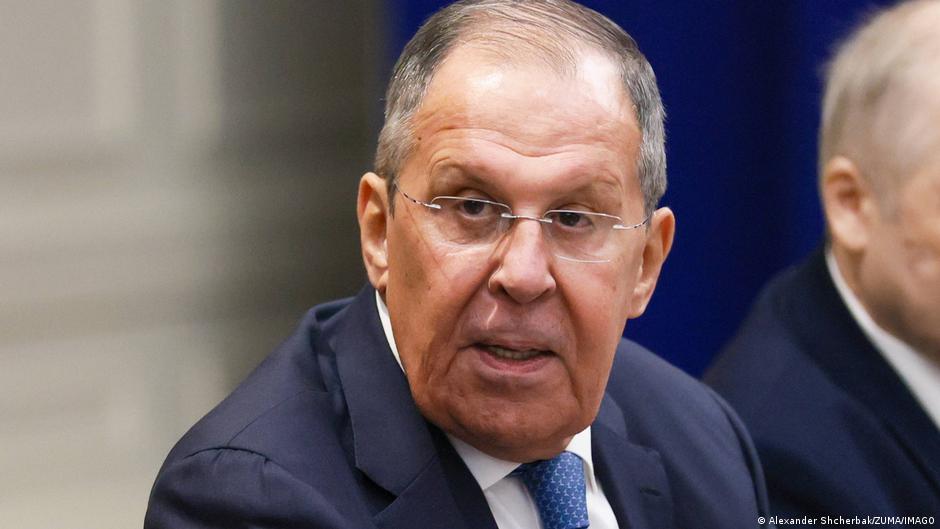
At the same time, Russian Foreign Minister Sergei Lavrov told the UN Security Council that there would be no “pause” in hostilities. Taken together, those developments reinforce Zelensky’s argument that Russia is not positioning itself for de-escalation, but for continued pressure.
For Ukraine, the speech was therefore also a pitch to international stakeholders: the war’s trajectory will be shaped by whether Russia’s financial, industrial and technological base can be constrained quickly enough. Zelensky’s business logic was clear. The Kremlin’s ability to keep fighting depends on revenue, infrastructure, manpower and adaptation. Ukraine’s strategy is to raise the cost of each.