Russian Regions Reinstate Fuel Curbs as Refinery Attacks Strain Supply
Kaluga and Zabaykalsky authorities are again limiting gasoline sales as refinery disruptions expose pressure points in Russia’s fuel logistics.
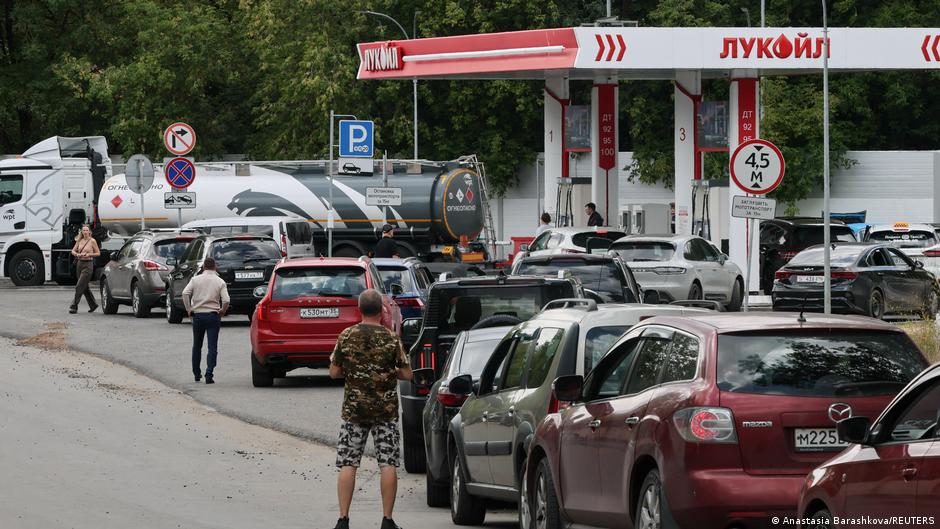
Authorities in Russia’s Kaluga region and Zabaykalsky Krai are reintroducing restrictions on gasoline sales after intensified Ukrainian attacks on Russian oil refineries disrupted supplies and renewed pressure on the country’s fuel distribution system.
In Kaluga, a region bordering Moscow and the Moscow region, limits return from September 23, Governor Vladislav Shapsha said on Tuesday, September 22. Drivers will be allowed to refuel on alternating even and odd days, depending on the first digit of their vehicle registration number. Gasoline may be dispensed only directly into a vehicle’s tank, a measure designed to prevent stockpiling in canisters and other containers.
The decision follows a recurrence of queues and local delivery failures at individual filling stations. For regional authorities, the move is not only a supply-management response but also a reputational and operational test: fuel shortages quickly become a visible signal of stress in the broader economy, especially in regions closely tied to Moscow’s commuter, logistics and commercial networks.
“We are now recording local logistical disruptions in fuel deliveries to individual gas stations. Queues have returned. This is causing justified dissatisfaction,” Shapsha wrote on his Telegram channel.
Regional Controls Return After a Brief Pause
Kaluga had already imposed an even-odd gasoline sales regime on August 15. Those restrictions were lifted from September 1, suggesting that officials had expected earlier disruptions to ease. The renewed restrictions, less than a month later, point to the fragility of the stabilization effort and the limited room regional administrations have when refinery output and transport logistics come under pressure simultaneously.
In Zabaykalsky Krai, the regional operational headquarters also announced new curbs from September 23. The BRK and Kors filling station networks are setting a limit of 15 liters of AI-92 and AI-95 gasoline per vehicle. Buyanto Batomunkuev, first deputy chairman of the regional government, said the measure reflected the scale of remaining stocks: total fuel reserves at filling stations and oil depots stand at 17,000 tons, which, “under the current dispensing regime,” would be enough for only 20 days.
For fuel retailers, such limits function as emergency demand management. They slow the pace of depletion, reduce panic buying and stretch existing inventory until new deliveries arrive. But they can also shift costs onto consumers and businesses, particularly small logistics operators, taxi drivers, farmers, construction firms and regional distributors that rely on predictable access to gasoline rather than diesel-only supply chains.
Zabaykalsky Krai had introduced similar restrictions in June, later removing them on July 23. The return of limits in September indicates that the issue is not confined to a single temporary delivery failure. Instead, the pattern suggests recurring stress across storage, wholesale allocation and transport routes, with local networks forced to ration when national supply conditions deteriorate.
A Supply Shock With Corporate and Market Consequences
The restrictions come amid intensified strikes by the Armed Forces of Ukraine on Russian oil refineries. The attacks have hit a sector that is strategically central to Russia’s domestic economy: refineries convert crude into gasoline, diesel and other products needed by households, companies and regional authorities. When plants are damaged by drones, fires or related incidents, operators may be forced to reduce output or halt production entirely.
From a business perspective, the disruption creates several layers of risk. Refinery operators face production losses and repair costs. Fuel station networks must manage inventory rationing and customer dissatisfaction. Regional governments have to intervene in retail rules, even when the underlying constraints are upstream and logistical. Transport-dependent businesses confront uncertainty over operating costs and route planning.
Fuel sale restrictions introduced either by regional authorities or by filling station chains were used during the summer in almost all Russian regions, as well as in annexed Crimea. The breadth of those measures suggests a market disturbance that reached well beyond isolated border areas. Problems with fuel supplies prompted Russian President Vladimir Putin on June 28 to order systemic measures to stabilize the market.
The current shortage emerged after Ukrainian drone attacks on Russian refineries. Ukraine has been defending itself for more than four years against Russia’s military invasion. As strikes and fires affected refinery operations, plants had to reduce or completely stop production. Restrictions were later lifted in a number of places, but since early August Ukrainian attacks on refineries have intensified again, and Russia has entered what the source article describes as a second wave of the fuel crisis.
By mid-September, the gasoline deficit in Russia had worsened: fuel was unavailable at almost every second filling station, Novaya Gazeta Europe reported, citing data from the gdebenzin service. That indicator, if reflected across consumer experience, represents a major competitive and management challenge for fuel retail chains. Stations that can maintain supply may gain traffic and loyalty, while those facing dry pumps risk losing customers and damaging relationships with regional authorities.
The corporate strategy implications are significant. Fuel companies and retailers must decide how to allocate scarce product across regions, whether to prioritize contracted customers or retail consumers, and how to communicate rationing without triggering additional demand surges. Regional chains such as BRK and Kors in Zabaykalsky Krai are effectively adopting controlled-release strategies, capping sales to extend stock life rather than allowing rapid depletion.
For Moscow-adjacent Kaluga, the even-odd system reflects a different management model: demand is spread across the calendar rather than capped by volume per vehicle in the same way. Both approaches aim to reduce immediate pressure on retail infrastructure. Neither resolves the underlying vulnerability of a fuel system exposed to refinery outages and uneven logistics.
The renewed restrictions also highlight the competitive landscape between regional and national operators. Larger companies may have broader logistics networks and stronger access to supply, but they also face greater public scrutiny. Smaller regional chains may be more exposed to local shortages and limited storage capacity. In a prolonged crisis, access to wholesale volumes, depot capacity and transport assets becomes a strategic advantage.
For now, the policy response remains localized and tactical: alternating refueling days in Kaluga, 15-liter caps in Zabaykalsky Krai, and broader reliance on administrative intervention when retail shortages surface. The business question is whether systemic stabilization ordered in June can keep pace with renewed refinery disruptions. The reappearance of queues and rationing suggests that Russia’s fuel market remains vulnerable to repeated shocks, with operational decisions by refiners, filling station chains and regional governments increasingly intertwined.