CDU State Chief Resigns After Historic Election Collapse in Mecklenburg
Daniel Peters stepped down after the CDU failed to enter a state parliament for the first time in postwar German history.
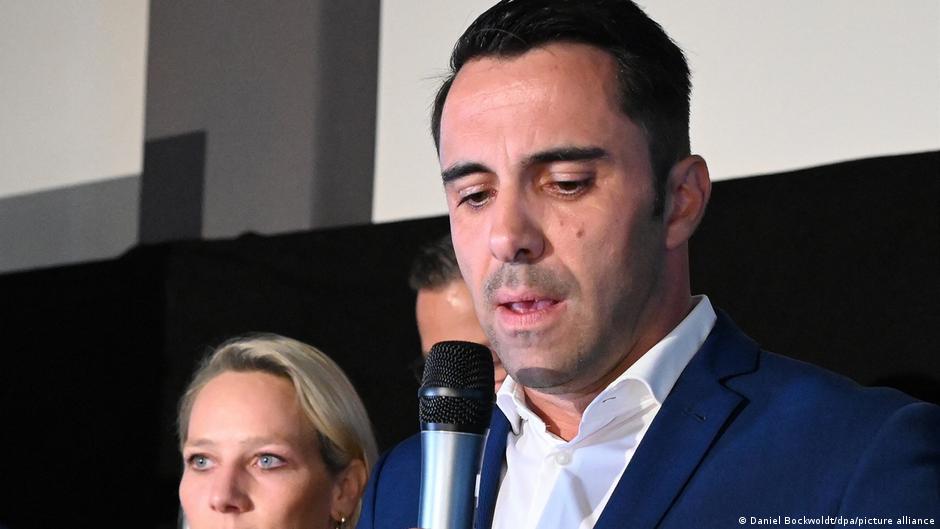
Daniel Peters, the chairman of the Christian Democratic Union in Mecklenburg-Western Pomerania, has resigned after the party suffered a historic defeat in the state parliamentary election, a result that immediately raised questions about management accountability, regional strategy and the CDU’s competitive position in eastern Germany.
Peters said he was taking personal responsibility for what he described as a crushing defeat for the conservatives. Speaking after a meeting of the CDU’s state executive in Schwerin on Monday, September 21, the 45-year-old politician announced that he was leaving the post following an election result that pushed the party below the threshold required to enter the state legislature.
The CDU, the party of German Chancellor Friedrich Merz, won just 4.9 percent of the vote in the election held the previous day. That meant the party failed, for the first time in the history of the Federal Republic of Germany, to enter the parliament of one of the country’s federal states.
For a party that has long presented itself as a national governing force with deep institutional roots, the result is more than a regional setback. It amounts to a governance and brand crisis in a state where the CDU has now lost parliamentary representation altogether, while rivals on both the far right and the center left have consolidated much stronger positions.
Leadership Change After a Strategic Breakdown
Peters will be replaced on an interim basis by Philipp Amthor, 33, who serves as state minister for cooperation between Germany’s federal states and the federal government. Amthor’s immediate task will be to manage the party’s transition and help define how the CDU assesses a defeat that goes beyond an ordinary electoral loss.
Amthor indicated that the party would not rush into a public diagnosis. He said the Christian Democrats in Mecklenburg-Western Pomerania now needed time to reflect on the result.
“It would be inappropriate in the current situation, and given the scale of this historic defeat, to immediately present an analysis or draw conclusions about the future balance of power,” Amthor was quoted by dpa as saying.
From a business-strategy perspective, the change resembles an emergency leadership handover after a failed market campaign. The CDU’s regional organization has suffered not only a decline in vote share but a loss of access to the institutional platform that state parliament provides. That limits visibility, weakens influence over policy debates and reduces the party’s ability to rebuild through legislative work.
The appointment of Amthor on an interim basis suggests the party is prioritizing continuity and damage control before choosing a longer-term leadership model. His role will likely involve stabilizing the organization, preserving internal cohesion and preparing a structured review of how the party lost enough support to fall below the five percent barrier.
Competitive Landscape Shifts Sharply
The election was won by the far-right Alternative for Germany, which received 38.2 percent of the vote. The Social Democratic Party of Germany, led in the state by incumbent Minister-President Manuela Schwesig, came second with 35.5 percent. The Left Party entered the state parliament with 6.5 percent, while Alliance 90/The Greens also cleared the threshold with 5.7 percent.
Other parties did not pass the five percent barrier. The CDU’s 4.9 percent result left it just outside parliament, but the political significance is much larger than the margin suggests. In a fragmented political environment, failing to cross the threshold can erase years of organizational presence in a single electoral cycle.
The outcome also changes the negotiating environment for government formation. The SPD has already announced the start of talks with both the Left Party and the Greens with the aim of forming a governing coalition without the AfD. That places the Social Democrats in the central management role for coalition construction, despite finishing second behind the AfD.
For the CDU, the immediate consequence is exclusion from coalition arithmetic. The party is no longer positioned as a potential partner in the state parliament and cannot directly shape the next governing arrangement. This is a significant loss of leverage for a party whose national leadership is headed by Chancellor Merz.
The AfD’s first-place finish underscores the broader competitive pressure on established parties in Mecklenburg-Western Pomerania. The CDU’s collapse creates an opening for other parties to claim conservative, protest-oriented or centrist voters, depending on how the post-election debate develops. The SPD, meanwhile, is moving quickly to translate its second-place result into executive continuity through coalition talks.
Implications for the CDU Brand
The resignation of Peters is a conventional act of political accountability, but the underlying challenge is strategic. The CDU must determine whether its defeat was driven by candidate positioning, campaign management, regional messaging, broader dissatisfaction with the national party, or a structural shift in voter behavior. The source article does not provide that analysis, and Amthor has explicitly cautioned against immediate conclusions.
Still, the numbers define the scale of the problem. A party associated with Germany’s chancellor won less than five percent in a federal state election, while the AfD and SPD together took nearly three quarters of the vote. The CDU’s management challenge is to rebuild credibility without overstating what can be repaired quickly.
In practical terms, the party will need to protect its remaining regional infrastructure, retain members and donors, and identify whether its message can be repositioned before the next electoral cycle. Without parliamentary seats, that recovery effort becomes harder because the party loses routine media exposure and policy relevance in the state legislature.
The interim leadership of Amthor may therefore function as a holding structure while the CDU decides on a longer-term turnaround plan. His public caution signals an attempt to prevent reactive decisions in the immediate aftermath of a landmark defeat. Whether that restraint becomes the basis for a credible renewal strategy will be the central question for the party in Mecklenburg-Western Pomerania.
For now, the political market in the state has been redrawn. The AfD leads the field, the SPD is pursuing coalition talks with the Left and the Greens, and the CDU is outside parliament for the first time in any German federal state. Peters’s resignation closes one chapter, but the more consequential issue is whether the CDU can rebuild a competitive regional offer after losing its place in the legislature.