Macron and Trump Align on Ukraine Infrastructure Protection Push
The French and U.S. presidents are seeking a moratorium on strikes against Ukraine’s energy and civilian infrastructure while backing stronger air defenses.
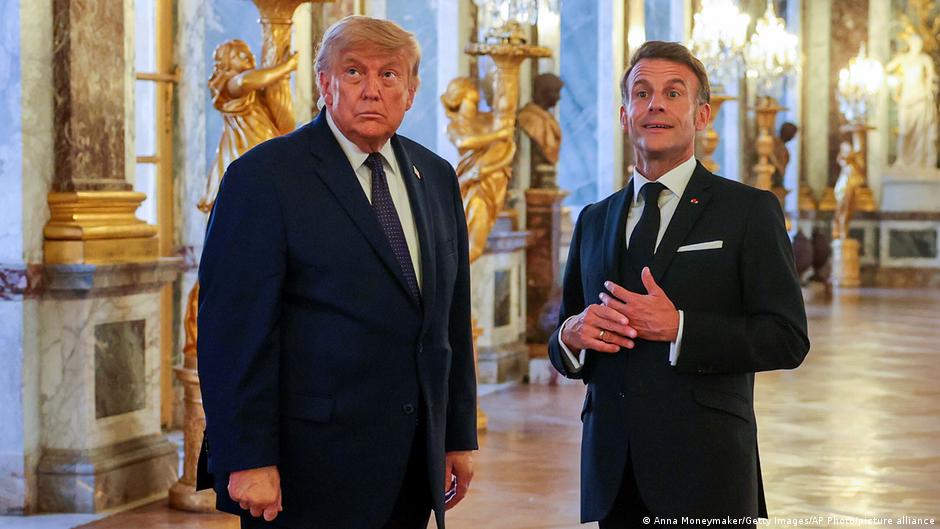
French President Emmanuel Macron said he and U.S. President Donald Trump had discussed joint efforts to secure a moratorium on attacks against Ukraine’s energy and civilian infrastructure, a diplomatic initiative that also points to a broader strategic priority: keeping Ukraine’s economy and public services functioning under the pressure of Russia’s war.
Macron wrote on X on Monday, September 21, that the two leaders had addressed proposals aimed at halting strikes on energy facilities during Russia’s war against Ukraine. The talks took place in New York, where world leaders are gathering for the 81st session of the United Nations General Assembly from September 22 to 26.
“We will also combine our efforts to achieve a moratorium on strikes against Ukraine’s energy infrastructure and civilian infrastructure. Civilians must be protected, and we must begin serious negotiations as soon as possible on the terms of peace between Russia and Ukraine,” Macron said.
For Kyiv and its partners, the issue is not only humanitarian. Ukraine’s power grid, heating systems and civilian infrastructure are central to the country’s economic resilience, its ability to sustain industrial activity and the government’s capacity to maintain public confidence during a prolonged war. A moratorium, if achieved, would reduce pressure on emergency repair budgets, stabilize basic services and limit the economic disruption caused by repeated attacks.
Air Defense as Strategic Investment
Speaking to journalists after his meeting with Trump, Macron said the two leaders agreed on the need to help Ukraine strengthen its defensive capabilities. According to Macron, this includes supplying Kyiv with additional interceptor missiles to defend against Russian air attacks.
That emphasis on interceptors reflects a management and resource-allocation challenge for Ukraine’s allies. Air defense support has become one of the most commercially and strategically sensitive parts of Western assistance to Kyiv. Interceptor supplies are costly, production is constrained and demand is rising across NATO countries as governments reassess their own defense inventories.
For Ukraine, additional interceptors are a direct input into national continuity. Protecting cities, substations, civilian facilities and industrial assets limits economic losses and helps preserve the country’s operating base. For France and the United States, the question is how to coordinate procurement, deliveries and political messaging in a way that turns military assistance into a more coherent long-term support architecture.
The Macron-Trump discussion therefore carries implications beyond a single diplomatic statement. It signals an effort to align transatlantic policy around two connected tracks: reducing the targeting of civilian and energy infrastructure through a moratorium, and increasing Ukraine’s practical ability to repel attacks if that moratorium does not hold.
Diplomacy Around the UN General Assembly
The meeting also unfolded within a dense week of diplomacy in New York. According to a DW correspondent, Macron began a bilateral meeting with Ukrainian President Volodymyr Zelensky on the evening of September 21. The timing gives France an opportunity to position itself as a bridge among Kyiv, Washington and the wider group of countries attending the UN General Assembly.
Nearly 130 world leaders are expected to attend the 81st session, creating a concentrated setting for negotiations over Ukraine, sanctions, defense assistance and future peace terms. Zelensky is also expected to meet Trump on September 22, a meeting that could further define how Washington approaches both military support and economic pressure on Moscow.
Before his scheduled meeting with Trump, Zelensky met U.S. lawmakers and thanked them for passing the late Senator Lindsey Graham’s law on “hellish sanctions” against Russia. “I want the sanctions to start working,” the Ukrainian leader said.
That remark highlights another part of the competitive landscape surrounding the war: sanctions policy as a tool to weaken Russia’s capacity to finance and sustain military operations. For Ukraine, sanctions are not an abstract diplomatic measure but a core component of the pressure campaign it wants partners to intensify. For Western governments, sanctions must be balanced against enforcement capacity, market effects and the political durability of support at home.
Macron’s comments suggest that France sees infrastructure protection, air defense and negotiations on peace terms as interdependent. A moratorium on strikes would address immediate civilian harm and economic instability. More interceptors would improve Ukraine’s ability to withstand continued attacks. Serious negotiations, in Macron’s framing, should begin as quickly as possible, but without separating diplomacy from Ukraine’s need for stronger defenses.
From a business and strategy perspective, the initiative underscores how the war has made infrastructure security a central issue in European policy. Energy assets, civilian facilities and defense supply chains are no longer separate policy files; they are part of the same operating environment for governments, contractors and international institutions responding to the conflict.
The coming meetings in New York may show whether Macron and Trump can turn their stated alignment into a coordinated program of pressure and protection. The practical test will be whether allies can secure additional air defense capacity for Ukraine, advance the proposed moratorium and maintain momentum on sanctions as the UN gathering brings the conflict back to the center of global diplomacy.