Kallas Urges EU Envoys to Extend Russia Sanctions as Oligarch Dispute Tests Unity
The EU’s sanctions strategy faces a deadline as member states debate whether to delist Russian billionaires Alisher Usmanov and Mikhail Fridman.
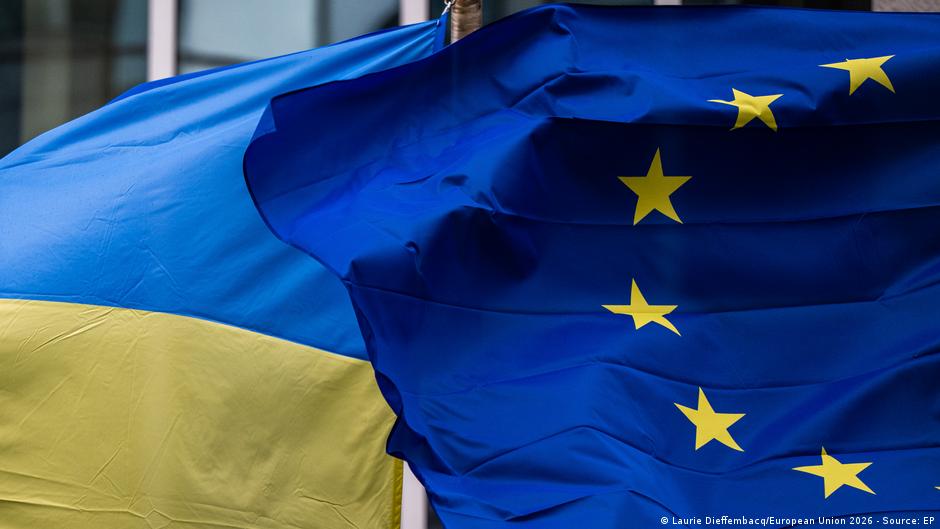
EU foreign policy chief Kaja Kallas has urged the bloc’s permanent representatives to extend sanctions against Russia over the war in Ukraine, framing the measures as a central instrument in Europe’s effort to constrain Moscow’s financial capacity. Her intervention comes ahead of a new meeting of EU ambassadors and after an earlier failure to agree on the renewal of restrictive measures because of disagreements involving Russian billionaires Alisher Usmanov and Mikhail Fridman.
Speaking to journalists in New York on Monday, September 21, Kallas said sanctions remain an essential part of the European Union’s response to Russia’s war in Ukraine. The issue is now moving from broad geopolitical messaging into a test of EU decision-making discipline: sanctions policy requires continued political alignment among member states, and the current debate shows how individual names on a sanctions list can complicate a wider strategic posture.
“Sanctions are a key element of our response to the war unleashed by Russia,” Kallas said, describing them as a tool intended to deprive Moscow of financing.
According to Kallas, as cited by AFP, representatives of EU member states are seeking to complete negotiations on extending the punitive measures against Russia in the near term and to ensure that they enter into force quickly. She also stressed that the EU’s position remains unchanged and that Brussels is already working on a new sanctions package.
A deadline with corporate and political stakes
The next meeting of the permanent representatives of EU member states is scheduled for the morning of September 22, according to a DW correspondent in Brussels citing an EU diplomat. At that session, ambassadors are expected to discuss the possible removal of sanctions from Usmanov and Fridman while maintaining restrictive measures against thousands of other individuals and organizations.
The structure of the debate matters for business as much as for diplomacy. EU sanctions regimes are not simply political declarations; they affect asset freezes, access to financial systems, commercial relationships, reputational risk, and the ability of companies and investors to transact across borders. Any change involving high-profile business figures is likely to be read closely by banks, legal advisers, corporate compliance teams, and counterparties managing exposure to Russia-linked assets.
Earlier, on September 14, EU ambassadors failed to agree on another six-month extension of sanctions against Russia for violating Ukraine’s territorial integrity. Instead, they decided to extend the current regime temporarily for further consultations, with the stopgap arrangement running until midnight on September 22.
That short extension created a pressure point for the bloc’s sanctions architecture. For companies, the uncertainty around renewals can complicate compliance planning, particularly where counterparties, beneficial ownership structures, or frozen assets are linked to individuals under discussion. For EU governments, the episode highlights the managerial challenge of sustaining a sanctions program that has grown in scale and complexity since Russia’s full-scale invasion of Ukraine.
Member-state bargaining over sanctioned billionaires
According to DW sources speaking on condition of anonymity, the disagreements were connected to Slovakia’s effort to have Usmanov and Fridman removed from the sanctions list. France, for its part, blocked the extension of the sanctions regime while seeking the removal of Usmanov. Luxembourg also supported lifting punitive measures from Fridman, Reuters reported on September 21, citing diplomatic sources.
The positions of individual member states underline how EU sanctions decisions can become a form of internal bargaining. While the public rationale for sanctions is strategic pressure on Russia, the practical management of the lists involves legal risk, national interests, diplomatic trade-offs, and questions over whether specific designations can withstand scrutiny. That makes sanctions policy a recurring governance challenge for Brussels: the bloc must show unity externally while managing internal differences over individual cases.
Usmanov and Fridman are among the most prominent Russian business figures whose status has become part of the sanctions debate. Their cases carry significance beyond the individuals themselves because they sit at the intersection of wealth, political influence, and corporate networks associated with Russia’s economy. For European policymakers, delisting such figures could be interpreted as a technical legal adjustment, a political concession, or a signal about the durability of the sanctions regime.
Ukraine has criticized the possibility of lifting sanctions on both Russian billionaires. Ukrainian Foreign Minister Andrii Sybiha said Usmanov and Fridman were placed on sanctions lists because of their belonging to the “Russian aggressive regime, which is waging a war of conquest against Ukraine.” Since then, Sybiha said, nothing has changed.
Kyiv’s response reflects a broader concern that any softening of measures against high-profile individuals could weaken the deterrent and symbolic value of sanctions. From Ukraine’s perspective, sanctions are not only financial instruments but also part of the political architecture that keeps pressure on Moscow and on influential figures connected to Russia’s power system.
Strategy, leverage, and competitive pressure
For the EU, the immediate management decision is whether to preserve the existing regime while resolving the disputes over Usmanov and Fridman. Strategically, however, the larger question is how Brussels maintains sanctions as a durable policy platform. Kallas’s statement that the EU is already working on a new package suggests that the bloc wants to keep expanding or updating its pressure campaign, even as it struggles with renewal mechanics.
The competitive landscape is also relevant. EU sanctions operate alongside measures taken by allies and partners, and the effectiveness of the regime depends partly on coordination, enforcement, and the ability to close loopholes. If internal disagreements delay renewals or create uncertainty around delistings, companies may face a more fragmented compliance environment and governments may face questions over enforcement credibility.
At the same time, the debate shows the limits of a sanctions strategy that depends on repeated consensus among many governments with different economic and political priorities. Maintaining pressure on Russia requires not only identifying new targets but also defending existing measures through legal and diplomatic processes. That is a management problem as much as a foreign-policy one.
Kallas’s message ahead of the September 22 meeting was therefore aimed at more than a procedural renewal. It was a call to preserve the strategic coherence of the EU’s Russia policy at a moment when individual sanctions cases are testing the bloc’s internal alignment. The outcome will signal whether Brussels can keep its sanctions program stable while preparing the next round of measures against Moscow.