Kyiv Strike Hits Maternity Hospital Area as Russia Targets Energy Infrastructure
Kyiv’s mayor said two people were killed and six injured after missile debris struck several districts, including near a maternity hospital.
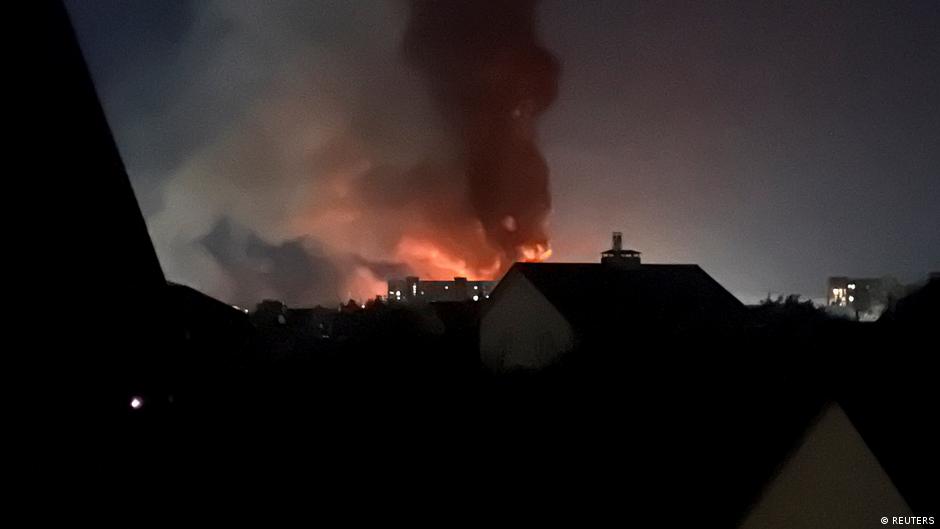
Two people were killed and six were injured in a Russian armed forces strike on Kyiv overnight on Thursday, September 24, according to Kyiv Mayor Vitali Klitschko, in an attack that also damaged the area around a maternity hospital and underscored the continuing operational risks facing Ukraine’s capital.
Klitschko said in a Telegram post that two of the injured were in serious condition. The reported damage was spread across several districts of the city, suggesting a broad disruption pattern rather than an isolated point of impact. For public authorities, critical service providers and businesses operating in Kyiv, the incident highlights the strategic challenge of maintaining continuity when attacks affect transport routes, residential areas, administrative buildings and health-related infrastructure at the same time.
In the Podilskyi district, missile debris hit a parking lot near a maternity hospital, Klitschko said. Cars caught fire, while windows and part of the building facade were damaged. Preliminary information indicated that there were no casualties inside the medical institution. Klitschko added that a nearby clinical and diagnostic center was also damaged.
The attack also affected the Darnytskyi, Solomianskyi, Podilskyi and Dniprovskyi districts. In Darnytskyi, a missile fragment fell on a roadway. In Solomianskyi and Podilskyi, debris landed on the territory of nonresidential development. In Dniprovskyi, fragments were reported in the courtyard of a 16-story building and private residential houses, as well as on an administrative building. Private household areas were affected, and one house sustained destruction.
Infrastructure Risk Remains Central
Ukrainian Telegram channel Insider UA reported that about 20 missiles of different types were launched at Kyiv over a 35-minute period, with energy infrastructure described as the main target of the attack. That detail is significant for the city’s economic and administrative resilience. Energy assets sit at the center of business continuity planning, municipal service delivery and emergency response capacity. When attacks are directed at power infrastructure, the consequences can extend beyond the immediate strike zone into hospitals, transport networks, communications, supply chains and residential heating or utilities.
For companies with staff, assets or suppliers in Kyiv, the latest reported strike reinforces the need for distributed operations, backup power arrangements and crisis protocols that account for simultaneous disruption across multiple urban districts. The reported impact near medical facilities also illustrates how damage to adjacent infrastructure can create risk for essential services even when the facilities themselves report no casualties.
From a management perspective, the pattern described by city officials points to the importance of redundancy. A roadway hit in one district, administrative property affected in another and health-related buildings damaged elsewhere can together complicate logistics, employee movement and the ability of institutions to respond quickly. The business impact of such attacks is therefore not limited to direct physical damage; it can include interruption of mobility, emergency staffing, patient access, repairs and the diversion of municipal resources.
“All relevant services are on site. Operational headquarters are being deployed to provide assistance to people,” Odessa military administration head Serhiy Lysak wrote.
Odessa Also Reports Damage
Separately, the head of the Odessa city military administration, Serhiy Lysak, reported a Russian armed forces attack on Odessa. According to Lysak, medical and educational institutions, as well as residential buildings, were damaged. He said all relevant services were working at the scene and operational headquarters were being deployed to assist people.
The reports from Kyiv and Odessa point to the continuing pressure on Ukrainian municipal management structures. Local authorities are being required to coordinate emergency response, assess damage to public and private property, support residents and maintain essential services during repeated attacks. For businesses, investors and institutional operators, the competitive and strategic landscape in Ukraine remains shaped not only by market fundamentals but also by security exposure, infrastructure resilience and the ability of local administrations to restore functionality after strikes.
In Kyiv, the reported damage near a maternity hospital is likely to draw particular concern because it involved a health-care environment, even though preliminary information from Klitschko said there were no injured people inside the medical facility. The additional damage to a neighboring clinical and diagnostic center adds another layer of operational strain, as health systems must absorb repair needs while continuing to serve patients.
The 35-minute window described in the Insider UA report also matters for emergency management. A concentrated attack involving about 20 missiles of different types creates a compressed decision-making environment for city authorities and emergency services. That can affect how quickly fires are contained, roads are secured, residents are evacuated or treated, and critical infrastructure operators assess whether backup systems are required.
For Kyiv’s public and private sectors, the immediate toll is measured in deaths, injuries and damaged buildings. The wider business issue is resilience: how institutions continue to function when energy infrastructure is targeted, debris affects multiple districts and medical, residential and administrative sites are pulled into the same emergency response cycle. The latest reports show that in Ukraine’s major cities, operational continuity remains inseparable from security planning.