Russian Ship Registry Expands as Sanctions Pressure Reshapes Shadow Fleet
A CREA analysis shows sanctioned tankers are moving into Russia’s flag registry as open registries tighten enforcement and compliance risks rise.
Russia’s ship registry has expanded sharply as international pressure on the country’s so-called shadow fleet forces vessel owners and operators to make increasingly strategic choices about legal exposure, operating continuity and access to global energy routes.
From January 2025 to June 2026, the register of vessels sailing under the Russian flag grew by 36%, according to an analysis by the Centre for Research on Energy and Clean Air, published on Friday, September 25. Over that period, 107 vessels were added to the registry, with the strongest increase recorded in December 2025, when 25 new entries were added in a single month.
The expansion reflects a broader shift in the maritime compliance environment. Open registries that once provided flexibility for owners of sanctioned or high-risk vessels are now becoming less willing to permit ships carrying sanctioned cargo to operate under their flags. For companies involved in Russian energy transport, the result is a narrower set of options: continue operating under disputed or false flags and risk detention, or enter the Russian registry and accept the commercial, financial and reputational consequences that come with that decision.
A shrinking flagging strategy
The pressure is not limited to one registry. Barbados and Palau have fully cleared their registries of sanctioned vessels, while Panama has reduced the number of such ships by almost two-thirds from its peak in May 2025, CREA noted. The world’s largest ship registries have also launched a shared database, known as RISC, to counter reflagging and other methods used to avoid restrictions.
For the shadow fleet, that coordination changes the economics of evasion. Reflagging has long been a management tool for owners trying to preserve commercial activity despite sanctions, financing constraints and insurance complications. But when large registries share data and smaller jurisdictions withdraw from higher-risk business, the pool of viable flag states contracts. That makes the Russian registry less an ordinary administrative choice than a fallback operating platform for vessels with fewer remaining market options.
By June, 46 ships that had previously sailed under the flags of the Comoros or Gambia had been registered in Russia. Other vessels moved to Sierra Leone and Equatorial Guinea, while some continued operating without a recognized flag.
CREA’s figures show that the latest registry growth is heavily concentrated among sanctioned assets. Of the 107 vessels added to the Russian registry, 93 had previously been sanctioned, while 90 were under restrictions from more than one jurisdiction. Ships that transported Russian oil before the first sanctions were introduced changed flags three times more often than they had previously. Sixteen of those vessels also transported Iranian or Venezuelan oil.
Operational continuity over market access
For Russian energy exporters and the shipping networks serving them, the move into the Russian registry appears to preserve operational continuity even as it may deepen isolation from mainstream maritime services. After changing to the Russian flag, vessels continued transporting Russian fuel around the world. Oil worth 5.2 billion euros was shipped primarily to China, according to the analysis. Ship-to-ship transfer schemes in Egypt and the Red Sea were also used.
That pattern points to a business strategy built around rerouting, registry migration and alternative logistics rather than reintegration into conventional shipping markets. China’s role as the main destination for the oil cited in the analysis underlines the importance of buyers willing to handle sanctions-related complexity. At the same time, the use of ship-to-ship transfers shows how the network relies on operational opacity and flexible routing to keep cargo moving.
The corporate risk profile is substantial. Vessels operating under sanctions face heightened scrutiny from insurers, port authorities, charterers and financial institutions. For management teams, the decision to continue trading through the Russian registry may reduce immediate disruption but can increase exposure to detention risks, emergency-response gaps and reputational damage. It also creates a more fragmented competitive landscape, where compliant operators and sanctioned networks are effectively running under different cost structures, insurance assumptions and legal constraints.
Arctic Metagaz and the limits of registry protection
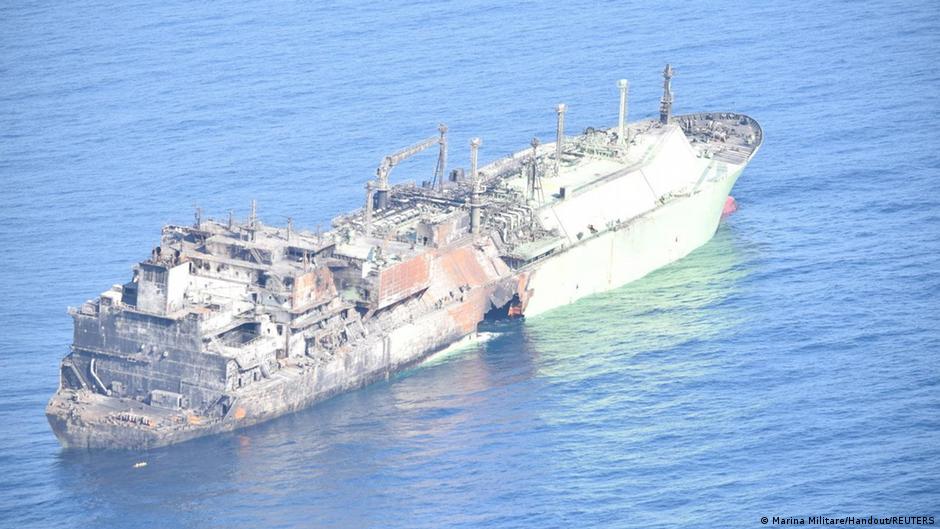
The risks became visible in March, when the Russian LNG carrier Arctic Metagaz caught fire in the Mediterranean Sea. Libya, Malta and Italy were forced to deal with the crisis on their own.
“The Arctic Metagaz incident showed the Russian flag for what it really is: a shield for dangerous vessels, providing no support in the event of disaster and leaving coastal states to manage risks and consequences,” analyst Luke Wickenden said.
Arctic Metagaz is one of roughly ten gas carriers used to transport sanctioned LNG from Russia’s Arctic LNG 2 terminal to the port of Beihai on China’s southern coast. In February 2026, the vessel left the port of Murmansk after loading and was likely heading toward the Egyptian port of Suez, gCaptain reported. Since 2024, the ship has been under sanctions imposed by the United States and the United Kingdom.
For governments and commercial counterparties, the incident highlights a central management problem in the shadow-fleet model: the flag may enable a vessel to keep trading, but it does not necessarily provide credible crisis support. That leaves coastal states, ports and nearby operators exposed to emergency costs created by ships that sit outside normal compliance frameworks.
Strategically, Russia’s growing registry may help consolidate control over vessels serving sanctioned energy exports. But it also makes the fleet more visibly tied to the Russian state and more vulnerable to coordinated policy responses. As open registries tighten standards and data-sharing improves, the competitive space for ambiguous ownership structures and flag-hopping is narrowing. The business question now is whether registry migration can keep Russian fuel moving at scale without raising costs, risks and liabilities beyond what buyers and operators are prepared to absorb.