Venezuela Government and Opposition to Hold Direct Talks on Earthquake Aid and Election Timelines
First face-to-face negotiations in Caracas aim to address disaster relief and democratic processes amid ongoing political tensions.
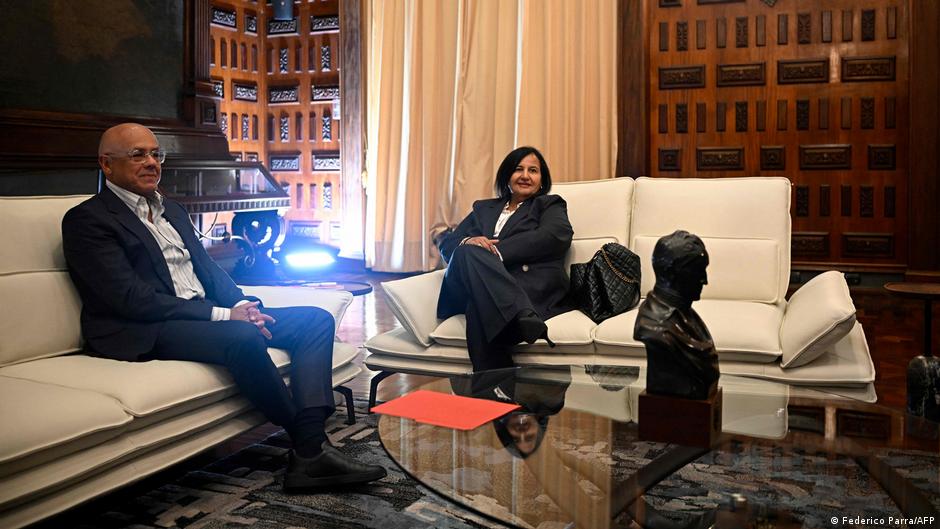
Venezuela’s government is set to engage in direct talks with the opposition in Caracas next week, marking the first face-to-face negotiations in recent years. The discussions are expected to focus on providing aid to those affected by a recent earthquake and establishing a timeline for new elections, signaling a potential shift in the country’s political dialogue.
Background and Key Negotiators
The announcement was made by Jorge Rodríguez, chairman of the National Assembly and chief government negotiator. Rodríguez confirmed that Dinorah Figuera will represent the opposition. Figuera, a former holder of Rodríguez’s own parliamentary seat, fled Venezuela in 2018 due to fears of political persecution. She leads the center-right opposition bloc which won the 2015 parliamentary elections—victory that was recognized by Washington but rejected by then-President Nicolás Maduro.
“These talks aim to restore democratic institutions and strengthen the electoral system, alongside addressing urgent humanitarian needs,” said Jorge Rodríguez.
Following the 2015 elections, the Maduro government refused to acknowledge the opposition’s parliamentary majority, intensifying Venezuela’s political crisis. After the U.S.-backed opposition challenged Maduro’s legitimacy, the government temporarily appointed Delcy Rodríguez to lead, further deepening divisions.
Discussion Topics and Political Implications
According to international observers, the negotiations are supported by Washington, which has vested interests in stabilizing Venezuela and restoring democratic order. The agenda includes restoring democratic institutions, enhancing electoral transparency, and agreeing upon a schedule for forthcoming elections.
Venezuela’s most recent elections took place in 2024, officially declaring Nicolás Maduro the winner. Opposition parties rejected the results, claiming their candidate, Edmundo González Urrutia, secured the majority. The stalemate has prolonged political uncertainty and economic instability in the country.
Notably absent from the talks is María Corina Machado, a Nobel Peace Prize nominee and leading opposition figure allied with González Urrutia, who currently lives in exile. Although she has vowed to return to Venezuela, she was not invited to participate in these negotiations, underscoring ongoing factional divides within the opposition.
Corporate and Economic Context
The political discord and uncertainty over Venezuela’s governance have significant implications for the business environment. Prolonged instability discourages foreign direct investment and complicates corporate strategy for multinational companies operating in the region. The restoration of democratic processes and political consensus could pave the way for economic reforms and a more predictable regulatory framework, crucial for revitalizing Venezuela’s struggling oil sector and broader economy.
Business leaders and analysts will be closely monitoring these negotiations, as any breakthrough could trigger shifts in market confidence, affect geopolitical alignments, and open new opportunities for strategic partnerships and mergers and acquisitions in Venezuela.
In summary, the upcoming talks represent a critical juncture for Venezuela’s political future and economic prospects. Successful dialogue could help resolve long-standing conflicts, restore democratic legitimacy, and create a more stable environment conducive to growth and investment.