U.S.-Denmark Greenland Deal Signals Strategic Shift in Arctic Competition
Washington says the arrangement would expand its military role in Greenland while preserving Danish sovereignty and Greenlandic self-determination.
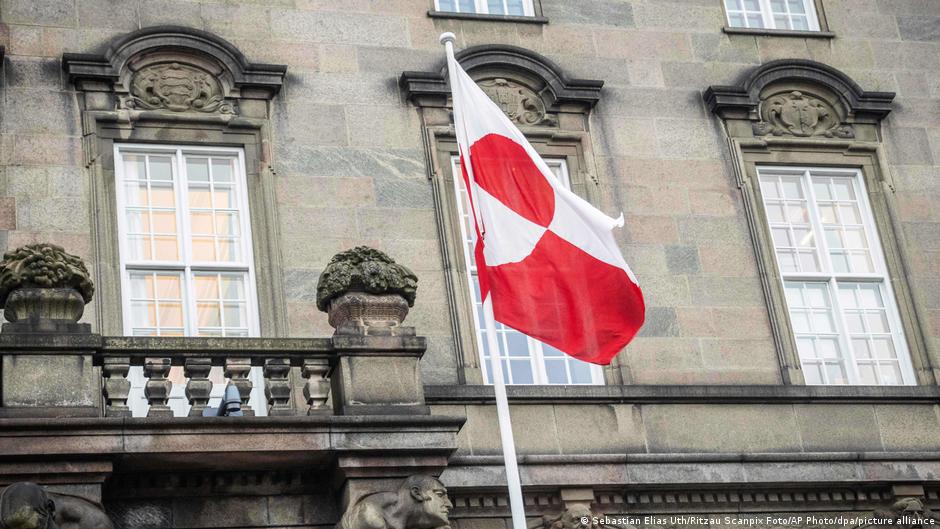
The United States has announced an agreement with Denmark and Greenland to expand its military presence on the island, a move that President Donald Trump framed as a long-sought breakthrough in securing U.S. interests in the Arctic. While officials in Copenhagen and Nuuk welcomed the understanding, their own wording suggested that the final documents may not yet have been signed, leaving the timing and legal form of the arrangement open.
Trump said the agreement would give Washington “permanent control over security and all other needs in Greenland,” writing on Truth Social on Friday evening, September 18, that the United States had secured an indefinite right to do whatever is necessary in Greenland to ensure and protect the security of both the island and the United States. He also said that adversaries of the United States would not be able to establish military bases in Greenland or make “sensitive investments” in the Danish autonomous territory without U.S. approval.
From a business and strategy perspective, the announcement is significant because it links defense posture, investment screening and Arctic resource competition in a single geopolitical package. Greenland has long been discussed in Washington not only as a security asset near North America, but also as a territory with rare earth resources that could matter to industrial policy, defense supply chains and the competitive positioning of Western economies.
Strategic Control Without an Acquisition
The arrangement, as described by Trump, appears to move U.S. policy away from the earlier idea of buying Greenland and toward a structure that would give Washington enduring security influence without formally changing sovereignty. Trump said the deal would cost the United States nothing and praised himself for achieving what he said his predecessors had failed to conclude for a century. He added that the results would be highly valued by the American people.
That formulation matters. In corporate terms, the United States is seeking many of the strategic benefits of control without the balance-sheet burden or political liabilities of acquisition. The reported provisions would give Washington a decisive role over military access and sensitive investment, while Denmark and Greenland retain formal sovereign and self-government principles. Such a structure resembles a control-rights arrangement rather than ownership, with security approvals serving as the key mechanism.
The governments in Copenhagen and Nuuk welcomed the understandings with Washington. Danish Prime Minister Mette Frederiksen said the agreement would benefit NATO by strengthening “our common security in the Arctic and in the North Atlantic region.” A joint statement by Copenhagen and Nuuk emphasized that the arrangements recognize Denmark’s “sovereignty and territorial integrity” as well as “the right of the people of Greenland to self-determination.”
Greenland’s prime minister, Jens-Frederik Nielsen, said the agreement “ensures and strengthens the security of Greenland, the Kingdom of Denmark, the United States and the Western alliance.”
Nielsen also said the deal recognizes Greenland’s interests and its place in international cooperation. For Nuuk, the management challenge is clear: Greenland must balance the security guarantees and economic leverage that come from closer U.S. involvement with the political sensitivity of outside powers shaping decisions in an autonomous region.
Management Risk and Last-Minute Deal Uncertainty
Despite the public statements, the announcement from Nuuk and Copenhagen was described as a press release about an “expected agreement” with the United States. That wording may indicate that the actual documents have not yet been signed. Under Trump, negotiations between Washington and other governments have repeatedly collapsed at the last moment, with the White House accused of trying to change deal terms in the final stretch.
For businesses and governments tracking Arctic policy, that uncertainty is not a minor procedural point. Investment screening, infrastructure planning and defense procurement all depend on the final legal architecture. If Washington is to hold approval power over sensitive investments, companies interested in Greenlandic mining, logistics, telecommunications or dual-use infrastructure would need to assess U.S. political risk alongside Danish and Greenlandic regulation.
U.S. Secretary of State Marco Rubio described the Greenland deal to Fox News Digital as a “huge victory” for the United States and Americans. He said the agreement “forever guarantees U.S. security interests in the Arctic at no cost to American taxpayers.” Rubio also argued that Denmark and Greenland understand the limits of their own defense capacity, saying they lack the financial resources needed to protect Greenland in the event of an attack or threat, while the United States has the necessary means.
That argument places the deal squarely within a broader alliance burden-sharing debate. Washington is positioning itself as the capital provider and security guarantor in a high-cost geography where local and European resources may be insufficient. Denmark and Greenland, meanwhile, gain access to U.S. capabilities while trying to preserve political agency and avoid the appearance of ceding control.
Competitive Landscape in the Arctic
The competitive landscape surrounding Greenland has intensified as Arctic routes, military positioning and mineral resources gain strategic importance. Trump has long claimed an interest in control over the island, which lies off the coast of North America but is part of Denmark. During his first term, he stated an intention to buy Greenland. After returning to the White House, he increased pressure on Denmark and its European allies, including by threatening them with large customs tariffs.
Trump has justified his approach as necessary for U.S. security. However, officials close to him have repeatedly noted that Greenland is rich in rare earth resources. That dual rationale is central to the business implications of the agreement. Rare earths are essential to advanced manufacturing, defense technologies and clean-energy supply chains, and Western governments have been seeking to reduce dependence on rival-controlled sources. A stronger U.S. role in Greenland could therefore reshape the commercial environment for mining and infrastructure projects, even if the agreement is presented primarily as a security measure.
For Denmark, the deal could reduce defense exposure while reinforcing its role inside NATO’s Arctic posture. For Greenland, it could bring stronger security guarantees and higher international relevance, but also tighter scrutiny over investment flows. For the United States, the strategic prize is a durable foothold in a region where military access, mineral security and alliance politics increasingly overlap.
The central question now is whether the announced understanding becomes a signed, operational agreement and what specific authorities Washington will hold. Until those details are settled, the announcement should be read as both a geopolitical milestone and a negotiation still carrying execution risk.