Russia Opens Three-Day Duma Vote as Wartime Controls Shape the Field
The election framework underscores how the Kremlin has managed party access, voting logistics and information risks during a wartime campaign.
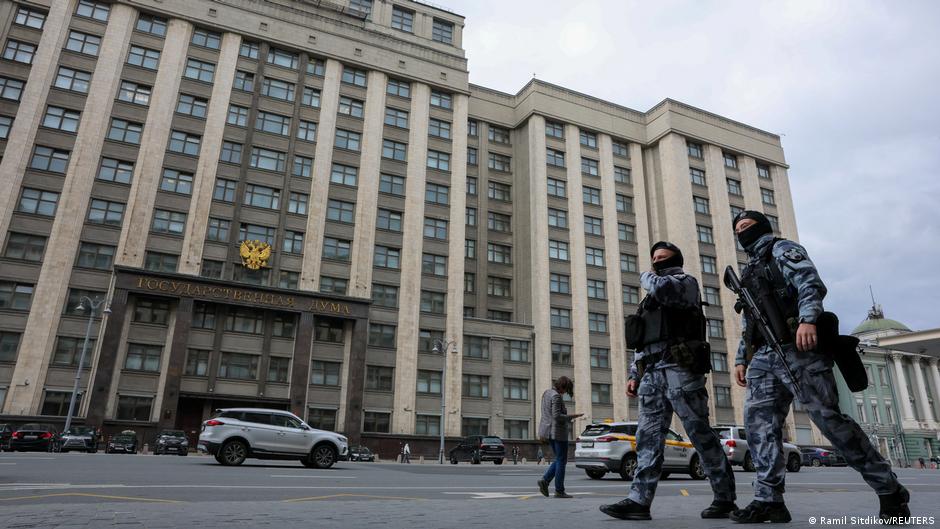
Russia officially began three days of voting for the State Duma on Friday, September 18, opening a parliamentary election shaped less by open political competition than by the management choices of a wartime state. Polling stations first opened at 08:00 local time in Kamchatka and Chukotka, with voting scheduled to continue through September 20 and regional polling places operating until 20:00 local time.
For companies, investors and policymakers watching Russia’s institutional direction, the election offers a view into how the country’s political management system is being adapted under wartime conditions. The mechanics of the vote, the treatment of opposition candidates and the messaging around alleged artificial intelligence-generated election footage all point to a governance model focused on control of process, narrative and verification.
The new Duma is expected to include 450 deputies. Half are to be elected in single-mandate districts, a format that allows voters to choose individual candidates. The remaining 225 seats are to be distributed through party lists. Ten parties are listed for the party-list contest after Yabloko, a party that had consistently criticized the war, was removed from participation on formal grounds. Some Yabloko candidates remain on ballots as single-mandate contenders in several Russian regions.
A Managed Competitive Landscape
The structure of the election illustrates a familiar strategic approach in Russian politics: preserve the formal architecture of electoral competition while narrowing the field of meaningful alternatives. None of the 10 parties represented in the 2026 Duma election has condemned the continuing war in Ukraine. Yabloko was initially admitted to the election but later excluded from the party lists on formal grounds, leaving its remaining political presence fragmented across individual district races.
That matters because party-list participation is a central channel for national political visibility. Removing a party from that contest reduces its ability to build scale, mobilize voters across regions and present itself as a coordinated alternative. In business terms, the system retains multiple market participants while restricting the ability of a differentiated competitor to operate at national scale.
Individual Yabloko members who continued as single-mandate candidates have also faced pressure and removals from the election on various grounds. According to the source material, these actions have often involved old photographs and social media posts, including references to Alexei Navalny. The pattern highlights the compliance risk environment facing political actors in Russia, where past public expression can become a basis for later exclusion.
None of the 10 parties represented in the 2026 State Duma election has condemned the continuing war in Ukraine.
The opposition’s remaining tactical debate also reflects the constrained environment. Shortly before the election, opposition figures Yulia Navalnaya and Maxim Katz urged Russians to vote for the strongest single-mandate candidates who were not members of United Russia. Yabloko criticized that approach and instead advised voters to spoil their ballots. The disagreement shows how limited the strategic options have become for opposition forces: consolidate around non-United Russia contenders, or reject the process through ballot invalidation.
Occupied Territories and Verification Risk
This election also extends voting to Russian-occupied territories of Ukraine, marking a significant difference from the previous State Duma elections held in 2021. Participants in Russia’s full-scale invasion of Ukraine, as well as residents of regions occupied by Russia, voted early from late August through September 17, according to representatives of various Russian structures cited in the source.
Observers noted that even setting aside the question of the legitimacy of such a process in occupied regions, the Central Election Commission organized voting there in ways that make the results practically impossible to verify. Authorities did not publish information about members of regional election commissions or the addresses of polling stations. Open video observation was not organized. The use of mobile ballot boxes was allowed.
The Central Election Commission also permitted local election commissions, when necessary, to print ballots on site and not immediately transfer them to higher-level bodies after counting. Each of these decisions weakens the audit trail around the vote. Taken together, they create a system in which official outcomes depend heavily on institutional trust, while independent verification becomes highly limited.
From a corporate strategy perspective, this is relevant because the Duma is a key legislative body in a political economy where state priorities have become more closely aligned with wartime governance. The composition and perceived mandate of the new parliament may affect the operating environment for Russian companies, foreign firms still exposed to the market, and counterparties dealing with sanctions, procurement, industrial policy and regional administration.
Information Control and the AI Narrative
Before voting began, pro-government media in Russia circulated videos warning that footage showing falsifications or ballot stuffing at polling stations could be generated by artificial intelligence. Ella Pamfilova, chair of the Central Election Commission, also stated that such technologies could allegedly replace images from polling stations during live broadcasts.
The emphasis on AI-generated fakes is notable because it pre-positions an explanation for potentially damaging visual evidence. In modern election management, video from polling stations can become a reputational and political risk when allegations of irregularities spread quickly online. By presenting such footage in advance as potentially synthetic, officials and aligned media create a framework for contesting the authenticity of future claims.
For business readers, the broader signal is about institutional risk. Political systems increasingly use technology narratives not only to manage cyber threats but also to shape public interpretation of evidence. In this case, the warning about AI-generated video appears alongside reduced transparency in occupied territories and pressure on opposition candidates, reinforcing a wider strategy of controlling both the voting process and the information environment around it.
The three-day voting format itself also reflects management priorities. Extended voting can be presented as a convenience for citizens across a vast country. At the same time, multi-day processes can complicate observation and increase reliance on election administration procedures. In regions where transparency tools are limited or absent, those administrative choices become central to the credibility of the outcome.
As voting continues through September 20, the immediate political result may be less surprising than the operational model behind it. The election shows a system working to maintain formal electoral routines while adapting them to wartime territorial claims, controlled party competition and preemptive information defense. For Russia’s domestic power structure, that combination may be the core strategic objective: not simply winning seats, but managing the conditions under which political legitimacy is produced.