US Gas Transit Proposal Tests Europe’s Russia Exit Strategy
Washington is exploring a US-mediated return of Russian gas flows through Ukraine, linking commercial incentives to an energy ceasefire.
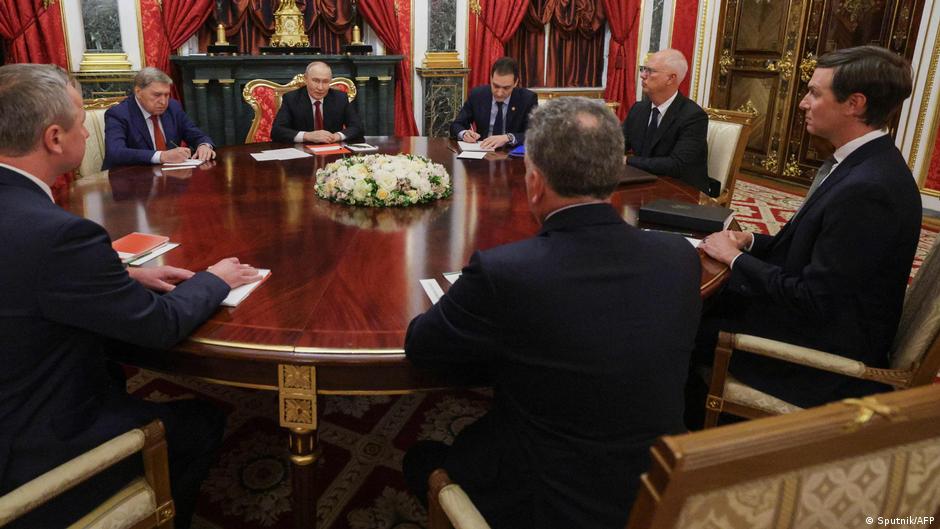
The United States is pressing for the rapid resumption of Russian natural gas deliveries to Europe through Ukraine as part of negotiations on an energy ceasefire between Moscow and Kyiv, according to The Wall Street Journal, which cited US, European and Ukrainian officials.
The proposal would introduce an American intermediary into the transaction, potentially changing the commercial structure of a trade that Europe has spent years reducing. US negotiators Jared Kushner and Steve Witkoff discussed the idea during visits to Moscow and Kyiv in September, the newspaper reported.
Under the plan, Russian gas would be sold through the US intermediary. The structure is expected to provide a way around European sanctions while creating potentially profitable opportunities for American investors. That design gives the proposal a distinctly corporate dimension: rather than simply restoring the previous supplier-transit-customer relationship, Washington would place a US commercial participant between Russian production and European buyers.
Commercial Leverage in Ceasefire Negotiations
Washington is seeking a comprehensive agreement to halt attacks on energy facilities before trilateral talks involving the United States, Russia and Ukraine, scheduled to take place in Abu Dhabi in November. The administration of President Donald Trump expects European opposition to the gas initiative may ultimately be less forceful than public statements suggest, according to the newspaper’s sources.
US officials view Russia’s possible return to the European gas market as an additional incentive for Russian President Vladimir Putin to support an energy ceasefire. Ukraine, meanwhile, could gain renewed revenue from transporting gas across its territory.
For Washington, the proposal links three interests: a negotiating incentive for Moscow, transit income for Kyiv and a new commercial role for US investors.
The model illustrates how the administration is attempting to use deal structures and financial incentives to influence security negotiations. Each party would receive a different economic benefit, although the interests involved are not necessarily aligned. Russia would regain access to European customers, Ukraine would collect transit revenue, and an American intermediary would occupy a strategically important position in the supply chain.
The White House has also proposed placing proceeds from Russian gas sales to Europe into a special account in a third jurisdiction, one US official said. The mechanism is intended to restrict the use of the money for military purposes. If implemented, it would add another layer of oversight and financial management to the arrangement, alongside the US intermediary and the existing network of producers, pipeline operators and European buyers.
Europe Faces a Strategic Reversal
The initiative is encountering serious resistance in Europe. Existing European Union legislation calls for the phased elimination of Russian gas imports by the end of 2027, while leaders of the largest European countries have repeatedly said they do not want to become dependent again on Russian energy supplies.
That policy has already transformed the competitive landscape. Russian gas now represents roughly 11% of European consumption, compared with 45% immediately before Russia’s full-scale invasion of Ukraine. US liquefied natural gas currently supplies about 30% of European gas consumption.
A renewed pipeline route through Ukraine could therefore affect more than diplomatic negotiations. It would reintroduce Russian volumes into a market where US LNG suppliers have gained substantial importance. At the same time, the proposed American intermediary could allow US investors to participate in the return of Russian pipeline gas even as US LNG remains a major source of European supply.
This creates a complicated strategic question for European governments and energy companies. Additional pipeline gas could ease pressure from high energy prices and improve short-term supply security. Yet accepting it could conflict with the EU’s legislated timetable, undermine investments made to diversify supply and revive exposure to a supplier European leaders have sought to marginalize.
Some European officials have sharply criticized the plan in private conversations, according to the newspaper. The Trump administration nevertheless believes that elevated energy prices and concerns about energy security could make European countries more receptive to the proposal.
A Test of Corporate and Political Risk
For companies, the plan would present significant strategic and compliance questions. A transaction designed to navigate sanctions would depend on the precise legal status of the intermediary, the treatment of sales proceeds and the willingness of European buyers to enter new contracts. It would also require participants to assess whether a ceasefire-linked arrangement could provide sufficient stability for long-term commercial commitments.
The proposal ultimately asks Europe to weigh immediate energy economics against its longer-term policy of eliminating Russian gas. Washington’s approach assumes that financial architecture can reconcile those competing priorities: Russian supply could return, Ukraine could benefit from transit, military use of revenue could be constrained, and American investors could gain a role. European resistance shows that the central obstacle is not merely price or pipeline capacity, but whether the commercial benefits justify a potential reversal of the bloc’s energy strategy.