Binance Faces $6.3 Billion Test as Trump Questions FBI’s North Korea Claim
The exchange has repaid 90% of stolen client assets, but the attack raises strategic questions about liquidity, security and trust.
Binance is confronting a major test of its financial resilience and risk management after hackers stole about $6.3 billion in cryptoassets from customers of the world’s largest cryptocurrency exchange. The Federal Bureau of Investigation attributed the October 29 attack to North Korean hackers, while US President Donald Trump publicly questioned whether that conclusion had been established.
The competing messages from the FBI and the White House add a geopolitical layer to what is already a significant corporate crisis. For Binance, however, the immediate business challenge is more direct: reimbursing customers, managing liquidity across a wide range of tokens and demonstrating that its security and governance systems can withstand one of the largest thefts of cryptoassets.
On October 31, Binance said it had compensated customers for 90% of the funds stolen in the attack. The company reported that losses involving BTC, ETH, USDT, BNB, SOL, USDC, XRP, USD1, RLUSD and ZEC had been reimbursed in full.
The remaining 10% consists of tokens outside the 10 largest assets covered by the initial compensation effort. Binance said those tokens have lower liquidity, meaning that acquiring sufficient quantities to reimburse customers completely will take more time. That distinction highlights an important operational issue for large exchanges: the ability to absorb a loss depends not only on its dollar value but also on the depth of the markets for the affected assets.
Reimbursement becomes a strategic response
Binance’s decision to repay most customers quickly functions as more than a customer-service measure. It is also a strategic attempt to contain reputational damage and reduce the risk that users move assets to competing exchanges or private wallets. With more than 300 million registered users worldwide, according to various estimates, confidence in the platform is central to the company’s competitive position.
The scale of Binance’s reported asset base provides important context. In 2024, the company said it had more than $160 billion in assets under management. The $6.3 billion theft is therefore material even for a platform of Binance’s size, while the reimbursement program creates an additional liquidity and treasury-management challenge.
The exchange’s ability to replace highly liquid assets first suggests that market depth is shaping the sequence of compensation. Bitcoin, Ether and major stablecoins can generally be obtained more readily than smaller tokens. Binance’s explanation indicates that completing the final portion of repayments will depend on acquiring less-liquid assets without immediately disrupting their markets.
That process could be closely watched by customers and competitors. A rapid completion would support Binance’s claim to financial strength, while prolonged delays could create uncertainty for holders of smaller tokens. The incident also gives rival exchanges an opportunity to compete on custody safeguards, transparency and the speed with which customers can recover assets after a security breach.
FBI warning meets presidential caution
The FBI said on October 31 that the hackers belonged to TraderTraitor, a North Korean group that it identified as responsible for the October 29 theft. According to the agency, members of the group typically convert stolen funds into Ethereum and then launder them, including through instant cryptocurrency exchange services.
The bureau urged companies handling cryptoasset transactions to block transfers involving wallets linked to TraderTraitor. Law enforcement officials published a list of the relevant wallets in the FBI’s press release, effectively asking the industry to help prevent the stolen assets from moving through the broader crypto market.
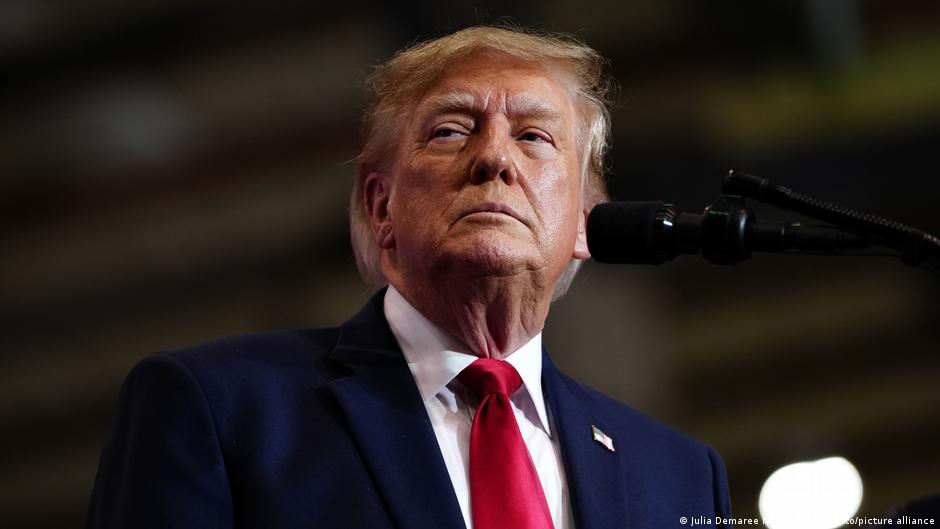
Trump was more cautious about assigning responsibility. Speaking to journalists at his Mar-a-Lago estate in Florida on November 1, the president said the administration was still examining the incident.
“We don’t know whether this is connected to North Korea, but if it is, we will discuss this issue with North Korea,” Trump said.
The disagreement does not change Binance’s immediate obligation to affected users, but it complicates the external response. Crypto companies are being asked to act on wallet information tied to the FBI’s attribution even as the president says the North Korean connection remains under review. For exchanges and transaction services, that creates a sensitive compliance environment in which rapid blocking decisions may have to be made while the political assessment is still developing.
A broader competitive test for crypto platforms
The attack underscores how cybersecurity, liquidity management and government relations have become intertwined strategic issues for global crypto exchanges. Binance must manage the technical investigation, complete customer compensation and cooperate with efforts to restrict the movement of stolen assets. At the same time, it needs to reassure a user base whose scale is a key source of its market power.
The episode may also influence management decisions across the sector. Exchanges now have a fresh reason to review how they segregate customer assets, fund emergency reimbursements and monitor transactions involving smaller tokens. The FBI’s request to block identified wallets further demonstrates that crypto businesses can be drawn rapidly into international law-enforcement efforts.
For Binance, the central corporate question is whether its swift repayment of major assets can outweigh concerns created by the size of the breach. Its 90% reimbursement figure offers an early measure of resilience, but the unresolved balance, the lower liquidity of affected tokens and uncertainty over the attackers’ identity mean the crisis is not yet fully contained.