France Protests Test Business Resilience as Turnout Falls to 320,000
A third consecutive Saturday of nationwide demonstrations highlights persistent cost pressures and operational risks across major French cities.
France faced a third consecutive Saturday of nationwide protests as 320,000 people took to the streets, according to government estimates, underscoring the persistence of social pressures linked to the rising cost of living and problems in education. The demonstrations resulted in 565 arrests and required the deployment of 70,000 police officers across the country.
For companies operating in France, the latest mobilization presents a mixed picture. Official turnout has declined for two consecutive weeks, falling from 550,000 demonstrators on October 17 to 410,000 on October 24 and 320,000 on October 31. Yet the continued scale of the movement, its expansion beyond its original student base and repeated clashes in major commercial centers mean management teams still face uncertainty over staffing, transport, security and access to urban locations.
Authorities said 70,000 people demonstrated in Paris. Protest organizers placed nationwide participation at almost 500,000, highlighting a substantial gap between official and organizer estimates. The disagreement complicates efforts by businesses to gauge the movement’s strength and anticipate whether disruption is likely to diminish or continue.
Lower turnout does not eliminate operational risk
Interior Minister Laurent Nuñez said the demonstrations were largely peaceful, but accused members of far-left groups of using “monstrous violence” against law enforcement officers. In Paris, five officers were injured during clashes with several hundred protesters. Three were hurt by Molotov cocktails, and one officer’s clothing caught fire, causing a burn to his leg.
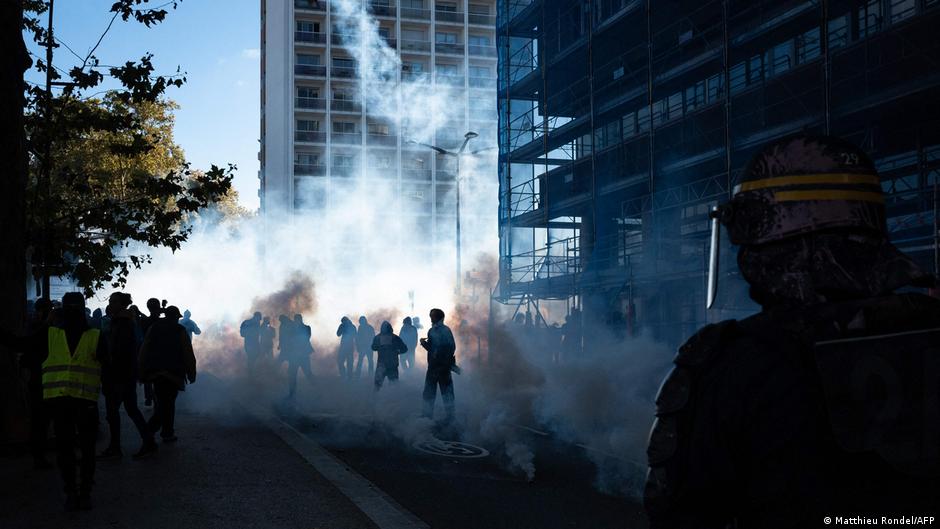
Protesters in the capital also threw paving stones and rocks at police, who responded with tear gas and batons. Such confrontations can transform otherwise peaceful marches into localized security incidents, creating immediate challenges for retailers, hospitality operators, transport providers and employers with offices near demonstration routes.
Declining national participation may reduce the movement’s overall scale, but clashes in several major cities show that concentrated disruption remains a material operational concern.
The unrest was not confined to Paris. Police in Toulouse used water cannon and tear gas against participants in an unauthorized protest. In Marseille, an unauthorized march involving approximately 10,000 people later escalated into clashes with law enforcement. Police also confronted rioters in Lyon and used tear gas.
The geographic spread requires corporate leaders to assess risk city by city rather than relying only on the national turnout figure. A smaller nationwide crowd can still have an outsized effect when confrontations occur around transport corridors, shopping districts or dense business areas. Companies may need to maintain flexible workplace arrangements and review site-level security plans while the movement continues.
Education grievances broaden into economic discontent
The nationwide demonstrations began with protests by school pupils and university students in late September. Their initial grievances included teacher shortages, overcrowded classrooms, excessively long school days, outdated school buildings and a lack of modern equipment. Participants also expressed anxiety about their prospects, including difficulties gaining admission to universities.
The movement subsequently attracted people dissatisfied with other social problems, including the rising cost of living. That broadening is strategically significant because it gives the protests a wider base than the education sector alone. For employers, it also points to concerns that extend from public services into household finances, workforce expectations and confidence about future opportunities.
As the demonstrations expanded, they increasingly descended into disorder involving burning rubbish containers and vehicles, severe confrontations with police, vandalism and looting. The distinction between the broader protest movement and smaller groups involved in violence remains important for risk assessment: authorities characterized most of Saturday’s demonstrations as peaceful even as serious incidents occurred in several cities.
A European competitive and policy dimension
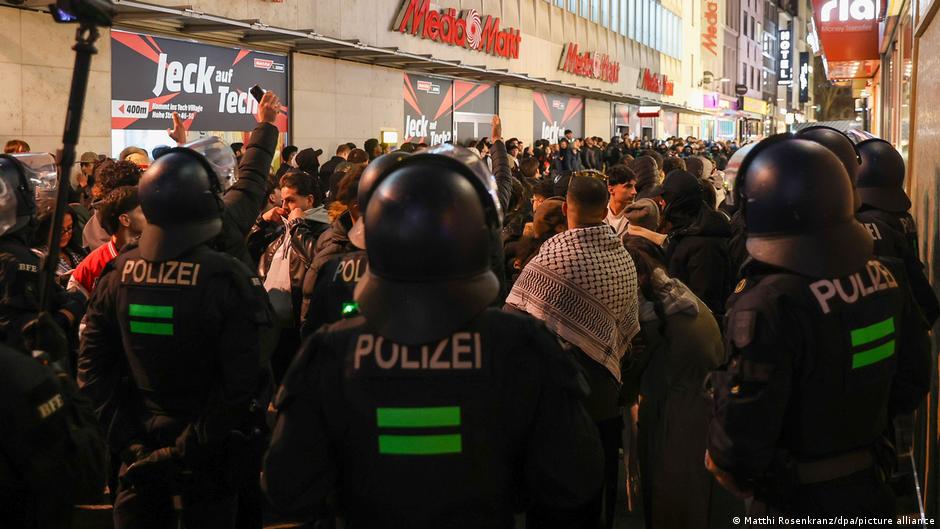
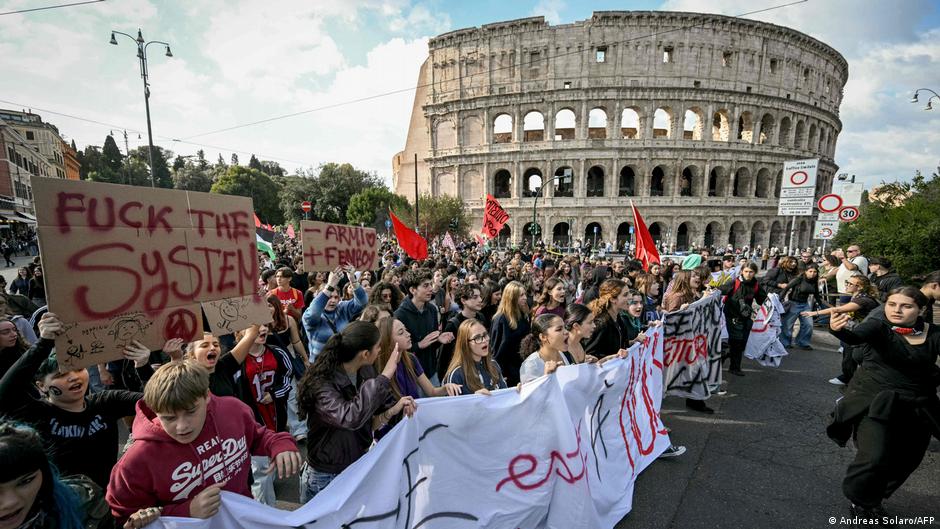
The French protests have also inspired young people in other European countries, including Italy, Germany and Belgium, to organize demonstrations. Protests in major German cities on October 31 ended in disorder. The cross-border spread adds a regional dimension for companies with operations and supply chains spanning several European markets.
Management decisions will therefore depend not only on whether participation in France continues to fall, but also on whether the movement’s grievances retain momentum and encourage further action elsewhere. The latest official figures suggest a clear decline in turnout over three Saturdays, with participation down by 230,000 from October 17. However, 320,000 demonstrators, hundreds of arrests and a nationwide police deployment of 70,000 personnel indicate that the protests remain a significant test of institutional capacity and corporate resilience.
The immediate business priority is continuity: protecting employees, maintaining access to workplaces and customer locations, and preparing for sudden transport or security disruption. Longer term, the protests highlight the strategic importance of monitoring household cost pressures, education quality and youth expectations—issues that can shape labor availability, consumer demand and the broader competitive environment even after demonstrations subside.