Cyberattacks Expose Strategic Risks in Ukrainian and Russian Alert Apps
Simultaneous breaches disrupted public-warning applications in Ukraine and Russia, highlighting operational and reputational risks for critical digital services.
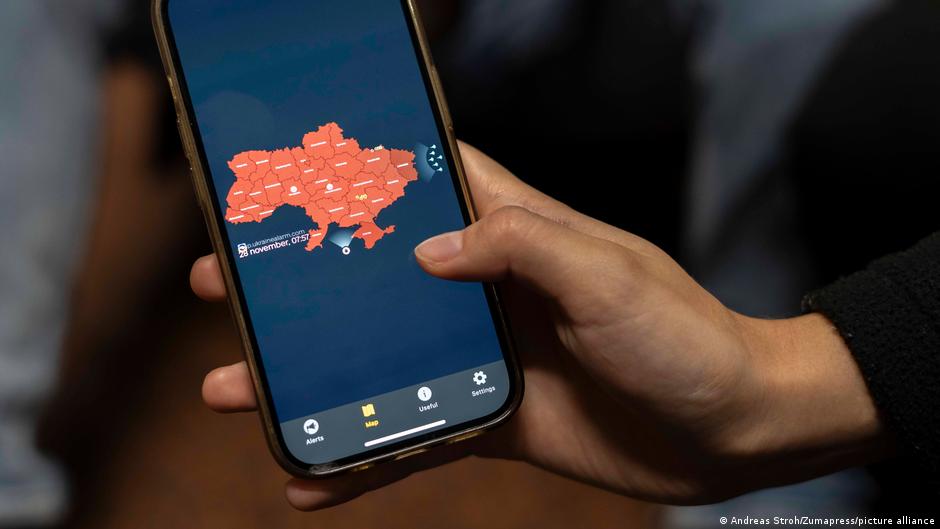
Cyberattacks on government-linked public-warning applications in Ukraine and Russia generated false alerts about radiation, chemical hazards and nuclear weapons, forcing operators in both countries to suspend functions, investigate vulnerabilities and begin restoring their services.
The incidents demonstrate how a compromised communications channel can become a strategic liability even when the underlying national warning infrastructure continues to operate. For developers and government agencies, the immediate management challenge is not limited to repairing software. They must also restore confidence in systems whose value depends on users treating every legitimate notification as credible and urgent.
Ukrainian application suspends push notifications
Ukraine’s official Air Alert application, which is used to warn the public about threats, came under cyberattack on the evening of Sunday, Nov. 1. Users began receiving false notifications about radiation and chemical dangers, as well as warnings of possible street fighting in Kyiv.
The Ukrainian Air Force was among the first institutions to respond. The military said the application had probably been subjected to “hostile interference” and stressed that there was no radiation threat.
Ukraine’s State Emergency Service said the nationwide warning system was operating normally. It added that all threat signals continued to be transmitted to regional administrations and street-based public alert systems. That distinction was operationally important: the breach affected a prominent digital distribution channel, but authorities said the broader state warning network remained functional.
The application’s developers later confirmed that unauthorized parties had interfered with the service. They disabled push notifications and temporarily suspended the application while responding to the intrusion.
“Today, unauthorized persons interfered with the operation of the application. We disabled push notifications and temporarily suspended the application,” the developers said.
The team also advised users not to follow links contained in suspicious notifications. The warning indicated that incident management extended beyond correcting false messages to limiting the potential consequences of user interaction with compromised communications.
During the night of Nov. 2, the developers reported that the service was being restored gradually. Users began receiving air-raid notifications again, although some functions remained temporarily unavailable. The team said the application does not store users’ personal data and that additional cybersecurity protections were being introduced.
Russia reports a parallel attack
Russia’s Emergency Situations Ministry reported a hacking incident at almost the same time. The ministry said its mobile application had been subjected to a “massive cyberattack” that enabled attackers to distribute false information claiming that nuclear warheads had been launched toward Russia.
Russian emergency officials said specialists were working to eliminate the vulnerability and restore normal service. As in Ukraine, the response combined technical remediation with public communication intended to counter alarming false information distributed through a channel associated with government warnings.
Trust becomes the central operational asset
For organizations managing critical alert products, the episodes underline the commercial and strategic importance of resilience, access controls and clear escalation procedures. Unlike a conventional application outage, a compromised emergency platform can continue functioning while delivering harmful information. That creates a more complex management problem because operators must determine whether to disable the service, preserve essential functions or redirect users to alternative channels.
Ukraine’s decision to switch off push notifications and temporarily halt the application illustrates that tradeoff. Suspending a widely used service can reduce the spread of fraudulent alerts, but it also removes a convenient channel for legitimate warnings. The continued operation of regional and street-based systems provided redundancy while the digital service was being repaired.
The gradual restoration approach also suggests a risk-managed return to service. Core air-raid alerts resumed before every feature became available, allowing developers to prioritize the application’s central function while continuing technical work. The statement that the application stores no personal user data addressed a separate concern: whether the intrusion may have exposed sensitive information in addition to manipulating notifications.
Neither side disclosed the identity of the attackers, the precise technical method used, the scale of the affected user base or the cost of remediation. No acquisition or corporate transaction was announced in connection with either incident. The immediate strategic decisions therefore remain focused on internal cybersecurity investment, service architecture and coordination between developers, emergency agencies and military authorities.
The competitive landscape for public-warning technology is shaped less by conventional market share than by reliability and institutional trust. Applications in this category compete with sirens, street systems, regional authorities and other communications channels for users’ attention. Their advantage is speed and direct reach; their vulnerability is that a single successful intrusion can undermine confidence in future alerts.
Both incidents show why operators of critical communications products must treat notification infrastructure as a core security boundary rather than a routine application feature. Restoring technical functionality is only the first stage. The longer-term management task is to ensure that users can distinguish authentic warnings from manipulated messages without hesitating when a genuine threat emerges.