US Court Rejects Trump Administration Bid to Halt Alaska Certification
The ruling limits a federal challenge built around candidate-name confusion in a pivotal Alaska race for control of the US Senate.

A federal court has rejected an attempt by President Donald Trump’s administration to challenge the possible certification of Alaska’s US Senate election results, removing an immediate legal obstacle ahead of a contest considered critical to control of the chamber.
The administration had sought to block official certification if incumbent Republican Senator Dan Sullivan lost the election. Its case centered on the candidacy of Daniel J. Sullivan Jr., a retired teacher who shares the senator’s surname and could, according to the administration, confuse voters and affect the result.
In her ruling on Sunday, November 1, federal judge Sharon Gleason concluded that the US Department of Justice lacked the necessary legal grounds to bring the case. The decision represents a setback for an administration strategy aimed at preserving the option of contesting a potentially narrow defeat before Alaska formally confirms the outcome.
Legal Strategy Meets an Operational Barrier
The Justice Department argued that if Democrat Mary Peltola won, officials should withhold certification while determining whether voters who selected the second Sullivan had actually intended to support the incumbent senator. That request effectively asked the court to create a process for measuring the impact of possible name confusion after ballots had been cast.
Gleason’s 20-page order identified a fundamental execution problem: federal authorities had not proposed a practical way to conduct such an inquiry without violating ballot secrecy. The ruling therefore turned not only on the administration’s legal standing, but also on whether its requested remedy could be implemented within the rules governing confidential voting.
The court found that the government had offered no practical mechanism for testing voter intent without compromising the secrecy of the ballot.
For political organizations and their advisers, the case highlights the limits of post-election litigation as a risk-management tool. A campaign can allege that ballot design, candidate identity or voter misunderstanding changed an outcome, but converting that claim into an enforceable remedy requires a court to identify both a valid legal basis and a workable process. Here, the administration failed on both fronts, according to the ruling.
Consultant Conduct Sharpens the Competitive Stakes
The dispute followed a report by The New York Times that political consultants connected to Peltola may have participated in recruiting the similarly named candidate. Peltola has denied the allegations. Reuters said it was unable to independently confirm the newspaper’s reporting.
If substantiated, such conduct would raise broader questions about competitive tactics in high-value electoral races, including how campaigns and outside advisers exploit candidate entry rules. But the court’s decision did not establish that Peltola or consultants linked to her had orchestrated the candidacy. Instead, it focused on whether the federal government could lawfully seek to delay certification on the theory presented.
The episode also illustrates the importance of third-party candidates in closely contested races. A candidate does not need to win a significant share of the vote to become strategically important; in a narrow contest, even a limited number of ballots can alter the competitive calculation. The shared Sullivan name made that effect especially sensitive because the administration argued that some support might have been misdirected rather than intentionally given.
Appeal Extends Uncertainty Before Election Day
After the ruling, the Justice Department said it intended to appeal, signaling that the administration has not abandoned its effort to preserve a challenge to certification. An appeal could extend the legal uncertainty, although the initial decision leaves the government without the requested restriction as voters prepare to cast ballots.
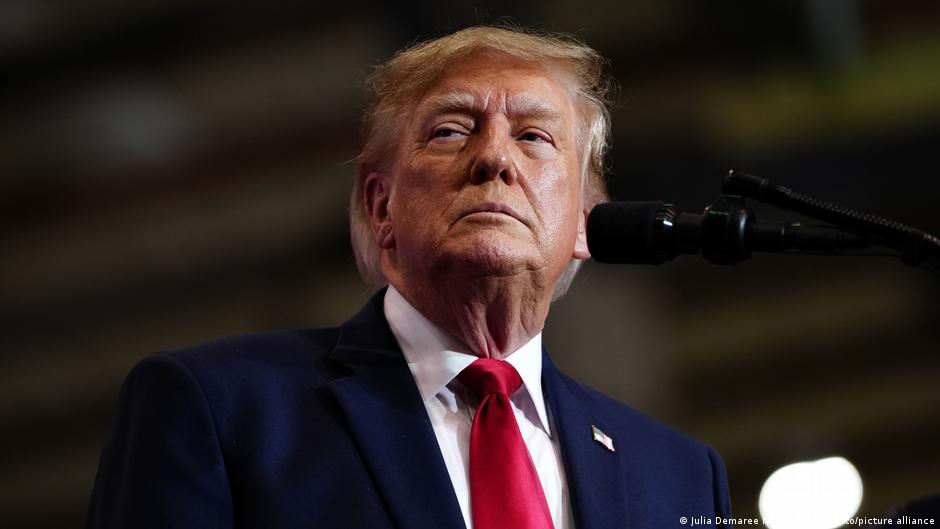
Trump responded on Truth Social by writing that the “fake Daniel J. Sullivan Jr. has disappeared” and again criticizing his political opponents. His intervention keeps the dispute at the center of the Republican campaign narrative and places additional attention on the retired teacher’s candidacy.
The timing increases the strategic importance of every management decision by the campaigns, the Justice Department and election officials. The midterm elections for the US House of Representatives and Senate are scheduled for November 3, leaving little time for an appellate court to consider the government’s arguments before voting concludes.
Alaska’s Senate race is viewed as one of the pivotal contests in the battle for control of the upper chamber of Congress. That makes the litigation consequential beyond the state: the outcome could influence which party controls the Senate, with implications for legislation, appointments and the administration’s ability to execute its agenda.
For now, the ruling narrows the administration’s available options. It also demonstrates that aggressive legal positioning cannot substitute for an operationally credible remedy. Unless an appeals court intervenes, Alaska officials remain free from the requested federal order blocking certification if Sullivan is defeated and Peltola prevails.