Russian Strikes Test Ukraine’s Emergency Capacity and Business Continuity
New attacks across Kherson, Odesa, Sumy and Kyiv regions show how Russia’s campaign continues to pressure civilian infrastructure and local operating resilience.
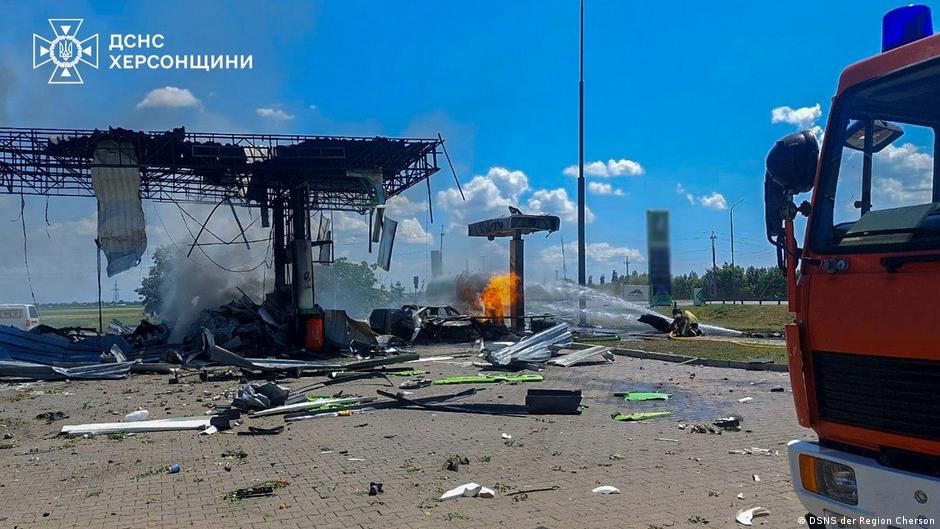
Four people were killed in Ukraine after a new series of Russian attacks on September 18 and overnight into September 19, with casualties reported in the Kherson and Sumy regions and additional damage in Odesa and the Kyiv region. The incidents underline the continuing operational strain placed on Ukrainian regional authorities, emergency services and civilian infrastructure as Russia maintains pressure far beyond the front line.
In the Kherson region, two people were killed after a Russian drone strike in the settlement of Tekstylne on Friday evening, September 18. Oleksandr Prokudin, head of the regional military administration, said the attack took place at around 6 p.m.
“As a result of the strike by an enemy drone, two men sustained injuries incompatible with life,” Prokudin wrote on Telegram.
Throughout the evening, Prokudin repeatedly reported air raid alerts in the region, including warnings linked to possible launches of Russian guided aerial bombs. The same day, one of the city hospitals in Kherson was also attacked when a drone dropped explosives on the grounds of the facility. No casualties were reported in that incident.
Infrastructure Pressure and Emergency Response Risks
For Ukrainian public-sector managers and private operators, the pattern of attacks presents a recurring business-continuity challenge: the targets and consequences are dispersed across residential, administrative, medical and warehouse facilities. That distribution complicates planning for municipal services, logistics networks and insurers, while forcing local administrations to allocate scarce response capacity across multiple risk categories at once.
In Odesa, the regional branch of Ukraine’s State Emergency Service reported the aftermath of Russian attacks on September 18. An 11-storey administrative building was hit and caught fire. After emergency crews arrived and were working at the scene, the same building was attacked again. Ten people were reported injured, including two rescuers.
The reported repeat strike on the same building is significant from a management and operational-risk perspective. Emergency services must not only respond to damage but also operate under the possibility that a damaged site could be struck again. That raises the cost, complexity and danger of rescue operations, and can lengthen the time needed to stabilize affected facilities.
Overnight into September 19, Odesa was attacked again. After an air raid alert was declared in the city and reports emerged of Russian small missiles approaching, local residents posted footage on social media showing a fire that had broken out in a residential building within the city. Initial details about the incident were not provided.
Sumy Strike Hits Residential Building
Sumy also came under Russian attack on the evening of September 18. One projectile hit a multi-storey residential building, with reports indicating that it was a guided aerial bomb. The explosion damaged several apartments and caused part of the building to collapse. According to preliminary data from local authorities, at least two people were killed and seven others were injured.
The use of guided aerial bombs has become one of the most destructive elements in Russia’s strike campaign against Ukrainian urban areas. For city administrations, each such incident can create an immediate requirement for evacuation, temporary housing, structural assessment, medical response and reconstruction planning. These burdens fall on local governments already operating under wartime fiscal and staffing constraints.
The Kyiv regional military administration also reported consequences from Russian strikes on the evening of September 18. Tymur Tkachenko, head of the regional administration, said two men were injured in the Bucha district after warehouse premises were hit. Warehouse facilities were also damaged in the Boryspil district.
Damage to warehouse infrastructure carries implications beyond the immediate physical losses. Storage sites often serve as nodes in regional supply chains, supporting commercial distribution, humanitarian deliveries, municipal procurement and business inventories. Even limited damage can interrupt deliveries, raise replacement costs and force companies or public agencies to re-route goods through less efficient channels.
A Campaign With Economic Consequences
Although the reported attacks were primarily human tragedies, they also fit into a broader competitive and strategic landscape shaped by infrastructure attrition. Russia’s strikes continue to impose costs on Ukraine’s public administration, healthcare system, emergency services and private-sector logistics. The repeated targeting or damaging of civilian and administrative assets increases uncertainty for companies trying to maintain operations in affected regions.
For businesses, the managerial problem is not limited to a single strike or one city. The same reporting cycle included deaths in Kherson and Sumy, injuries in Odesa and the Kyiv region, damage to a hospital site, an administrative building, residential housing and warehouses. That geographic and asset-class spread makes risk modeling harder for companies with workers, inventory or customers across Ukraine.
It also places pressure on local leadership. Regional administrations must communicate air raid alerts, coordinate emergency response, assess structural damage, support displaced residents and document losses, often while further attacks remain possible. The management challenge is therefore continuous rather than episodic.
Ukraine’s competitive landscape for investment and reconstruction is likewise affected by the durability of these attacks. Firms considering production, logistics or services in safer western and central areas still face exposure through supply chains, insurance costs, workforce disruption and transport constraints. In frontline and southern regions, the risk calculus is sharper still, particularly for operators tied to physical premises such as warehouses, hospitals, administrative offices and apartment-linked service businesses.
The latest attacks show that the war’s economic impact remains closely tied to the security of civilian infrastructure. As regional authorities respond to casualties and damage, companies and public institutions must continue making operational decisions under persistent uncertainty, with emergency capacity, facility resilience and workforce safety at the center of their strategy.