Merz Signals Strategic Reset as Germany Reassesses U.S. Alliance
Germany’s chancellor says the era of unconditional transatlantic friendship may be over, framing the rupture as a catalyst for national renewal.
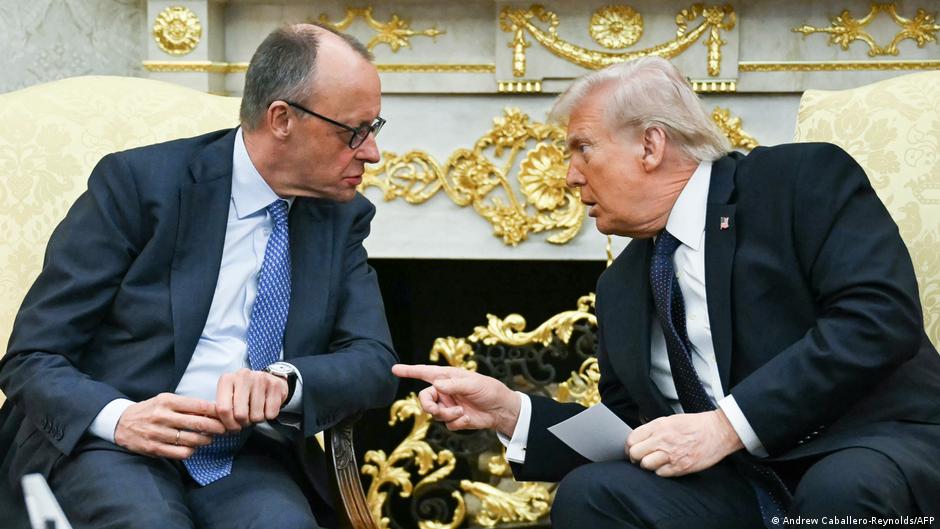
German Chancellor Friedrich Merz has cast the deterioration in relations between Berlin and Washington as more than a diplomatic dispute. Speaking at a Christian Democratic Union campaign event in Berlin on Thursday, September 17, he suggested that Germany is entering a new strategic phase in which old assumptions about U.S. support can no longer anchor national policy, security planning or economic decision-making.
The time of “unconditional transatlantic friendship” has probably been over for a long time, Merz said, according to remarks cited by dpa. He described a shift on the other side of the Atlantic in political approaches and in the assessment of the transatlantic alliance that Germany may once have found difficult to imagine.
For business leaders, the significance of the statement lies not only in foreign policy. Merz is effectively pointing to a broader corporate and economic operating environment in which German companies, investors and policymakers must plan for greater geopolitical volatility, weaker predictability from Washington and a more assertive role for Berlin in defense, industrial policy and European strategic coordination.
“We are seeing on the other side of the Atlantic a change in political approaches and in the assessment of the transatlantic alliance that we perhaps could not have imagined.”
A Strained Alliance Becomes a Strategic Variable
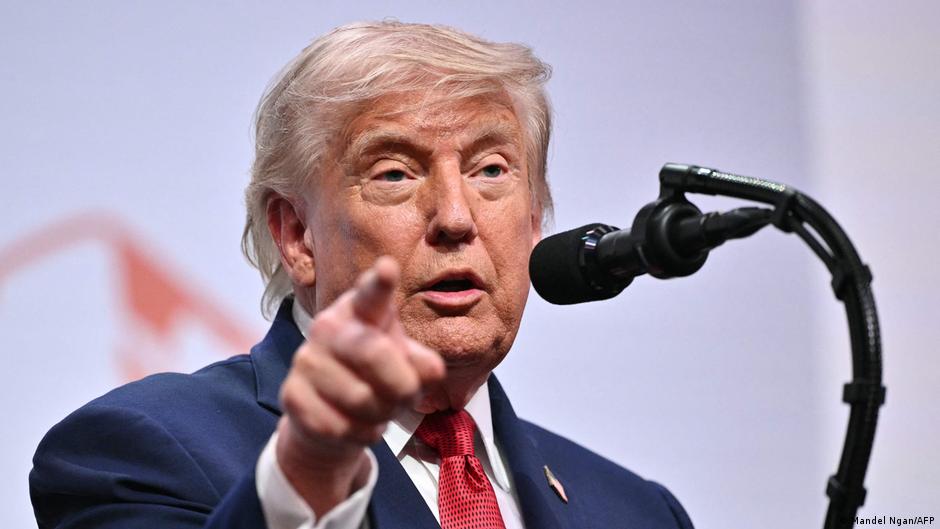
Merz’s remarks came against the backdrop of sharply worsening ties with U.S. President Donald Trump. The tensions have been driven by disagreements over the war by the United States and Israel against Iran, as well as the trade wars initiated by the White House. At the beginning of Trump’s second presidential term, he had taken a favorable view of Merz. Relations deteriorated after the German chancellor refused to support the United States in the war with Iran.
Since then, Trump has criticized German authorities, including by attributing false statements to Merz. Earlier in September, the U.S. president congratulated the far-right Alternative for Germany on its victory in the state elections in Saxony-Anhalt. That was another signal of support from Washington for German right-wing populists, a pattern that had already drawn criticism in Berlin.
From a corporate strategy perspective, this political backdrop matters because it raises the cost of relying on stable U.S.-German alignment as a baseline assumption. German exporters, defense contractors, energy-intensive manufacturers and logistics firms are all exposed to the consequences of trade disputes, sanctions policy, maritime disruption and shifting security commitments. The message from Merz is that management teams may need to treat transatlantic uncertainty as a structural risk rather than a temporary interruption.
Defense Spending and the New Industrial Opportunity
At the same time, Merz framed the strain between Europe, including Germany, and the United States as an opportunity that should not be missed. Germany, he said, must use the moment to assume more responsibility for its own security and development. He pointed in particular to the federal government’s significant increase in defense spending.
That shift has implications for the competitive landscape across sectors. Higher defense outlays can alter capital allocation, procurement priorities and consolidation dynamics in industries ranging from aerospace and electronics to cybersecurity, advanced manufacturing and logistics. For German companies, the strategic question is whether the defense buildup becomes a narrow budgetary response or a broader industrial-policy platform that reshapes supply chains, technology partnerships and M&A activity.
Merz’s framing also suggests a management challenge for Berlin itself. If Germany is to take on greater responsibility for security and development, the government will need to coordinate fiscal choices, procurement reform and industrial capacity at a pace that matches the geopolitical pressure. For businesses, that could create openings in public-private partnerships and defense-adjacent investment, but also expose firms to policy uncertainty if priorities shift under political pressure.
Economic Recovery, but Reform Still on the Table
Merz also pointed to signs of economic recovery after several years of stagnation. He said forecasts indicate that Germany’s economy is expected to grow by about 1.3 percent in 2026. “We have come out of this valley of shrinking or stagnating economy,” the chancellor said, while adding that the country still needs reforms.
For Biz Review’s readership, that combination is central: modest recovery does not remove the need for structural change. A 1.3 percent growth outlook may ease immediate pressure on companies and public finances, but it does not by itself resolve Germany’s longer-term competitiveness questions. Those include energy costs, labor constraints, investment bottlenecks, regulatory complexity and the challenge of maintaining export strength in a more fragmented global market.
Merz’s comments therefore link foreign-policy autonomy with economic restructuring. The underlying strategic argument is that Germany cannot rely on the old transatlantic model while also hoping to restore growth through incremental adjustments. Greater defense responsibility, trade exposure and domestic reform all sit inside the same management problem: how to reposition Europe’s largest economy for a world in which political alliances are more transactional and industrial advantage is more actively contested.
The Trump Call and the Business of Risk Management
Later the same day, German government spokesman Stefan Kornelius said Merz and Trump had held a phone call that Berlin had previously postponed. According to Kornelius, Merz discussed with Trump the “next steps to end” Russia’s war against Ukraine, welcomed the U.S. Congress’s adoption of a sanctions package against Russia initiated by Senator Lindsey Graham, and addressed shipping problems in the Strait of Hormuz and the Red Sea caused by the war in Iran.
The chancellor also referred to the September 11, 2001, terrorist attacks, whose anniversary had originally been the occasion for the planned call between the two leaders. Berlin had postponed the conversation indefinitely one day before it was scheduled, without giving reasons.
The postponement followed Trump’s praise for Alternative for Germany after its convincing victory in the Saxony-Anhalt state parliament election. Berlin reacted with irritation. Metin Hakverdi, the German government’s coordinator for transatlantic cooperation, said Germans were capable of deciding for themselves how to deal with migration and whom to elect. “We do not need advice from the White House on this,” he stressed.
The sequence underscores a more complex bilateral relationship: Berlin and Washington remain engaged on Ukraine, sanctions and maritime security, even as political trust erodes. For companies, that means the alliance is not collapsing into disengagement, but it is becoming less predictable. Strategic planning will have to account for both continued cooperation and sudden political shocks, particularly where trade, sanctions, shipping lanes and defense commitments intersect.
Merz’s larger message is that Germany’s political leadership sees a break with the past not only as a source of risk but as a trigger for strategic repositioning. Whether that repositioning translates into durable competitive advantage will depend on execution: defense investment, economic reform, industrial capacity and the ability of German management teams to adapt faster than the geopolitical environment deteriorates.