Fed Raises Key Rate for First Time in Three Years as Inflation Pressures Mount
The unanimous move under Chair Kevin Warsh signals a strategic shift at the central bank despite political pressure for lower borrowing costs.
The U.S. Federal Reserve has raised the federal funds rate by 25 basis points to a range of 3.75% to 4%, marking its first increase in three years and a notable turn in monetary policy after a cycle of cuts in 2024 and 2025.
The decision, announced by the Federal Reserve on Wednesday evening, September 16, was justified by the need to counter inflation in the United States. All 12 members of the Federal Open Market Committee voted in favor of the increase, underscoring a rare degree of institutional alignment at a moment of heightened economic and political scrutiny.
For companies, lenders and investors, the rate move is more than a macroeconomic adjustment. It changes the cost-of-capital assumptions that underpin acquisitions, refinancing plans, real estate transactions and corporate investment. After three rate cuts in 2024 and another three in 2025, many businesses had been operating on the expectation that borrowing conditions would remain comparatively favorable. The Fed’s latest action challenges that assumption.
A Central Bank Strategy Reset
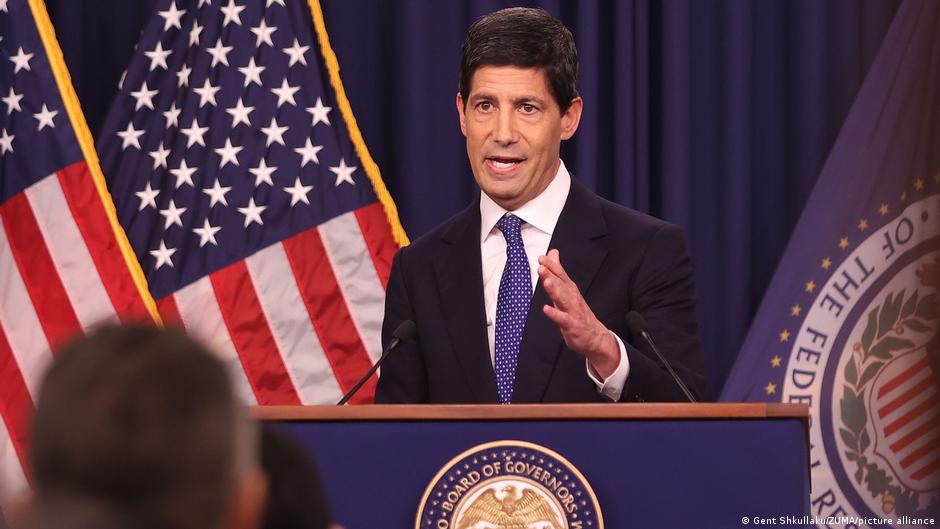
Fed Chair Kevin Warsh framed the decision as a direct response to inflation that has remained above the central bank’s comfort zone for years. Speaking at a press conference, Warsh emphasized that price stability was the central priority under the Fed’s mandate.
“Our main focus within our mandate is directed at ensuring price stability. Quite simply, inflation is too high, and it has continued for too long. That is a fact.”
Warsh said U.S. inflation has exceeded the 2.0% target for five years. In July and August of this year, it stood at 3.4%. That persistence appears to have outweighed the political and market preference for cheaper credit, particularly in interest-sensitive sectors such as housing, construction, consumer finance and leveraged buyouts.
The decision also highlights a key difference between the U.S. Federal Reserve and the European Central Bank. While the ECB is based in Frankfurt am Main, the Fed operates under a dual mandate: maintaining price stability and supporting a strong labor market. That dual responsibility gives Fed officials a broader framework for decision-making, but also exposes them to sharper criticism when rate moves appear to conflict with growth or employment priorities.
Warsh’s Corporate Background Comes Into Focus
The leadership profile of Kevin Warsh gives the decision added business significance. Warsh was nominated as Fed chair by U.S. President Donald Trump and took office in mid-May. He previously served on the Federal Reserve Board of Governors from 2006 to 2011. Before that, he worked as a banker at Morgan Stanley, where he specialized in mergers and acquisitions.
That background is relevant because the latest rate increase will reverberate through the same corporate finance channels in which Warsh built his private-sector career. Higher benchmark rates can affect deal financing, debt service costs, valuation multiples and the economics of leveraged transactions. Companies considering acquisitions may face more expensive financing packages, while targets could see pressure on valuations if buyers revise discount rates upward.
Warsh had also advised Trump on economic policy, which made his nomination notable for investors who expected a rate environment more closely aligned with the president’s preference for low borrowing costs. According to AFP, Trump had expected that Warsh, as Fed chair, would help preserve a low interest rate, which among other effects would make real estate loans more affordable.
Instead, the Fed has moved in the opposite direction. The central bank’s unanimous vote suggests that the inflation data and the risks facing the economy were compelling enough to override the earlier political expectations attached to Warsh’s appointment.
Energy Prices and Competitive Pressure
The broader inflation backdrop has been shaped in part by geopolitical events. According to the source account, the war by the United States and Israel against Iran, ongoing since late February, has led to a sharp increase in energy prices and, as a result, has fueled inflation.
For the corporate sector, energy inflation has a direct impact on margins, logistics costs and pricing power. Companies with high energy exposure may need to reassess procurement strategies, hedging policies and customer pricing. At the same time, firms with stronger balance sheets may gain competitive advantages over rivals that are more dependent on variable-rate borrowing or energy-intensive operations.
The Fed’s rate rise therefore lands unevenly across the competitive landscape. Banks and financial institutions may benefit from wider interest margins, depending on deposit and credit dynamics. Real estate developers, mortgage lenders and highly leveraged companies are likely to face pressure. Consumer-facing companies could see demand soften if higher borrowing costs constrain household spending.
In the M&A market, the decision may slow transactions that rely heavily on debt financing, especially if buyers must reprice risk and lenders tighten terms. Strategic buyers with cash reserves could find themselves in a stronger position relative to financial sponsors that depend more directly on leveraged financing. That shift may influence which companies can pursue acquisitions and which may be forced to delay expansion plans.
Political Backlash Raises Governance Questions
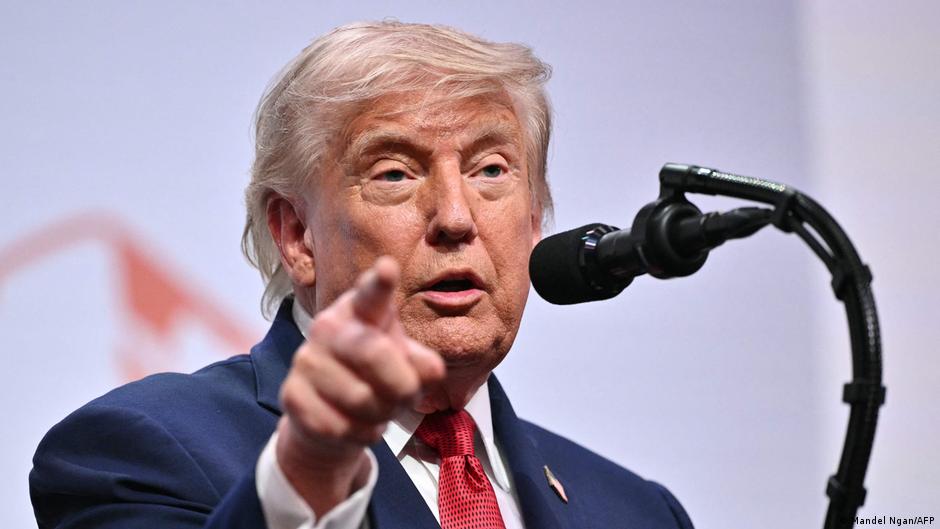
Trump sharply criticized the FOMC’s decision to raise the key rate, saying it was driven by “political motives.” Speaking to journalists in North Carolina on September 16, he said Warsh was “a good man” but argued that the Fed chair had to deal with hostile leadership.
“They are raising the key rate to cause as much harm as possible to Trump. That is, they are raising it for political reasons.”
The criticism places renewed attention on central bank independence, a critical factor for markets and corporate planners. Businesses generally prefer predictability in monetary policy, even when higher rates create near-term pressure. Political conflict around the Fed can add uncertainty to boardroom decisions, particularly for companies weighing long-term capital allocation, major acquisitions or refinancing schedules.
For Warsh, the decision may define the early phase of his chairmanship. His background as an M&A banker and former Fed governor positioned him as a figure familiar to both Wall Street and Washington. But his first major tightening step shows that the Fed, under his leadership, is prepared to prioritize inflation control even when that conflicts with the political desire for lower rates.
The immediate corporate takeaway is clear: the era of easier money that followed multiple cuts in 2024 and 2025 can no longer be assumed. Management teams may need to revisit leverage targets, capital spending plans and acquisition models. Investors, meanwhile, will be watching whether the September move is a single adjustment or the start of a more sustained tightening cycle.