Russian Strikes on Kyiv, Odesa and Sumy Expose Mounting Business Risks
Overnight attacks injured civilians and damaged offices, warehouses, homes and public infrastructure, underscoring operational exposure in Ukraine’s key cities.
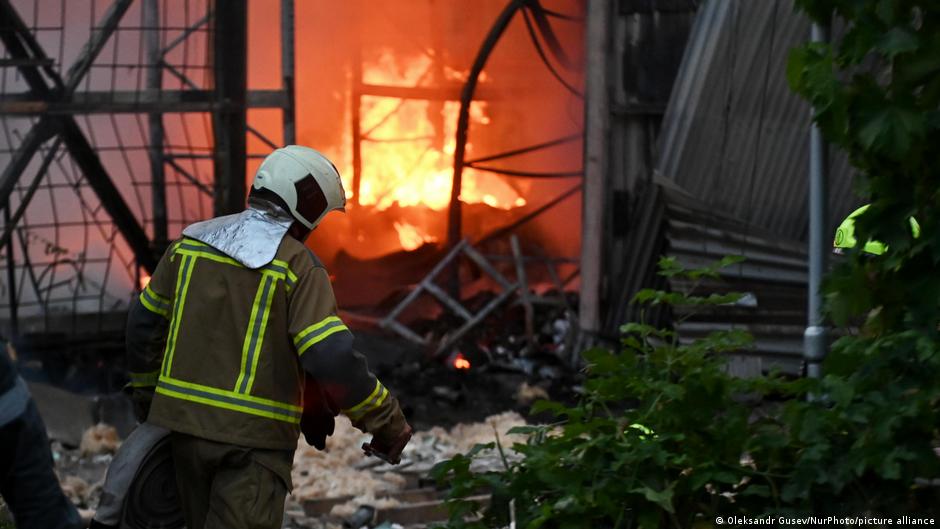
Russia’s overnight strikes on Kyiv, Odesa and Sumy have added another layer of pressure to Ukraine’s urban economy, damaging commercial, residential and public assets while sending a clear signal to companies operating in the country: wartime risk remains broad, unpredictable and difficult to price.
In Kyiv, at least 12 people were injured in Russian strikes carried out during the night of Thursday, September 17, according to the city’s mayor, Vitali Klitschko. Two children, aged 10 and 12, were among those hurt. Kyiv’s city military administration earlier said the 10-year-old injured in the attack was a girl. Klitschko said nine of the injured were in hospitals.
The same night, Odesa authorities reported at least three people injured in a Russian attack on the city, including a four-year-old child. Serhii Lysak, head of the Odesa city military administration, said all of the injured were receiving necessary medical care. He had earlier reported that a multi-storey building in Odesa had been damaged.
In Sumy, emergency officials said one person was killed and nine others were injured, including two children, after Russian air strikes the previous evening. Ukraine’s State Emergency Service said guided aerial bombs destroyed and damaged private residential houses, outbuildings and civilian vehicles.
Damage Extends Beyond Residential Areas
For business leaders, insurers and investors tracking Ukraine exposure, the attacks matter not only because of the human toll but also because of the type of assets affected. In Kyiv, authorities reported damage to warehouse premises in the Solomianskyi and Dniprovskyi districts. The Dniprovskyi district also saw damage to a residential building, according to the city administration.
Klitschko said that in Dniprovskyi district, the glazing and facade of a three-storey office building were damaged. Windows were blown out in several residential buildings. In the Sviatoshynskyi district, according to Klitschko, a non-residential building was also damaged.
Ukraine’s State Emergency Service separately reported that in Kyiv’s Holosiivskyi district, the facade and glazing of a four-storey university building were damaged. The institution was not named. The service’s account indicated there were no deaths or injuries in that incident.
These details are strategically significant because they show the recurring overlap between civilian harm and disruption to the physical infrastructure that supports commerce, education, storage, administration and local services. Warehouses point to supply-chain vulnerability. Office damage affects management continuity and professional services. University damage raises questions for institutions and employers dependent on skilled labor pipelines and urban stability.
“Nine of the injured are in hospitals,” Kyiv Mayor Vitali Klitschko said in a post about the aftermath of the attack.
Corporate Continuity Under Persistent Threat
For companies with employees, suppliers or customers in Kyiv and Odesa, the latest strikes reinforce the need for continuity planning that goes beyond conventional security protocols. Kyiv remains Ukraine’s administrative and economic center, while Odesa is a critical southern city with long-standing importance to logistics and trade. Repeated attacks on urban districts can disrupt staffing, warehousing, transport schedules, office operations and customer-facing activity even when specific company sites are not directly targeted.
The reported damage to warehouse premises in Kyiv is especially relevant for businesses managing inventories, humanitarian supply flows, retail distribution or manufacturing inputs. In wartime conditions, storage facilities are not merely passive real estate; they are nodes in a system where delays can cascade into contractual risk, lost sales, higher insurance costs and emergency relocation expenses.
Office damage in the capital also carries managerial implications. Companies may be able to shift many functions online, but broken windows, damaged facades and staff injuries still create immediate questions about workplace safety, lease obligations, employee transport and psychological strain. Even limited physical damage can force temporary closures or hybrid operating arrangements, especially when attacks occur overnight and emergency assessments are needed before staff return.
Residential damage has a direct commercial dimension as well. When employees’ homes are hit or nearby buildings are damaged, businesses face absenteeism, relocation requests, emergency assistance needs and productivity losses. Those pressures are particularly acute when children are among the injured, as reported in Kyiv, Odesa and Sumy.
Competitive Landscape and Investment Calculus
The attacks also shape the competitive landscape for domestic and foreign companies. Firms with deeper risk-management capacity, diversified locations, redundant suppliers and stronger liquidity are better positioned to absorb shocks. Smaller businesses, local service providers and single-site operators face more severe exposure when strikes damage nearby infrastructure or interrupt consumer traffic.
In practical terms, management teams operating in Ukraine must weigh three linked questions: where assets are located, how quickly operations can be moved or restored, and what support systems exist for employees. These are no longer narrow security decisions. They influence capital allocation, merger and acquisition diligence, insurance negotiations, supplier selection and board-level oversight.
For potential acquirers or strategic investors, the latest attacks illustrate why Ukrainian assets require risk-adjusted valuation frameworks. Damage to offices, warehouses, housing and educational facilities does not necessarily halt economic activity, but it changes the assumptions behind growth forecasts, operating margins and integration timelines. Buyers assessing targets in logistics, real estate, consumer goods, education-linked services or urban infrastructure must account for both direct asset risk and indirect disruption.
At the same time, companies that remain operational in major Ukrainian cities may gain strategic advantages from resilience, local knowledge and customer loyalty. The competitive divide is likely to favor organizations able to combine decentralized operations with fast decision-making, employee support and flexible logistics. In that sense, wartime management capability has become a core business asset rather than a back-office function.
Urban Risk Remains Central
Ukraine’s air force reported during the night of September 17 that missiles were moving toward Kyiv. The subsequent accounts from city, military and emergency officials describe a pattern of damage across multiple districts and asset types, from residential buildings to warehouses, offices and a university building.
The human impact remains the central fact: civilians were injured in Kyiv and Odesa, children were among the wounded in all three cities, and one person was killed in Sumy. But for business readers, the events also underline a broader strategic reality. Ukraine’s urban economy continues to function under conditions in which management decisions, investment assumptions and competitive positioning can be reshaped overnight by attacks on civilian areas and adjacent commercial infrastructure.
For boards and executives, the lesson is not simply that Ukraine is a high-risk market. It is that the risk is dynamic, district-specific and operationally complex. The latest strikes show why companies need scenario planning that connects people, property, logistics and governance, rather than treating security as a separate line item.