U.S. Charges Russians in Alleged Terror Financing and Assassination Network
Prosecutors say the RIS Network operated as a Russian state-linked platform for overseas attacks, targeting Ukraine’s allies and dissidents.
U.S. prosecutors have accused several Russian citizens and alleged associates of operating within a global network that, according to the Justice Department, financed terrorism and conspired to carry out contract killings around the world, including on U.S. soil. The case, brought in the Southern District of New York and announced in a Justice Department press release on Tuesday, September 15, places the alleged RIS Network at the center of what U.S. authorities describe as a Russian state-linked apparatus for attacks abroad.
For business and risk leaders, the allegations are not only a national security matter. They also point to a broader operating environment in which geopolitical conflict, covert action, sanctions exposure and cross-border law enforcement increasingly intersect. The Justice Department’s account suggests a structured organization with senior managers, recruiters, coordinators and alleged operational tasking, a profile that resembles a networked enterprise rather than an ad hoc conspiracy.
According to the indictment summarized by prosecutors, the accused paid people in the United States and other countries to conduct preliminary surveillance and targeted killings. They also allegedly instructed accomplices to carry out and attempt terrorist attacks against civilian and military infrastructure in European countries that support Ukraine, or that were perceived as supporting Ukraine. The FBI took part in the investigation.
A Networked Model for Overseas Operations
The Justice Department described RIS Network as a unit of the Russian state apparatus involved in foreign attacks, including killings. Prosecutors said the network had focused on Russian dissidents and defectors and, more recently, on countries regarded as allies of Ukraine. That evolution, if proven in court, would indicate a shift in operational priorities from targeted political repression toward a wider campaign against states and infrastructure connected to the war in Ukraine.
The allegations identify several figures who U.S. authorities say held senior roles within RIS Network. Yuri Khrameev, also known by the nickname “Colonel Yuri,” is described as a former colonel in Russian special services who participated in recruiting people to commit killings against Russian dissidents. His son, Kirill Khrameev, is identified by U.S. prosecutors as an FSB officer. The father-son pairing, as described by the indictment, underscores the government’s theory that the alleged activity was embedded in a hierarchy with links to Russian security services.
Another defendant, Cuba-born Russian resident Oemis Romagoza Durruti, is suspected of coordinating the network’s attacks. Also named as suspected recruiters are Cuban national Yaidel Delgado Suarez, known as “Viking,” and Venezuelan citizen Angel Eduardo Castro. U.S. authorities said all of the accused are currently wanted.
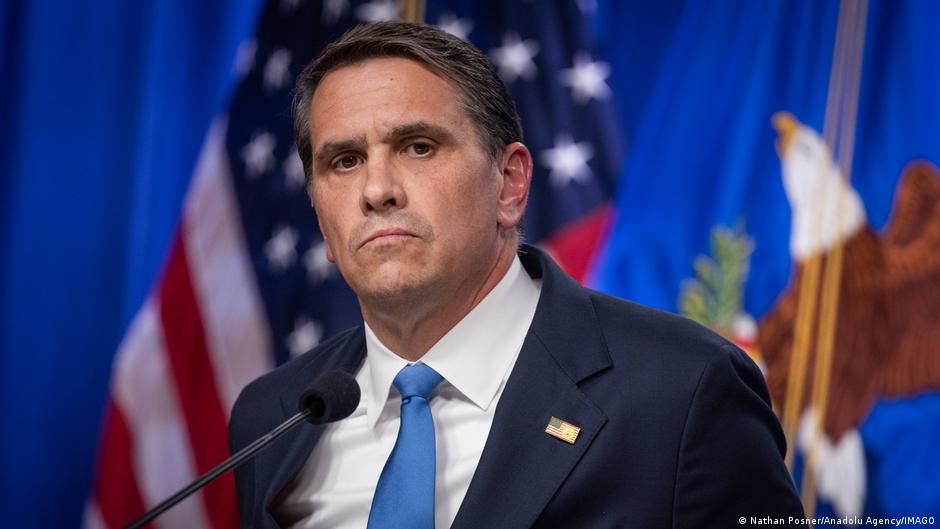
According to Assistant Attorney General for National Security John Eisenberg, the defendants “tried to recruit U.S. citizens and foreigners to carry out killings on behalf of the Kremlin.”
The case also includes allegations tied to the United States directly. ABC News, citing U.S. Attorney General Todd Blanche, reported that the charges concern, among other things, attempts to murder an unnamed Russian dissident whom the defendants believed to be in Washington, D.C. That claim, if established, would broaden the implications from overseas political violence to alleged operational planning inside the U.S. capital.
Strategic Implications Beyond the Courtroom
The charges come against the backdrop of intensified scrutiny of Russian state-linked activity in Western jurisdictions since the full-scale invasion of Ukraine. For governments, financial institutions and multinational companies, the case illustrates how national security investigations can quickly create compliance and reputational risks for any organization indirectly exposed to sanctioned actors, informal payment channels, logistics support or cross-border facilitation networks.
The Justice Department’s terrorism-financing allegations are especially significant. Prosecutors say the five named figures face up to 20 years in prison on that charge. Yuri Khrameev, Suarez and Castro are also charged with conspiracy to commit murder for hire, which carries a possible sentence of up to 10 years. The defendants have not been reported as being in U.S. custody, meaning the case may proceed as both a criminal matter and a diplomatic pressure point.
From a corporate strategy perspective, the case reinforces the need for companies operating in sensitive sectors to revisit their exposure to geopolitical risk. Businesses involved in infrastructure, logistics, payments, telecommunications, security services and dual-use technologies may face heightened scrutiny if their services can be used, directly or indirectly, by covert networks. The alleged use of recruitment and compensation across multiple countries also highlights the difficulty of monitoring informal human networks that can sit outside conventional corporate supply chains.
The management challenge is therefore not limited to sanctions screening. Companies may need stronger escalation processes for suspicious counterparties, unusual payment patterns, politically exposed individuals and requests involving high-risk jurisdictions. Boards and executive teams are increasingly expected to understand how political violence, intelligence activity and war-related enforcement actions can affect market access, licensing, insurance, banking relationships and employee safety.
The competitive landscape is also shifting for firms that advise on risk, compliance, investigations and security. Cases such as this one expand demand for due diligence that goes beyond financial crime controls and into intelligence-led risk analysis. Businesses with operations in Europe, the United States and countries aligned with Ukraine may seek more sophisticated threat assessments as authorities describe adversarial networks as transnational, adaptive and capable of targeting both individuals and infrastructure.
At the center of the U.S. case is the allegation that RIS Network functioned as a global mechanism for targeted violence, with activities extending into the United States and Europe. The defendants remain wanted, and the accusations will have to be tested in court. Even at this stage, however, the charges sharpen the business reality that geopolitical confrontation is no longer contained within diplomacy or military theaters. It is increasingly becoming a legal, operational and strategic risk for institutions far beyond government.