Russian drone strikes hit Kyiv fuel stations, warehouses and Odesa port assets
The attacks on logistics, port and transport infrastructure underscore how military pressure is disrupting Ukraine’s operating environment.
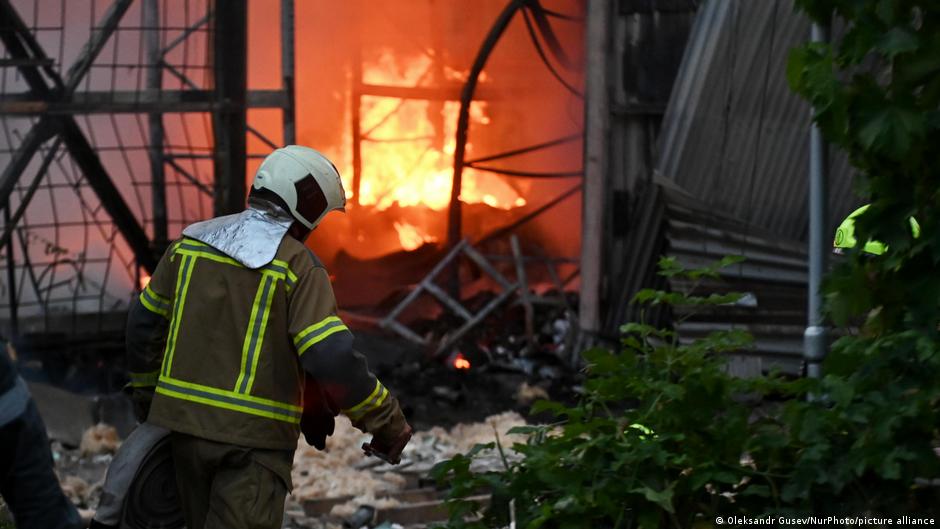
Russian drone strikes on Kyiv fuel stations and warehouse facilities, alongside a mass attack on civilian infrastructure in the Odesa region, have again put Ukraine’s logistics networks, transport assets and urban commercial infrastructure at the center of the war’s economic damage. Authorities in the Ukrainian capital said seven people were initially injured in the Kyiv attacks, with all of them taken to hospitals and two in serious condition. Kyiv Mayor Vitali Klitschko later said that one of those hospitalized had died.
The strikes, reported on Tuesday morning, September 15, targeted fuel stations in Kyiv’s Darnytskyi and Holosiivskyi districts, according to Klitschko. The Kyiv City Military Administration also reported a Russian strike on warehouse premises in the Obolon district in the north of the capital. An air alert was declared in Kyiv and the surrounding region, with a yellow danger level announced.
For businesses operating in Ukraine, the latest attacks highlight a central strategic challenge: the war is not only a military contest but also a sustained campaign against the infrastructure that supports commerce, distribution, fuel supply and port activity. Fuel stations, warehouses, logistics sites and transport infrastructure form the practical backbone of domestic supply chains. Damage to such assets can slow deliveries, raise operating costs, complicate inventory planning and force companies to rethink risk management across regions exposed to aerial attacks.
Infrastructure pressure and supply-chain risk
In the Odesa region, Russian forces carried out what local officials described as a massive attack on civilian infrastructure. Odesa’s role as a transport and port hub gives attacks there a broader commercial significance beyond the immediate physical damage. Regional military administration head Oleh Kiper wrote on Telegram that residential buildings, logistics facilities, port and transport infrastructure were hit. He also said roofs, facades and windows of private homes were damaged, along with dozens of garages and cars.
“Residential buildings, logistics facilities, port and transport infrastructure came under attack,” Oleh Kiper wrote, according to the report.
The damage profile described by local authorities points to a broad operational burden: private property losses, transport disruption and potential interruptions to cargo handling or related logistics. For companies with exposure to Ukrainian ports, storage networks, fuel distribution or inland transport, such incidents reinforce the need for redundancy, contingency routing and greater insurance scrutiny. They also show how attacks on civilian infrastructure can ripple through commercial decision-making, even when precise monetary losses are not immediately disclosed.
The Zaporizhzhia region also reported that an infrastructure facility was hit by Russian-launched drones. Regional authorities said emergency services were extinguishing a fire at the site. One person was killed and another was injured in the raid, according to the regional administration. The attack adds to a pattern in which regional infrastructure assets remain vulnerable, creating a highly uneven operating environment for both public services and private enterprises.
Scale of the drone attack
Ukraine’s Air Force said Russia attacked Ukraine using 200 strike drones of the Shahed and Gerbera types, as well as Parodiya decoy drones. According to preliminary data cited by the Air Force, Ukrainian air-defense units shot down or suppressed 187 Russian drones. The statement also reported impacts by aerial attack weapons at seven locations and the fall of downed debris in three places.
The figures underline the industrial character of the drone campaign. From a business perspective, the use of large numbers of strike and decoy drones increases the unpredictability facing transport operators, warehouse managers, fuel retailers and port-linked businesses. Even when most drones are intercepted or suppressed, falling debris and the few successful strikes can still damage assets, disrupt work schedules and affect employee safety. Companies operating in affected cities must account for downtime, emergency response procedures and staff relocation or shelter protocols as recurring operational risks.
Russia’s Defense Ministry, which is in the fifth year of its full-scale war against Ukraine, claimed that the strikes were carried out against “logistics centers and ports of Ukraine, as well as maritime vessels involved in the interests of the Armed Forces of Ukraine.” Ukrainian regional authorities, however, reported damage to fuel stations, warehouse premises, residential buildings, logistics assets, port and transport infrastructure, and private property.
The gap between Moscow’s stated targeting rationale and the damage reported by Ukrainian officials is significant for corporate risk assessment. Investors, insurers and multinational companies tend to examine not only official military claims but also the observed effect on civilian and commercial infrastructure. The reported damage to fuel stations, warehouses and port-related systems raises questions for any organization assessing continuity planning in Ukraine, especially in sectors dependent on transport reliability and physical distribution networks.
There is no indication in the source report of specific corporate ownership of the damaged fuel stations, warehouses, logistics facilities or port assets. That limits the ability to assess balance-sheet exposure for individual companies. Still, the type of infrastructure affected is commercially important. Fuel retail sites support urban mobility and delivery fleets; warehouses support inventory flows; ports and transport infrastructure connect domestic producers with external markets and supply channels.
Management teams operating in or around Ukraine’s major cities are therefore likely to view such attacks as a reminder that wartime resilience is no longer a back-office function. Decisions about site selection, stock levels, route diversification, emergency staffing and supplier contracts are increasingly strategic. In a competitive landscape shaped by security risk, companies able to maintain distribution and protect personnel may gain relative advantage over rivals with thinner contingency capacity.
The latest strikes also underscore the strategic value of air defense for economic continuity. Ukraine’s reported interception or suppression of 187 of 200 drones suggests that defensive systems can materially reduce the scale of damage, but not eliminate disruption entirely. For business leaders, that distinction matters. Reduced risk is not the same as normalized operations, and the persistence of strikes on infrastructure means investment decisions will continue to be filtered through security assumptions.
As of the reported Tuesday morning events, the confirmed human toll included one death among those hospitalized after the Kyiv strikes, one death and one injury in Zaporizhzhia, and multiple injuries in the capital. The physical toll included impacts on Kyiv fuel stations and warehouses, infrastructure in Zaporizhzhia, and civilian, logistics, port and transport infrastructure in the Odesa region. The commercial consequences will depend on the extent of asset damage, repair timelines and the ability of operators to keep supply chains functioning under continued attack.