Trump Says U.S. Will Remove 10% Tariff on Irish Whiskey Imports
The announcement gives Irish whiskey producers a potential reprieve from EU-wide spirits duties and signals a targeted shift in U.S.-Ireland trade policy.
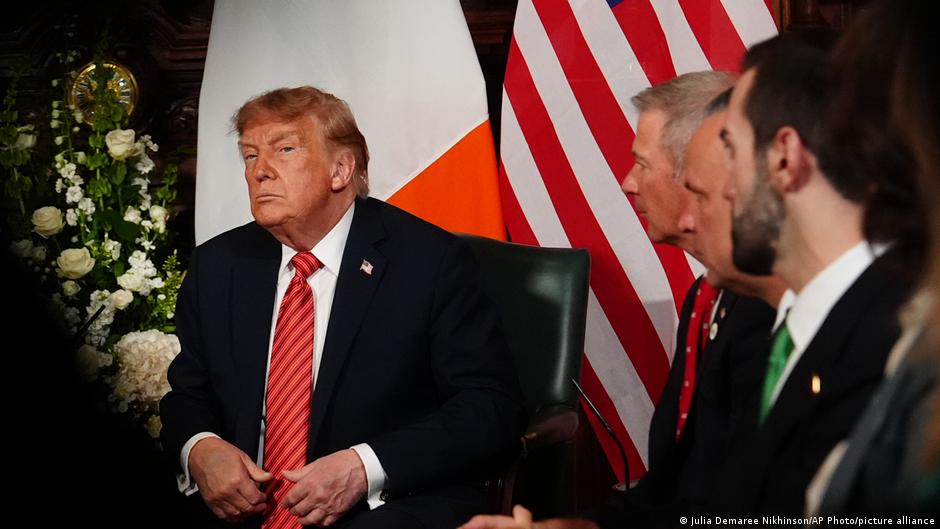
U.S. President Donald Trump said the United States will remove a 10 percent tariff on Irish whiskey, announcing the decision at the end of a visit to Ireland and framing it as a response to repeated appeals from Irish political and sporting figures.
Trump made the statement on Sunday, September 13, in Ireland before a cheering crowd of Irish golf enthusiasts during a tournament held at a golf club owned by his family. According to Trump, the requests to cancel the tariff came from several quarters, including Irish Prime Minister Micheal Martin and leading Irish golfer Shane Lowry.
The move, if fully implemented, would carve out a significant exception for one of Ireland’s best-known export categories at a time when wine and spirits shipped from the European Union to the United States remain subject to broader U.S. duties. The levy currently applies as part of tariffs covering all EU wine and spirits exports to the American market.
“Nothing characterizes the trade relationship between the U.S. and Ireland better than Irish whiskey,” Irish Whiskey Association director Eoin O’Cathain said in a statement.
The Irish Whiskey Association welcomed Trump’s announcement and said it hoped the decision would be fully implemented, according to Reuters. For producers, the key business question now is not only the political value of the pledge, but the timeline and administrative certainty around its execution.
Strategic Relief for a Signature Export
For Irish whiskey makers, tariff removal would amount to a direct improvement in the economics of selling into the United States. A 10 percent import duty can weigh on pricing, margins, distributor negotiations and brand positioning, particularly in a category where premiumization and international growth are central to corporate strategy.
Although Trump’s comments did not include implementation details, the announcement alone is commercially meaningful because it points to a possible easing of one cost pressure affecting the sector. Whiskey companies planning U.S. inventory, marketing spend and distribution agreements would be watching for confirmation that the tariff is formally withdrawn rather than merely signaled in a public appearance.
The decision also underscores how product-specific trade measures can shape competitive dynamics within a broader beverage market. Irish whiskey competes for shelf space, bar programs and consumer attention against other imported spirits as well as domestic alternatives. Removing a duty from Irish whiskey while broader EU wine and spirits tariffs remain in place could improve the category’s relative position in the U.S. market, depending on how the exemption is structured.
Politics, Business and Brand Diplomacy
The setting of the announcement was striking from a business standpoint. Trump delivered the statement in a golf environment, in a club owned by his family, and cited both Ireland’s prime minister and a prominent Irish golfer among those who had pressed for relief. That combination illustrates the unusual mix of political diplomacy, personal networks, sports culture and commercial symbolism around the decision.
For corporate leaders in the Irish whiskey industry, the episode highlights the importance of stakeholder engagement beyond conventional trade channels. A tariff affecting a major export category is typically addressed through government negotiations, industry lobbying and regulatory processes. In this case, the public narrative presented by Trump placed personal appeals and high-profile Irish figures at the center of the decision.
That does not reduce the commercial stakes. It may, however, influence how companies and trade associations manage communications with investors, distributors and partners. The Irish Whiskey Association’s response was deliberately positive but cautious, welcoming the announcement while expressing hope that it would be fully implemented. That phrasing reflects a familiar management challenge: translating a political declaration into operational confidence.
Competitive Landscape in U.S.-EU Spirits Trade
The broader context matters because the tariff is not described as a standalone measure aimed only at Irish whiskey. The duty is currently collected within a wider framework applying to EU wine and spirits exports to the United States. That means the announced removal raises questions about whether Irish whiskey would receive distinct treatment within a larger trade regime or whether the move could signal more extensive changes affecting other European beverage producers.
From a competitive perspective, a targeted exemption for Irish whiskey could create an advantage for Irish producers relative to other EU alcohol categories that continue to face the levy. U.S. importers and retailers tend to factor tariff costs into purchasing decisions, promotional calendars and shelf pricing. Even a modest change in landed cost can influence which products receive emphasis in a crowded market.
For management teams, the most immediate strategic issue is certainty. If the tariff is removed, companies may have greater room to invest in U.S. growth, support distributors, adjust pricing strategies or protect margins. If the process is delayed or remains unclear, executives may hesitate to make aggressive changes until customs treatment and regulatory guidance are confirmed.
The announcement may also strengthen the negotiating position of Irish whiskey producers with American partners. Distributors and retailers that had priced in tariff-related costs could revisit terms if the duty is eliminated. At the same time, producers may face pressure to pass savings through the chain rather than retain the full benefit as margin improvement.
Implementation Is the Business Test
The decisive issue now is whether the pledge becomes enforceable policy. Trump said the 10 percent tariff on Irish whiskey would be canceled, but the source account does not specify the mechanism, timing or legal process for doing so. Until those details are available, companies are likely to treat the announcement as a positive signal rather than a completed commercial change.
For Ireland’s whiskey industry, the announcement offers a clear upside: potential relief in a major export market and a high-profile endorsement of the product’s role in U.S.-Ireland trade relations. For competitors across the European wine and spirits industry, it introduces a fresh question about differentiated tariff treatment and the future direction of U.S. trade policy toward EU alcohol exports.
In that sense, Trump’s statement is more than a narrow tariff update. It is a reminder that corporate strategy in globally traded consumer goods can turn on political decisions, personal diplomacy and category-level lobbying. Irish whiskey producers now have a public commitment from the White House. Their next challenge is converting that commitment into predictable commercial advantage.