China Warns U.S. Against Space War Preparations After Weapons Disclosure
Beijing’s response to Washington’s confirmation of orbital military assets highlights a widening strategic contest with major defense and commercial implications.
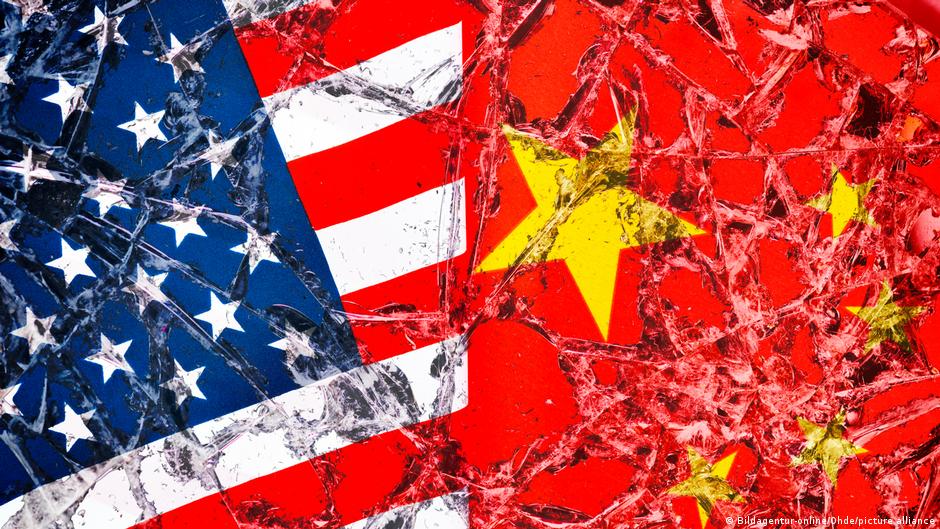
China has urged the United States to stop preparing for conflict in space after Washington for the first time officially confirmed that it has deployed weapons systems in orbit. The exchange marks a sharp escalation in public messaging around military competition beyond Earth, where national security strategy, defense procurement and commercial satellite infrastructure increasingly overlap.
The U.S. Space Force said American assets already positioned in orbit can support both defensive and offensive missions. In its statement, the service singled out China and Russia as key space-related threats, framing the disclosure as part of a broader push to maintain control of an operating domain now considered essential to modern warfare.
China’s Foreign Ministry responded on Tuesday, September 15, warning against the “militarization of space,” its transformation into a battlefield, and an arms race in outer space. Foreign Ministry spokesman Guo Jiakun said at a briefing that Beijing was calling on Washington to halt the build-up of military capabilities and preparations for war in space.
“We urge the American side to stop building up military power and preparing for war in space,” Guo Jiakun said.
A New Phase in Space Competition
The U.S. disclosure came one day earlier, on September 14, when Air Force Secretary Troy Meink said the United States has space-control assets located in orbit. He said those assets, operated by the U.S. Space Force, are able to protect the joint force from hostile actions, but did not provide details about the weapons themselves.
The Space Force statement said space control covers capabilities needed to ensure and protect control of space and that such tools may be used for both offensive and defensive purposes. It also referred to the use of kinetic and non-kinetic means, language that leaves room for a wide range of systems, from physical strike capabilities to electronic, cyber or other forms of interference.
For defense contractors, satellite operators and technology suppliers, the confirmation signals a more explicit market direction. Space is no longer treated only as an enabling layer for navigation, surveillance and communications. It is increasingly being organized as an operational arena where governments are expected to procure systems capable of protecting assets, denying access to adversaries and sustaining military networks under attack.
The statement’s naming of China and Russia is also significant for corporate strategy. China, according to the U.S. Space Force, is developing and operating space action assets and counterspace defense systems as part of its military modernization strategy. Russia, it said, views space as a theater of military operations and assumes that dominance in space will become a decisive factor in future conflicts.
Management Decisions and Strategic Signaling
The creation of the U.S. Space Force in 2019 during Donald Trump’s first presidential term reflected a management decision inside the U.S. defense establishment: to separate space operations into a distinct military branch in response to perceived threats from Russia and China. The latest confirmation of orbital systems shows how that institutional shift has matured into a more visible doctrine and procurement posture.
For Washington, openly acknowledging such assets may serve several objectives. It can reassure military planners and allies that the United States is investing in resilience and deterrence. It can also signal to competitors that attacks on U.S. space infrastructure may be met with capabilities already in position. At the same time, disclosure without technical detail preserves ambiguity, a common feature of deterrence strategy.
For Beijing, the public warning allows China to position itself as opposing the weaponization of space while criticizing the U.S. as the actor accelerating militarization. That message is likely aimed not only at Washington but also at third countries weighing their own defense partnerships, satellite dependencies and diplomatic stance on space governance.
The competitive landscape is complicated by the legal framework. The 1967 Outer Space Treaty prohibits the placement of nuclear weapons in space. The United States, Russia and China are among its parties. The treaty requires the exploration and use of outer space to be carried out for peaceful purposes, but it does not apply to conventional weapons placed on satellites or spacecraft.
That gap matters commercially and strategically. Past concerns focused most heavily on nuclear weapons in orbit. Today, the more immediate risks include hacking satellites and interfering with their operation. Such capabilities can affect military communications, surveillance and navigation while also creating risks for commercial networks used by governments and private-sector customers.
Russia, in particular, is suspected of developing weapons against Starlink satellites used by the Ukrainian military. AFP notes that Russia, the United States, China and India are examining options outside the treaty framework, including strikes on adversaries’ satellites that play important roles in military communications, observation and navigation.
The business implications extend across the space economy. Companies supplying launch services, satellite buses, sensors, cybersecurity, signal protection and command-and-control systems may face stronger demand from governments seeking redundancy and protection. But they also face greater geopolitical exposure, especially when commercial infrastructure becomes entangled with military operations.
The U.S.-China exchange therefore is not only a diplomatic clash. It is a sign that space strategy is moving further into the center of defense planning, industrial policy and technology competition. As military and commercial systems become more interconnected, management decisions made by governments and aerospace companies will shape not just national security doctrine, but the structure of the next phase of the space market.