Memorial Campaign Adapts Its Model to Reach 101 Cities Worldwide
The Return of the Names initiative has expanded internationally and decentralized its Russian operations amid sustained regulatory pressure.
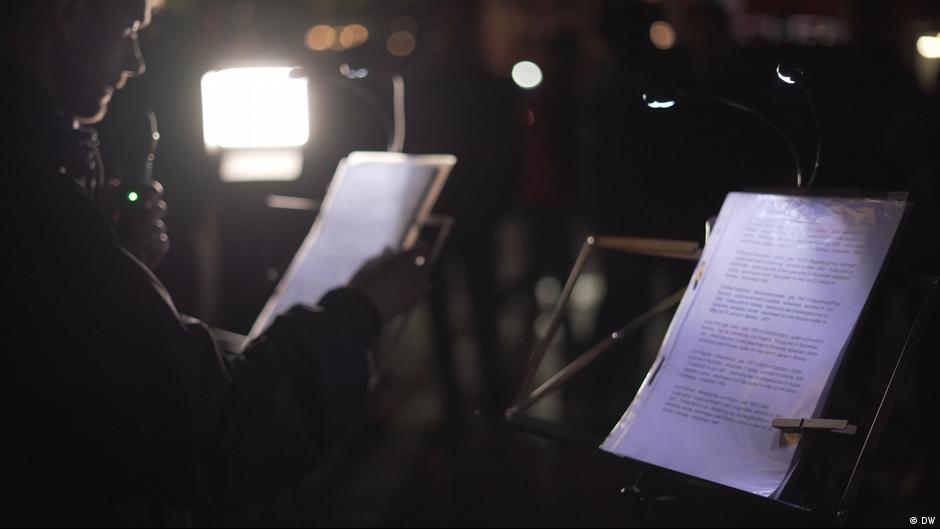
The annual Return of the Names commemoration for victims of Stalin-era repression was held across multiple countries on Thursday, October 29, ahead of the Day of Remembrance of the Victims of Political Repression. The campaign’s website listed 101 cities where events took place this year, either on October 29 or earlier.
Beyond its commemorative purpose, the initiative illustrates how a civic organization can preserve its activities after losing its original institutional center. International Memorial first organized Return of the Names in 2007. Following Memorial’s liquidation in 2021 and years of restrictions on public commemorations in Russia, the campaign has evolved into a geographically dispersed network involving overseas associations, local organizers and private participants.
A decentralized response to institutional pressure
Russian authorities have declined to authorize Return of the Names events since 2020, initially citing measures intended to combat the coronavirus. Pressure on independent historical-memory initiatives intensified after the liquidation of International Memorial in 2021, according to French media company RFI.
“However, the campaign did not disappear: it continued in other countries, while people in Russia still find ways to honor those who died,” RFI said.
This transition amounts to a significant operating-model change. A campaign once closely associated with a prominent organization and a highly visible gathering in central Moscow now relies on distributed participation. That structure limits dependence on a single legal entity, venue or management team, while allowing local groups to adapt events to their own regulatory and logistical circumstances.
The model was visible in Russia this year. Investigative online publication The Insider reported that independent commemorations for victims of repression were held for the first time since Memorial was banned. Events took place in the Irkutsk region, Kirov and Veliky Novgorod. Similar commemorations were scheduled for October 30 in St. Petersburg, Kopeysk in the Chelyabinsk region and Tolyatti in the Samara region.
In Moscow, diplomats from Sweden, the Czech Republic, the Netherlands, Poland and other countries visited the Solovetsky Stone on Lubyanka Square. Online outlet RusNews reported that no representative of the US Embassy attended this year.
International reach and local execution
Germany accounted for 15 participating cities, including Berlin, Munich, Hamburg, Cologne, Bonn, Düsseldorf, Bremen and Bielefeld, as well as other locations. The breadth of participation in one national market demonstrates the campaign’s capacity to operate through multiple local nodes rather than concentrate resources in a capital city alone.
In Paris, the event was organized by the Memorial France association, according to RFI. Participants gathered at the monument to Parisians who died in the fighting of the First World War on Boulevard de Ménilmontant. The choice of an established memorial site connected the campaign’s specific focus on Soviet repression with a broader European culture of public remembrance.
Return of the Names combines in-person readings, remote participation and online broadcasts. This hybrid approach gives the organizers a degree of strategic flexibility: physical gatherings maintain local visibility and symbolic value, while remote readings and livestreams make participation possible where public assembly is constrained or where communities are too dispersed to sustain a large event.
Scale, continuity and competitive attention
The first Return of the Names event took place on October 29, 2007, at the Solovetsky Stone on Moscow’s Lubyanka Square. Those assembled read aloud the names of people executed or otherwise repressed by the Soviet state. The repeated reading of individual names has remained the campaign’s defining format and differentiates it from conventional rallies or institutional ceremonies.
The initiative’s website says Return of the Names was held in 150 cities in 2025, compared with 101 cities listed for the current year. The figures indicate a smaller reported geographic footprint this year, although the source does not specify why the total changed or whether the two counts were compiled on an identical basis.
For organizations operating in politically sensitive fields, the campaign offers a case study in continuity under pressure. Its survival has depended less on consolidation, acquisitions or formal expansion than on transferring responsibility across borders and empowering local partners. Memorial France’s role in Paris, the network of events across Germany and the emergence of self-organized commemorations inside Russia show how a recognizable format can be retained even when centralized management is disrupted.
The competitive landscape is not commercial, but it still involves competition for public attention, venues, institutional legitimacy and organizational capacity. Return of the Names has responded by preserving a clear identity while diversifying how and where the campaign is delivered. Sixteen years after its first Moscow gathering, its continued operation across 101 cities suggests that decentralization has become not merely a contingency measure, but a core strategic feature.