UK and Netherlands Structure New Multibillion Aid Packages for Ukraine
The funding combines military support with export guarantees, reconstruction capital and incentives for corporate investment in Ukraine.
Britain and the Netherlands have unveiled new aid commitments to Ukraine that combine immediate military requirements with longer-term financing for reconstruction, industrial capacity and private-sector investment. The packages reflect an increasingly layered approach in which governments are using loans, guarantees and targeted funds alongside direct assistance.
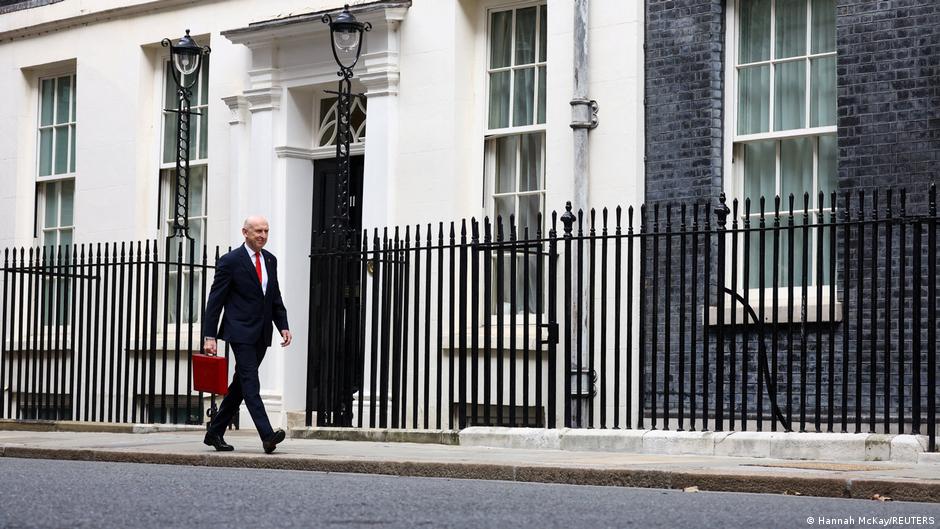
London will provide an additional £10 billion, equivalent to about €12 billion, according to British Finance Minister John Healey. Speaking in the House of Commons, Healey said the package would include loans, export finance guarantees and £500 million in emergency military assistance for the coming winter.
The structure is significant from a business perspective because it extends beyond a conventional grant. Export finance guarantees can reduce risk for companies and lenders involved in supplying Ukraine, potentially mobilising commercial activity that would otherwise be constrained by wartime uncertainty. Loans add another financing channel, while the dedicated military allocation addresses the country’s immediate security needs.
“You made my day,” Ukrainian President Volodymyr Zelensky was quoted by Healey as saying after learning of the additional British commitment.
Security spending underpins the broader financing strategy
A British government spokesperson cited by Reuters said the £500 million in emergency military aid was intended to close urgent gaps in Ukraine’s air defences. That objective links the short-term military component to the viability of wider economic support: energy assets, industrial sites and prospective investments all depend on protection from aerial attacks.
Healey said he and British Prime Minister Andy Burnham spoke with Zelensky before the parliamentary announcement. Zelensky later described the new British financial and military assistance on Telegram as a “truly powerful and timely step,” arguing that Moscow must see and feel that Ukraine will not be left alone with the problems Russia is seeking to expand.
“Every step to strengthen Ukraine brings Russia closer to understanding that it must end this war,” Zelensky said. He added that sanctions policy was another subject discussed with Burnham and said Britain would continue to maintain a principled position, describing it as an important example for the rest of the world.
The announcement also comes amid continued pressure on companies connected to the defence sector. On October 27, Russia’s Foreign Ministry said that, in response to what it called London’s hostile anti-Russian policy, seven representatives of British defence plants would be added to Russia’s entry blacklist.
Dutch package opens a pathway for corporate participation
The Netherlands is pursuing a similarly blended model. Following a meeting with Zelensky in The Hague on October 28, Dutch Prime Minister Rob Jetten announced €500 million in military assistance for Ukraine during the coming winter. Reuters reported that the money was expected to finance drones and other materials needed to strengthen Ukrainian defences.
The Dutch government will also allocate €1.2 billion in non-military support over the next three years. Of that total, €380 million is earmarked for reconstruction in 2027, followed by €410 million in each of 2028 and 2029. The multiyear schedule gives government agencies, investors and suppliers a clearer planning horizon than a single emergency disbursement would provide.
Part of the funding is due to flow to funds that help Dutch companies invest in Ukraine’s reconstruction. This creates a direct corporate channel within the aid programme, potentially supporting companies that can provide equipment, technology, engineering capacity or other reconstruction services while sharing some of the elevated financial risk with public institutions.
Other Dutch funds will be used for urgent repairs to Ukraine’s energy infrastructure and for purchases of industrial machine tools. Those priorities point to two complementary goals: preserving essential services during wartime and rebuilding productive capacity. Restoring energy systems can help businesses continue operating, while machine-tool purchases may support domestic manufacturing and reduce bottlenecks in industrial production.
Defence, energy and software partnerships move into focus
Zelensky also said on X that he and Jetten met Ukrainian and Dutch companies working in defence, energy and software. Following the meeting, their teams were instructed to develop a special air-defence project named Bliksem.
The project illustrates how bilateral assistance is increasingly connected to sector-level cooperation. Defence manufacturers, energy businesses and software companies bring capabilities that governments may seek to combine in integrated programmes, particularly in air defence, where hardware, power resilience, communications and digital systems can all be operationally relevant.
For Ukraine, the British and Dutch commitments address winter security while laying foundations for reconstruction and industrial renewal. For participating European companies, the packages could create opportunities backed by public finance, although operating risks remain substantial. Strategically, both governments are signalling that immediate defence procurement and longer-term economic recovery are being treated as parts of the same policy framework rather than as separate phases.