Flávio Bolsonaro Claims Leadership as Brazil’s Political Risk Deepens
The defeated candidate’s challenge from abroad raises questions about party control, institutional stability and Brazil’s business environment.

Brazil’s post-election confrontation has entered a new phase after Senator Flávio Bolsonaro, the defeated presidential candidate of the right-wing Liberal Party, declared himself the country’s “leader” and promised to challenge the result from abroad.
Bolsonaro, who secretly left Brazil for the United States after losing the election, published what he called a “letter to the Brazilian people” on X during the night of Thursday, October 29. Media reports said the original version described him as Brazil’s “true president” and “president-elect,” but those formulations were later removed.
The revisions suggest an effort to maintain the strongest possible claim to political leadership while limiting exposure from language that directly contradicts the certified outcome. For businesses and investors, the episode adds another layer of uncertainty around governance, institutional authority and the future direction of Brazil’s largest right-wing party.
A leadership strategy outside established institutions
In the letter, Bolsonaro alleged that Brazil had experienced “disgusting electoral fraud.” He claimed that incumbent President Luiz Inácio Lula da Silva’s victory in the October 25 vote violated the law and was made possible by a corrupt judicial system. He offered no specific evidence of fraud.
Bolsonaro said he intended to lead a campaign for democracy from abroad and prevent Lula da Silva from establishing what he called a “dictatorial regime.”
The approach places Bolsonaro in direct conflict not only with Brazil’s electoral authorities but also with the official position of his own organization. On October 26, the Liberal Party acknowledged his defeat. Bolsonaro received 48.21% in the runoff, compared with 51.79% for Lula da Silva, but said he would not recognize the result.
That divergence creates a strategic management problem for the Liberal Party. It must navigate between Bolsonaro’s substantial electoral support and the institutional consequences of disputing a result the party has already accepted. The dispute could shape control of the right-wing opposition, its relationships with other parties and its ability to present a coordinated agenda in Congress.
Political leaders have publicly rejected Bolsonaro’s position. Senator Alessandro Vieira described the attempt to contest the election as “ridiculous,” according to the online publication Globo, and noted that Bolsonaro’s own party had recognized the result. Senator Randolfe Rodrigues, the leader of Lula’s third government in the National Congress, characterized the letter as an “attack” on the electoral process.
Cássio Nunes Marques, president of Brazil’s Superior Electoral Court, said the election had proceeded “with the highest possible degree of normality” and in accordance with the law and constitution. Several parties also issued a joint statement declaring that “Brazil will not tolerate interference in its democratic process.”
Legal exposure complicates Bolsonaro’s political campaign
Bolsonaro’s departure also raises questions about compliance with a Supreme Court order. On October 26, he was prohibited from leaving Brazil and ordered to surrender his regular and diplomatic passports in connection with investigations involving corruption, money laundering and tax evasion. It remains unknown whether he complied. Media reports indicate that he also holds Italian citizenship.
The order was delivered while Bolsonaro was visiting his 71-year-old father, former President Jair Bolsonaro, who is under house arrest. The former president was sentenced to 27 years in prison for attempting a coup after losing the 2022 presidential election. The sentence was announced after he returned from a three-month stay in the United States following that election.
Flávio Bolsonaro rejects allegations involving money laundering, corruption and unlawful influence over the election campaign, all of which are under Supreme Court investigation. The combination of litigation, travel restrictions and an overseas political campaign could limit his operational flexibility while intensifying scrutiny of his allies and party organization.
International alliances and the competitive landscape
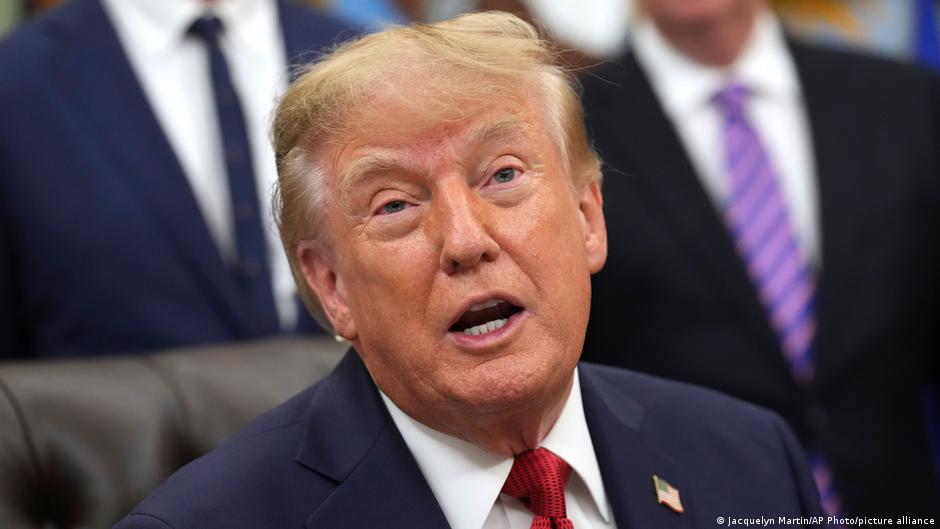
Bolsonaro thanked US President Donald Trump and Argentine President Javier Milei for their support, positioning his campaign within a broader network of right-wing leaders. That international alignment may help him sustain visibility, but it also reinforces domestic concerns about foreign involvement in Brazil’s electoral process.
Argentine migration authorities previously said Bolsonaro, his wife Fernanda and their daughters Carolina and Luiza entered Argentina through the Tancredo Neves international border crossing in Misiones province, on the Brazilian border. Authorities said they presented valid travel documents and faced no legal impediments to entering the country.
Bolsonaro apparently traveled from Argentina to Ecuador and then continued to Miami. His route, combined with the Brazilian travel prohibition, is likely to remain central to the legal and political response.
For Brazil’s corporate sector, the immediate issue is not a change in the election outcome but the potential duration of the institutional dispute. Lula retains the declared victory, electoral authorities defend the process and Bolsonaro’s party has conceded defeat. Yet Bolsonaro’s 48.21% vote share gives him a large political constituency and an incentive to preserve his leadership of the opposition.
The resulting competition is therefore both institutional and organizational: Lula’s government must consolidate authority, the Liberal Party must decide how closely to align with its defeated candidate, and rival opposition figures may seek influence if Bolsonaro’s legal position deteriorates. Companies assessing Brazil will be watching whether the conflict remains contained within courts and Congress or develops into a longer period of political disruption.