Zelensky Pushes Tough Budget Bills to Unlock Billions in Western Aid
Ukraine’s parliament is set to consider seven politically difficult bills tied to external financing as Kyiv seeks to close a widening defense budget gap.
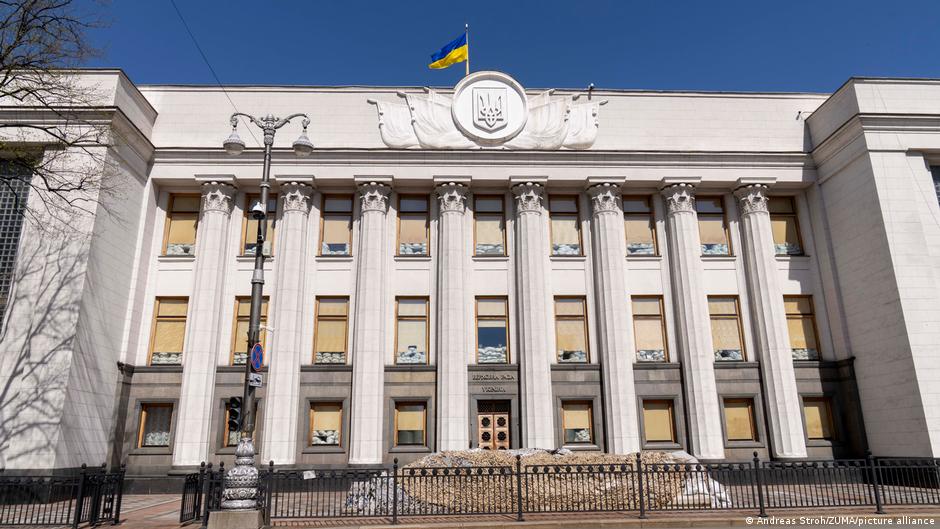
Ukrainian President Volodymyr Zelensky has signaled that the country’s parliament will this week take up a package of “difficult” legislation that could unlock billions of dollars in support from Western partners, underscoring how deeply Ukraine’s fiscal strategy now depends on external financing and domestic political execution.
In a Telegram post on Tuesday evening, September 15, Zelensky said the Verkhovna Rada would consider seven bills that are “necessary to close the hole in the state budget.” He described each of the measures as directly connected to “money for Ukraine from its partners,” framing the legislative agenda not merely as a domestic policy matter but as a prerequisite for sustaining the country’s defense and recovery capacity.
Most of the initiatives are expected to be considered in a first reading, according to Zelensky’s post. That suggests the package may still face a further parliamentary process before becoming law, but the president’s message made clear that the government views movement on the bills as urgent.
“Some of these things may be difficult, unpleasant and unpopular,” Zelensky wrote, adding that without them Ukraine cannot meet defense needs or ensure its ability to recover.
A fiscal strategy tied to political delivery
For Ukraine’s leadership, the bills represent more than a technical budget exercise. They are part of a broader management challenge: aligning domestic lawmaking with the conditions attached to Western financial support. Zelensky’s language points to a government attempting to maintain credibility with partners while also managing the domestic political costs of austerity, reforms or other unpopular measures implied by the legislation.
Based on the president’s message, approval of the bills by Ukrainian lawmakers could allow Kyiv to receive several billion U.S. dollars in assistance. While the details of each draft law were not laid out in the source material, the strategic logic is clear: Ukraine’s financing model depends on converting parliamentary action into partner disbursements.
That structure creates an unusually direct link between legislative management and national funding. In corporate terms, Ukraine’s government is operating under conditions similar to a company dependent on staged financing from strategic investors. Continued access to capital depends not only on need, but also on meeting agreed milestones. For Kyiv, those milestones now appear to include the passage of politically sensitive laws.
The scale of the pressure is substantial. AFP has noted that Ukraine’s budget shortfall has formed largely because of an estimated 23 billion euro gap in the defense sector. The agency also described Ukraine as facing a worsening economic situation, with Russian attacks damaging key industries, particularly metallurgy, and contributing to a reduction in agricultural export volumes.
Those pressures have narrowed Ukraine’s room for maneuver. The country, attacked by Russia, remains heavily dependent on financial support from Western partners. That dependency affects not only wartime budgeting but also the government’s negotiating position, reform timetable and internal political discipline.
Defense needs dominate the agenda
The legislative push follows Zelensky’s comments in late August, when leaders from Denmark, Latvia, Lithuania, Norway, Finland and Estonia visited Kyiv. At that time, the Ukrainian president said he expected 30 billion euros from the European Union as part of a two-year, 90 billion euro loan framework. He stressed then that the release of funds was tied to the “adoption of relevant legislation.”
Zelensky also emphasized the importance of full parliamentary participation, including from the opposition. His argument was that the money did not belong to the authorities or to the opposition, but was needed for the defense of the whole country. That appeal reflects a management problem familiar to governments under crisis conditions: how to turn a fragmented political body into a reliable delivery mechanism for commitments made to external partners.
The Defense Ministry’s budget deficit was previously estimated by Zelensky at 27 billion dollars, or more than 23.1 billion euros. He said the shortfall had arisen in part because of overspending in the first half of the year. The numbers he cited highlight the operational demands behind the current legislative urgency.
According to Zelensky, Ukraine needs 8 billion to 10 billion dollars to prepare the army for January 2027. It also needs nearly 20 billion dollars for purposes including salaries for military personnel and payments to families of the fallen. These obligations make the budget issue central to the state’s wartime operating model rather than a peripheral fiscal matter.
For Western partners, the situation also raises questions about governance, conditionality and burden-sharing. Financial support on this scale requires confidence that Kyiv can implement agreed measures, sustain budget discipline and maintain political consensus under pressure. The Rada’s handling of the seven bills will therefore be watched not only in Ukraine but also in capitals providing financial backing.
Competitive pressure from a damaged economy
Ukraine’s economic position has been weakened by repeated Russian attacks and by disruption to export channels. Damage to metallurgy strikes at a sector important to industrial output and foreign earnings, while lower agricultural export volumes affect one of the country’s most important competitive strengths. Together, these pressures reduce domestic revenue potential at the same time that defense spending remains extraordinarily high.
That combination leaves Kyiv with few easy options. Domestic tax capacity is constrained by wartime disruption, while spending needs are driven by military necessity. Western financing therefore functions as both a liquidity source and a strategic stabilizer. The legislative package now before parliament can be understood as part of the governance infrastructure required to keep that stabilizer in place.
The political risk is that measures described as unpleasant or unpopular could test public and parliamentary tolerance. The strategic risk is that delays or dilution could complicate the timing of external support. Zelensky’s public framing appears designed to reduce that risk by presenting the legislation as a matter of national importance and by making the connection between parliamentary action and partner funding explicit.
For Ukraine’s leadership, the immediate task is to secure enough support in the Rada to keep financing channels open. For the country’s Western partners, the process will serve as another test of Ukraine’s capacity to execute difficult policy under wartime conditions. The outcome will matter not only for the current budget gap, but also for Kyiv’s broader ability to finance defense, maintain state functions and prepare for the next phase of the war.