Ukraine Anti-Corruption Agencies Search Prosecutor General’s Office
The operation targets alleged protection of fraudulent call centers, raising governance questions around law enforcement oversight in Ukraine.
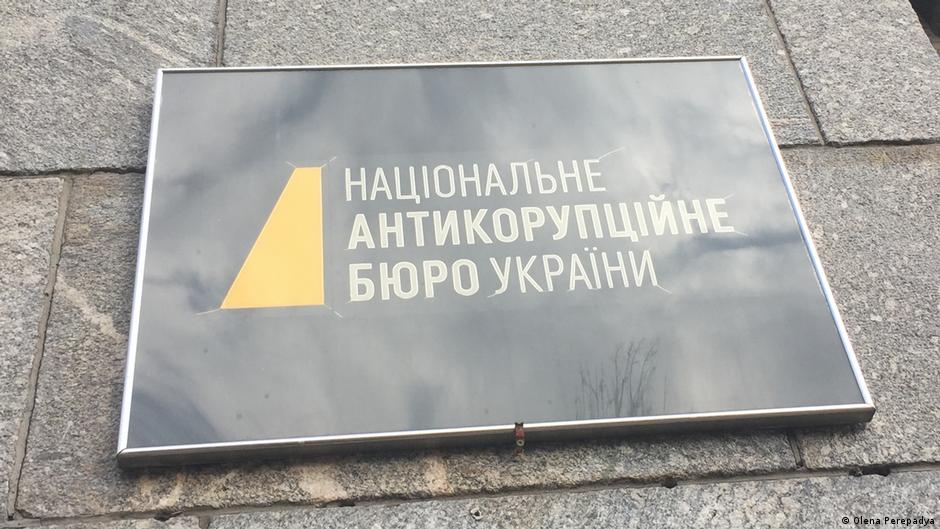
Ukraine’s anti-corruption agencies have opened an operation that places one of the country’s most sensitive law enforcement institutions under renewed scrutiny. The National Anti-Corruption Bureau of Ukraine, known as NABU, and the Specialized Anti-Corruption Prosecutor’s Office, or SAP, announced an operation to expose what they described as a criminal organization linked to the protection of a network of fraudulent call centers and the legalization of assets.
According to statements published Friday, September 4, on the Telegram channels of NABU and SAP, investigators believe the organization is headed by an employee of the Office of the Prosecutor General of Ukraine. The agencies initially said they would provide further details later, but on the same day they conducted searches at the Prosecutor General’s Office, an institution central to the country’s justice system and to Ukraine’s broader anti-corruption positioning.
The Prosecutor General’s Office confirmed that investigative actions had taken place. At the same time, it said the suspicions raised by NABU and SAP did not directly concern Prosecutor General Ruslan Kravchenko. The office said it would cooperate with the anti-corruption bodies and make available information required under the law.
“The Office of the Prosecutor General will provide the anti-corruption authorities with full assistance and all necessary information within the law,” the office said, adding that the employee whose possible involvement is being checked would be suspended during the pre-trial investigation.
For Ukraine’s public-sector management structure, the episode is more than a criminal inquiry into alleged call-center fraud. It tests the internal controls, personnel oversight and institutional coordination of agencies that sit at the center of the country’s rule-of-law agenda. The case also arrives as Kyiv is seeking to demonstrate to domestic and international audiences that it can investigate allegations even when they touch senior state institutions.
A Compliance Shock Inside a Core Legal Institution
The business significance of the operation lies in the intersection of public governance, illicit finance and Ukraine’s investment climate. Fraudulent call centers are not simply a consumer-protection issue. The allegations described by NABU and SAP include the protection of such networks and the legalization of property, making the case relevant to anti-money-laundering enforcement and to the credibility of the state’s legal infrastructure.
Ukrainian outlet Ukrainska Pravda reported, citing sources “in business circles,” that the NABU and SAP suspicions concerned Serhiy Kropyva, deputy head of the international legal cooperation department at the Prosecutor General’s Office. The outlet wrote that he had been detained. There has been no official confirmation of the individuals affected by the searches or of the suspects.
Journalists also reported that searches took place at the premises of Ukrainian official Oleh Kiper. Kiper previously held several positions in the Office of the Prosecutor General. In 2023, he was appointed head of the Odesa Regional Military Administration. Kropyva, before receiving his latest post in the Prosecutor General’s Office, served as Kiper’s deputy in the Odesa regional military administration. Before that, he had also worked in the Prosecutor General’s Office, in its cybersecurity department.
That sequence of roles gives the case a management dimension. The reported links run across prosecutorial, cybersecurity and regional military administration structures, though officials have not confirmed the names of suspects or the full scope of the searches. For institutions managing wartime legal and administrative pressures, the case highlights how personnel networks and interagency appointments can become part of the risk landscape.
Crackdown Follows Proposed Tougher Penalties
The operation came one day after President Volodymyr Zelensky sent a bill to the Verkhovna Rada, Ukraine’s parliament, that would toughen punishment for organizing fraudulent call centers and for connections to their activity. The timing places the NABU and SAP action within a wider state response to an illicit business model that authorities now appear to be treating as both a criminal and national-security problem.
Under the proposed legislation, organizers of such call centers could face up to 12 years in prison with confiscation of property. Working in such a place could carry a prison term of up to 10 years. Recruitment into call centers could be punishable by up to five years in prison, while repeat recruitment could carry up to 10 years. Even landlords who provide premises for call centers could face up to 10 years in prison.
Those proposed penalties indicate an effort to attack not only the operators of fraudulent call centers but also the enabling infrastructure around them: staffing, premises and asset flows. From a corporate-risk perspective, that expands potential exposure beyond direct organizers to service providers and property owners. It also signals that Ukrainian authorities are trying to raise the cost of participation across the wider ecosystem that allows such operations to function.
The latest anti-corruption operation follows a large nationwide action by Ukraine’s National Police against fraudulent call centers. As a result of that operation, authorities halted the activity of 94 such organizations. During searches, law enforcement officers seized, among other items, about $2 million, 64,000 euros, gold bars and jewelry.
Competitive Landscape of Fraud and Enforcement
The call-center issue has grown beyond a conventional fraud market. Victims include not only Ukrainians but also Russians. The problem became more visible after Russia’s full-scale invasion of Ukraine, as fraudsters began persuading people they had deceived to commit various acts of sabotage. Kyiv and Moscow have accused each other of organizing the work of such “sabotage” call centers.
That cross-border dimension complicates enforcement strategy. Fraud networks can operate as criminal enterprises, financial laundering channels and instruments in an information or sabotage environment. For Ukrainian authorities, the challenge is to show operational effectiveness while also protecting the integrity of institutions whose employees may have access to sensitive investigative, international cooperation or cybersecurity information.
The Prosecutor General’s Office has tried to limit institutional damage by emphasizing cooperation and by saying that the allegations do not directly involve Prosecutor General Kravchenko. Its decision to suspend the employee under scrutiny during the pre-trial investigation is a standard governance step, but the broader outcome will depend on what NABU and SAP disclose next and whether prosecutors can demonstrate a clean separation between the investigation and the institution’s leadership.
For Ukraine’s reform agenda, the case is a high-visibility test of anti-corruption architecture. NABU and SAP were created to pursue sensitive corruption cases with a degree of independence. Their ability to act inside the orbit of the Prosecutor General’s Office will be watched as a measure of whether enforcement agencies can challenge entrenched or well-connected interests. At the same time, the absence of official confirmation about the individuals searched or suspected means the factual perimeter of the case remains incomplete.
The immediate business takeaway is that Ukraine is escalating pressure on fraudulent call-center operations and the networks that allegedly protect or finance them. The strategic question is whether the enforcement drive can move from raids and draft legislation to durable governance controls, credible prosecutions and tighter oversight of state officials whose roles intersect with high-risk criminal markets.