AfD’s Saxony-Anhalt Win Raises Strategic Risks for Europe’s Political Center
Donald Tusk’s sharp response underscored how a regional election in eastern Germany is being read as a broader test of Europe’s governing coalitions.
Political leaders in countries neighboring Germany moved quickly to assess the implications of a strong electoral performance by the far-right Alternative for Germany, or AfD, in the state parliament election in Saxony-Anhalt. The result, while regional in formal scope, is already being treated across Europe as a signal with strategic consequences for coalition management, cross-border relations and the competitive positioning of mainstream parties.
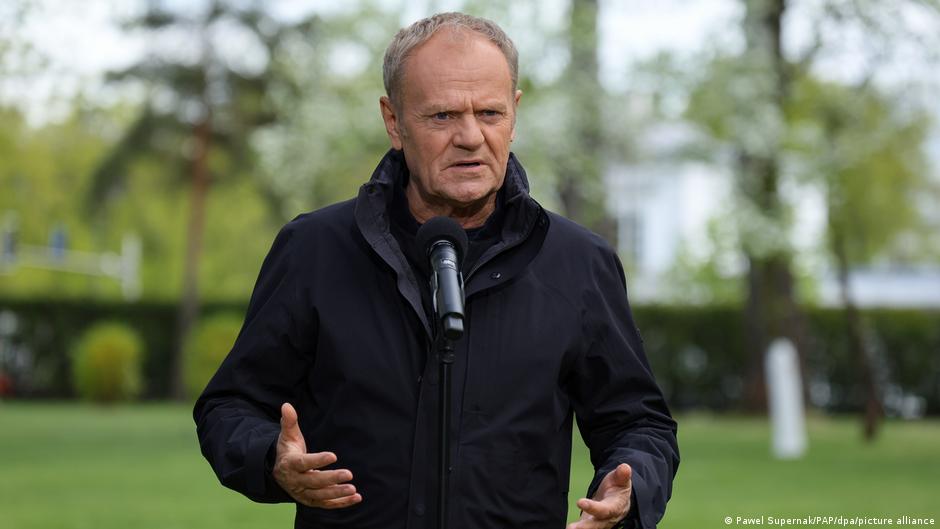
Polish Prime Minister Donald Tusk delivered the bluntest reaction. Writing on X on the evening of Sunday, September 6, he said he was stunned by the AfD’s success and warned against celebrating it in Poland. His message was aimed not only at developments in Germany but also at domestic political rivals that he accused of responding favorably to the party’s performance.
“In Poland, only idiots or traitors can rejoice at the triumph of the AfD party in Germany,” Tusk wrote.
According to Tusk, such figures had “accumulated” in Poland’s opposition parties Confederation and Law and Justice, known as PiS. The comment points to a widening strategic divide in Central Europe: whether nationalist and right-populist parties should be treated as potential partners in a broader ideological bloc, or as destabilizing actors whose rise raises security, governance and reputational risks.
A Regional Vote With Cross-Border Consequences
Preliminary results from Saxony-Anhalt showed the AfD winning decisively with 44 percent of the vote. The party’s candidate for state premier is Ulrich Siegmund. The scale of the result places significant pressure on the region’s existing political order and creates a difficult management problem for Germany’s established parties, particularly the Christian Democratic Union, or CDU.
The CDU, whose member Sven Schulze is the incumbent state premier, was projected to receive 17.4 percent. Other parties were clustered well behind the AfD: the Social Democratic Party of Germany, or SPD, was at 9.2 percent; Alliance 90/The Greens at 8.9 percent; The Left at 8.6 percent; and the Sahra Wagenknecht Alliance, or BSW, at 5.1 percent. The Free Democratic Party and other parties did not clear the 5 percent threshold, according to the preliminary results.
On the basis of those figures, the 83 seats in the Saxony-Anhalt state parliament could be distributed as follows: the AfD would receive 39 mandates, the CDU 15, The Left, the Greens and the SPD eight seats each, and BSW five. Preliminary election results were expected to become known during the night of September 7.
For business and policy observers, the key issue is not only which party came first, but how the numbers alter the state’s operating environment. A party with 39 seats in an 83-seat legislature would be a dominant force, even if it faces barriers to entering government. That can reshape negotiations, legislative priorities and the risk calculations of other parties. Companies and investors typically watch such shifts for signs of policy volatility, administrative gridlock or changes in the tone of public debate around migration, Europe and regulation.
Coalition Strategy Comes Under Strain
The election result intensifies a strategic dilemma familiar across Europe: mainstream parties face pressure from insurgent right-wing competitors, but partnership with those competitors can carry significant political costs. In Saxony-Anhalt, the question of whether the AfD could enter a governing coalition is central to the immediate political aftermath.
In neighboring Czechia, Tomio Okamura, speaker of the Chamber of Deputies of the Czech parliament and founder of the right-wing Freedom and Direct Democracy party, or SPD, congratulated the AfD during an appearance on public broadcaster CT. Okamura, a politician of Japanese-Korean origin, said he hoped above all that the AfD would join a new governing coalition in Saxony-Anhalt.
Okamura’s reaction reflects a different strategic reading from Tusk’s. For parts of the European right, the AfD’s result can be framed as evidence that nationalist and right-populist platforms have moved from protest politics into the arena of government formation. In Czechia, a coalition made up of billionaire Andrej Babis’s right-populist ANO party, Okamura’s SPD and the Motorists’ Party has governed since the end of 2025. That context makes Okamura’s endorsement of the AfD’s possible entry into government more than a gesture of ideological solidarity; it signals a model of coalition politics that some parties may seek to normalize.
For centrist and pro-European parties, the challenge is operational as well as rhetorical. They must decide whether to compete with the far right by adopting tougher positioning on contested issues, by reinforcing existing red lines on cooperation, or by assembling broad and potentially fragile coalitions designed primarily to keep such parties out of executive power. Each option carries trade-offs in voter retention, policy coherence and governing stability.
France Frames the Result as a European Risk
France’s minister for European affairs, Benjamin Haddad, responded on X by calling the result a “grave moment for Europe.” His statement focused less on local coalition arithmetic and more on the wider narrative contest facing European governments.
“We must listen to anger, anxieties and fears and respond to them. But nationalism and xenophobia will never be the solution,” Haddad wrote.
Haddad also urged that Europe not forget its history, saying this was the meaning of decisions taken by France and Germany. His response placed the Saxony-Anhalt result inside the long-running Franco-German framework that has shaped European integration and postwar political stability.
That framing matters for corporate and institutional stakeholders because Germany’s regional politics can feed into national and European decision-making. Even without immediate control of a state government, a strong AfD presence may affect how mainstream parties position themselves on European policy, fiscal questions, migration and relations with neighboring countries. The reaction from Warsaw, Prague and Paris shows that the election is already being interpreted beyond Germany’s borders as a competitive signal for Europe’s political market.
The immediate management task now falls to German parties in Saxony-Anhalt, where preliminary results indicate a fragmented parliament dominated numerically by the AfD but still requiring coalition logic to translate votes into executive authority. For Europe’s political center, the larger issue is whether it can respond to voter dissatisfaction without ceding strategic ground to nationalist challengers. Tusk’s condemnation, Okamura’s congratulations and Haddad’s warning together show that the AfD’s performance is not being treated as an isolated state-level event, but as a test of the continent’s political direction.