Putin Rejects Front-Line Freeze While Signaling US-Mediated Talks
Moscow’s negotiating posture leaves businesses facing sustained geopolitical risk as military strikes continue and core territorial demands remain unresolved.
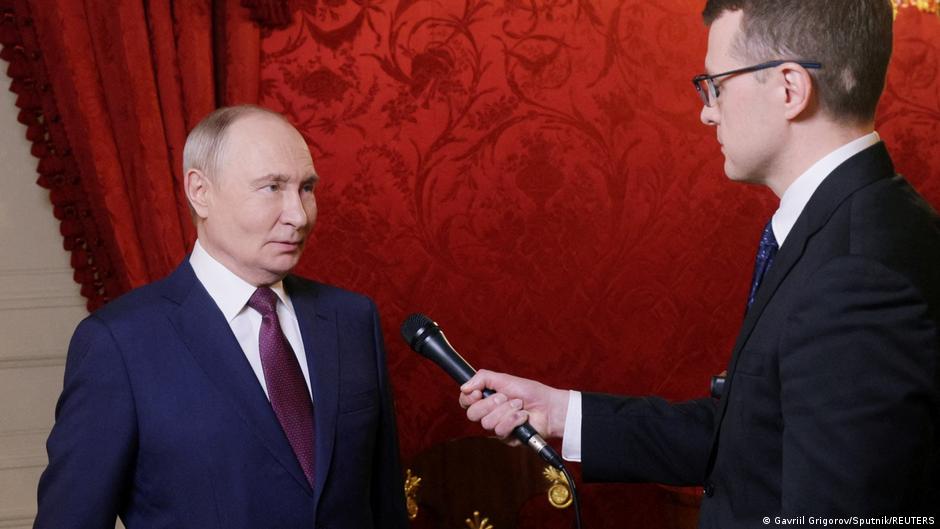
Russian President Vladimir Putin has said Moscow is prepared to resume talks with Kyiv through US mediation, but his rejection of a ceasefire along the current front line points to a negotiating strategy focused on a comprehensive settlement rather than a temporary halt in hostilities.
In an interview with Pavel Zarubin of Russia’s state-owned media group VGTRK, published Thursday, October 22, Putin said he had agreed during a meeting with US special envoy Steven Witkoff to renew dialogue with Ukraine under Washington’s mediation. The proposed format would address security arrangements for both Ukraine and Russia after a final peace agreement, he said.
“The purpose of these negotiations will be to discuss ensuring the security of Ukraine and Russia after peace agreements are reached, in their final form, rather than as a result of suspending hostilities for some short period,” Putin said.
For companies exposed to Russia, Ukraine and neighboring markets, the distinction between a final settlement and a short-term ceasefire is significant. A temporary freeze could reduce immediate operational risks, including disruption to logistics, infrastructure and energy supplies. Moscow’s insistence on broader terms, however, suggests that businesses cannot yet assume a near-term stabilization of the region’s political and security environment.
Negotiating Structure Remains Unclear
Following Putin’s meeting with Witkoff, Moscow did not disclose the level at which it would be willing to hold talks with Kyiv. Ukrainian President Volodymyr Zelensky has said he is ready for a three-way meeting with Putin and US President Donald Trump to discuss ending the war.
The Kremlin has repeatedly rejected that format or attached conditions that Kyiv did not regard as a serious basis for a meeting, including a proposal that Zelensky travel to Moscow. Delegations selected by Putin for previous negotiations with Ukrainian representatives also failed to produce tangible progress toward ending the war.
Further uncertainty emerged only hours after the Putin-Witkoff meeting, when Russian presidential aide Yuri Ushakov said Moscow was “completely dissatisfied” with proposals brought to Russia by Trump’s negotiators. That response highlights the gap between Moscow’s public willingness to engage and its assessment of the terms currently on offer.
From a strategic perspective, Russia appears to be preserving optionality: keeping US-mediated diplomacy open while declining to accept a ceasefire framework that could lock in the present military geography without resolving Moscow’s wider demands. For management teams assessing sanctions, investment exposure, supply contracts or regional contingency plans, that combination limits the value of diplomatic signals as an indicator of reduced risk.
Territorial Demands Complicate a Ceasefire
Zarubin also asked Putin about Zelensky’s statement a day earlier that Ukraine was prepared to freeze fighting along the current line of contact. Putin rejected the proposal, saying: “This is not their territory; this is the territory of historical Russia.”
Media reports previously said Trump supported the idea of freezing hostilities along the front line running through the Donbas in 2025, before meeting Putin in Anchorage. Such an arrangement conflicts with Putin’s publicly stated demand that Ukraine surrender the entirety of the Donbas to Russia without a fight.
The disagreement is central to the competitive and investment landscape surrounding the conflict. A front-line freeze could create a de facto boundary while leaving sovereignty disputes unresolved, whereas Russia’s stated position would require substantial Ukrainian territorial concessions. Until that gap narrows, companies must account for continued sanctions risk, damaged transport networks, volatile commodity flows and higher insurance and financing costs across affected markets.
Military Activity Undercuts Stabilization Signals
Putin also said Russia did not want to fight Ukraine and placed responsibility for the continuation of hostilities on Kyiv. He said Moscow remained prepared to negotiate and described Russians and Ukrainians as a closely related people, citing recent genetic research to claim they were “one people.” He did not explain how genetics would affect national sovereignty.
Military developments following the Putin-Witkoff meeting provided no evidence of reduced operational intensity. On the day Zarubin’s interview was published, Ukrainian authorities reported Russian attacks on civilian sites, including a clothing market in Lozova in the Kharkiv region, Kyiv’s historic center, and roads and bridges in several Ukrainian regions.
Two people were killed and 34 were wounded in the Russian strike on Lozova, according to the Ukrainian side. The attacks reinforce the disconnect between diplomatic messaging and conditions on the ground.
For international businesses, the immediate implication is that announcements of renewed dialogue should not yet be treated as a turning point. Moscow has signaled interest in talks, but it has rejected a central ceasefire option, criticized US proposals and maintained military pressure. Until negotiations produce an agreed format and credible measures to halt attacks, corporate planning is likely to remain shaped by prolonged conflict rather than rapid normalization.