Finland Completes 200-Kilometer Russia Border Fence Amid Security Shift
The project underscores Helsinki’s move to treat border control as strategic infrastructure after Russia’s war in Ukraine altered regional risk calculations.
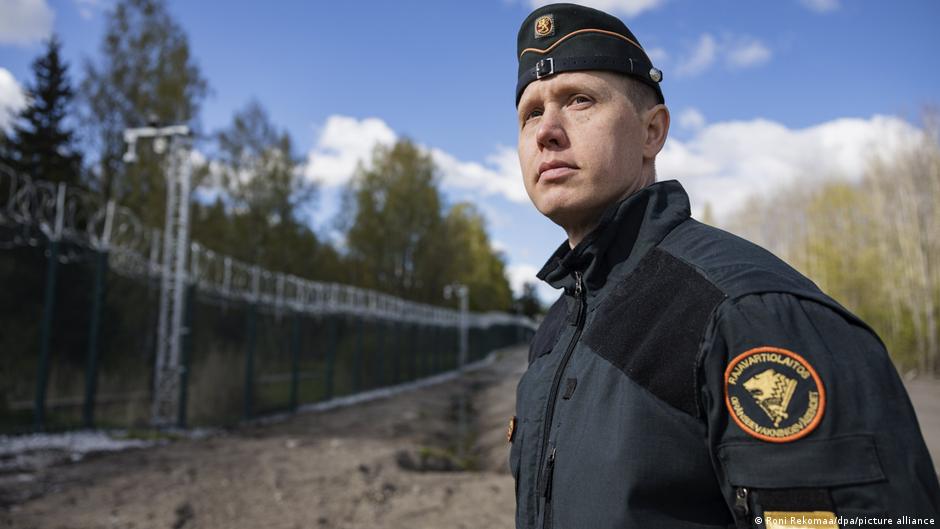
Finland has completed construction of a 200-kilometer fence along its border with Russia, marking the conclusion of one of the country’s largest infrastructure projects and a significant shift in how Helsinki manages security risk on the European Union’s external frontier.
The Finnish Border Guard, part of a state that is now a member of NATO, announced the completion on Monday, September 7. The project was launched in March 2023 against the backdrop of Russia’s war against Ukraine and concerns in Helsinki that Moscow could use migration flows as a tool of pressure against Finland.
For businesses, contractors and policymakers, the fence is more than a border-control measure. It reflects a broader transformation in public-sector procurement, national resilience planning and corporate participation in security-related infrastructure. The scale of the undertaking drew in hundreds of companies, while as many as 600 people and 150 pieces of equipment worked daily on construction sites, according to the Finnish Border Guard.
“The main task of the state is to ensure the safety of its citizens. The barrier wall on the eastern border is an integral part of an effective border security system in these unpredictable times,” Interior Minister Mari Rantanen said.
Security Spending Becomes Industrial Policy
The border barrier consists of a 4.5-meter-high fence, a technical surveillance system, a road network and a 25-meter-wide clearing. That combination points to a project designed not simply as a physical obstacle, but as an integrated security platform. In business terms, it represents demand for construction capacity, surveillance technology, transport access, maintenance services and long-term operational support.
The Finnish Border Guard described the initiative as one of the most extensive infrastructure projects in Finland. That characterization matters because it places border security within the same category of economic activity as major transport, energy or defense-related works: capital-intensive, contractor-heavy and politically driven.
The project also shows how national security priorities can reshape the competitive landscape for domestic suppliers. Hundreds of companies took part, suggesting a broad procurement base rather than a narrowly held contract structure. While the source account does not name the firms involved or provide a project budget, the operational data alone indicates a complex supply chain involving civil engineering, equipment deployment and technical systems integration.
For Finland’s corporate sector, this type of project can create short-term construction demand and longer-term opportunities tied to monitoring, repair, logistics and upgrades. It also raises the profile of companies able to operate in sensitive environments where security requirements, public accountability and rapid delivery schedules intersect.
A Strategic Response to a Changed Border
Finland began the work after Russia’s full-scale war against Ukraine had sharply changed the security environment in Northern Europe. Helsinki’s concern was not only conventional military risk, but the possibility that Russia could use migrants to put pressure on the country. The fence therefore fits into a wider management decision by the Finnish state: to invest in capacity that reduces vulnerability to coercive tactics at the border.
Rantanen also emphasized that Finland, as a member of the Schengen Area, carries its share of responsibility for security at the external borders. That point gives the project a European dimension. Finland is not only protecting a national boundary; it is managing part of the perimeter of a passport-free travel zone used by businesses, workers and consumers across much of Europe.
That has strategic implications for EU competitiveness and mobility. Schengen’s economic value depends on confidence that external controls function effectively. Any disruption at the frontier can have knock-on effects for logistics, labor movement and cross-border commerce. By investing in a large-scale barrier and surveillance network, Finland is positioning border security as a prerequisite for maintaining predictable internal movement within Europe.
The fence also follows Finland’s entry into NATO, though the project is administered through national border institutions rather than presented as a military construction program. The distinction matters. NATO membership changes Finland’s strategic alignment, but the border barrier reflects a civilian-security response led by the state and implemented through a mix of public agencies and private contractors.
Local Acceptance, Limited Enthusiasm
The project did not generate universal enthusiasm at the local level. In Imatra, a city near construction areas, Mayor Matias Hilden said in an interview with DW that no one was enthusiastic about the project, but residents had accepted it. He described the situation as “a little sad that we need this.”
That local reaction illustrates a management challenge common to large security infrastructure projects: the strategic rationale may be widely understood, while the social and symbolic costs remain uncomfortable. Border communities often bear the most visible consequences of geopolitical change. The fence is a response to national and European security concerns, but it also alters the physical and psychological landscape for municipalities along the frontier.
For business readers, the Imatra response is a reminder that stakeholder management in security projects extends beyond procurement and delivery. Local consent, municipal coordination and public messaging can shape how such projects are absorbed, especially when infrastructure is associated with deteriorating international relations rather than economic development.
The fence’s completion also reflects the longer arc of Finland’s response to Russian political decisions. In September 2022, a large number of Russians fled to Finland after Russian President Vladimir Putin announced partial mobilization in the country. That episode appears to have reinforced concerns in Helsinki about sudden movements of people across the border and the need for a more robust control system.
The completed 200-kilometer barrier is therefore best understood as a strategic asset built in response to a more volatile operating environment. It combines public-sector authority, private-sector execution and European border obligations. Its business significance lies not in a single contract or corporate winner, but in the way it signals a broader shift: security infrastructure is becoming a central part of state planning, procurement and competitive positioning in Northern Europe.