Macron Pushes EU-Wide Social Media Ban for Under-15s After French Setback
The French president is seeking a harmonized European law after France’s Constitutional Council blocked a national measure on free-expression grounds.
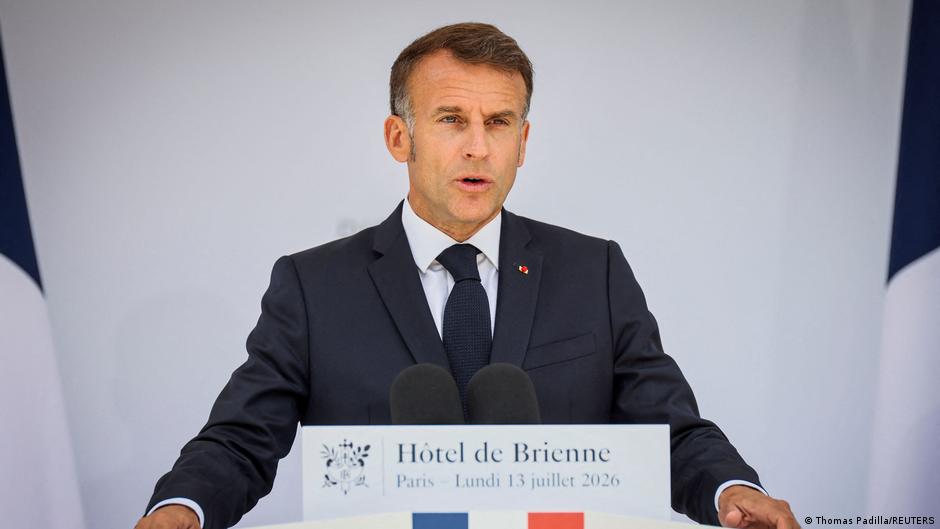
French President Emmanuel Macron has asked European Commission President Ursula von der Leyen to prepare a European legislative act that would ban children under the age of 15 from using social media, according to AFP, which reviewed a letter dated August 29 on Monday, September 7.
The move shifts a politically sensitive child-safety initiative from France’s domestic arena to the European Union level, after France’s Constitutional Council blocked a comparable national law on August 14. The country’s highest constitutional-review body said the provision violated freedom of expression, creating a legal and strategic setback for Macron as he seeks to make online protection of minors a defining domestic-policy priority in the final phase of his presidency.
Macron, who is due to leave office after elections in April 2027, has said he hopes to “find a way forward” in the coming months through a revised national legislative act that would comply with both EU law and the French Constitution. But in his letter to von der Leyen, he argued that the issue now required a wider European response.
“It is now crucial to go further and harmonize this provision through a new European text,” Macron wrote, according to the report.
A National Defeat Becomes a European Strategy
For Biz Review readers, the most important element of the French president’s request is not only the age threshold, but the strategic change in venue. By asking the European Commission to prepare legislation, Macron is trying to move a contested national rule into a broader regulatory framework that would apply across the EU’s single market.
That matters for technology companies because social media regulation becomes far more consequential when it is harmonized. A national ban can be challenged domestically, limited by constitutional courts, or implemented unevenly. A European act, by contrast, could create a more uniform compliance environment for platforms operating across multiple member states. For companies such as TikTok, Instagram and Snapchat, which were named in the French health-supervision context, the commercial impact would depend on how any legislation defines social-media access, age verification, parental consent, platform obligations and enforcement mechanisms.
The request also highlights a familiar regulatory pattern in Europe: national political pressure often serves as the starting point for EU-wide rules. Macron’s administration suffered a domestic legal defeat, but the decision by the Constitutional Council may have strengthened the case for a European approach. If France cannot implement the measure alone without running into constitutional concerns, Paris can argue that Brussels should design a framework that is more legally coherent across the bloc.
Reuters described the Constitutional Council’s decision as a blow to the French head of state. Macron responded by instructing Prime Minister Sébastien Lecornu to prepare a new, “legally impeccable” draft law. That instruction signals that the French government has not abandoned the domestic track, even as Macron presses for parallel European action.
Platform Risk and Competitive Pressure
The business implications for large social platforms would be significant if the EU took up the proposal. A ban for children under 15 would not simply reduce access for a young user group; it would force platforms to make operational decisions about identity checks, account creation, content visibility and enforcement at scale. Each of those areas carries cost, legal exposure and reputational risk.
Age-verification systems are particularly sensitive. If platforms are required to determine whether users are under 15, they may need to collect or verify more personal information, creating privacy and data-security trade-offs. If responsibility falls heavily on companies, compliance costs may favor larger platforms with established regulatory teams, while increasing barriers for smaller or newer competitors. If enforcement is weak or fragmented, the rules could create uneven market conditions and reputational disputes rather than a clean competitive framework.
The initiative also lands in a competitive landscape in which social platforms already face scrutiny over youth engagement, addictive design, recommendation systems and mental-health risks. The French health-supervision report from December 2025 warned about harmful effects on children from platforms such as TikTok, Instagram and Snapchat. The risks cited included lower self-esteem and a possible increase in self-harm, suicide and drug use. According to the statistics referenced in the source article, every second teenager spends between two and five hours a day on a smartphone, and 58% use phones to access social networks.
Those figures help explain why the proposal has political force. For governments, the issue combines public health, child protection and digital sovereignty. For platforms, it threatens a core growth channel: early-life user acquisition and habitual engagement. Even where underage users are not the most valuable advertising demographic in direct revenue terms, they are strategically important because social platforms compete for network effects, attention habits and long-term loyalty.
Management Decisions Ahead for Tech Companies
If Brussels begins work on a legislative text, social media companies will face a management challenge before any final law is passed. Executives will need to decide whether to resist the measure publicly, engage with regulators on technical design, or preemptively strengthen youth-safety tools to shape the debate.
A confrontational strategy could preserve flexibility but risks reinforcing the political argument that platforms cannot self-regulate. A cooperative strategy could reduce regulatory hostility but may normalize stricter obligations across the EU. For global platforms, the additional complication is precedent: a European under-15 ban could influence other jurisdictions, just as previous EU digital rules have affected compliance models beyond Europe.
The source article notes that momentum behind the ban increased after Macron made it a key point of his domestic agenda in his final year in office. That political timing is important. Macron has limited time before the April 2027 elections, which may create pressure to produce a visible legislative pathway quickly. At the same time, European lawmaking can be slow, and any proposal would face debate over fundamental rights, enforceability and proportionality.
The international context is also shifting. In December 2025, Australia blocked access to most social networks for people under 16. That example gives European advocates a comparable policy model, even though the EU would need to design any measure around its own legal order and member-state concerns.
For now, Macron’s request is best understood as both a regulatory proposal and a strategic response to institutional resistance at home. France’s Constitutional Council blocked the national version on freedom-of-expression grounds. Macron is now asking the European Commission to create a broader framework that could harmonize the rule across the continent. Whether that produces a workable law or a prolonged fight with the technology sector will depend on how Brussels balances child protection, constitutional rights and the operating realities of the social-media business.