Russia Labels StopTime Musicians ‘Foreign Agents’ After Year of Pressure
The designation highlights the regulatory and operational risks confronting independent artists and cultural ventures in Russia.
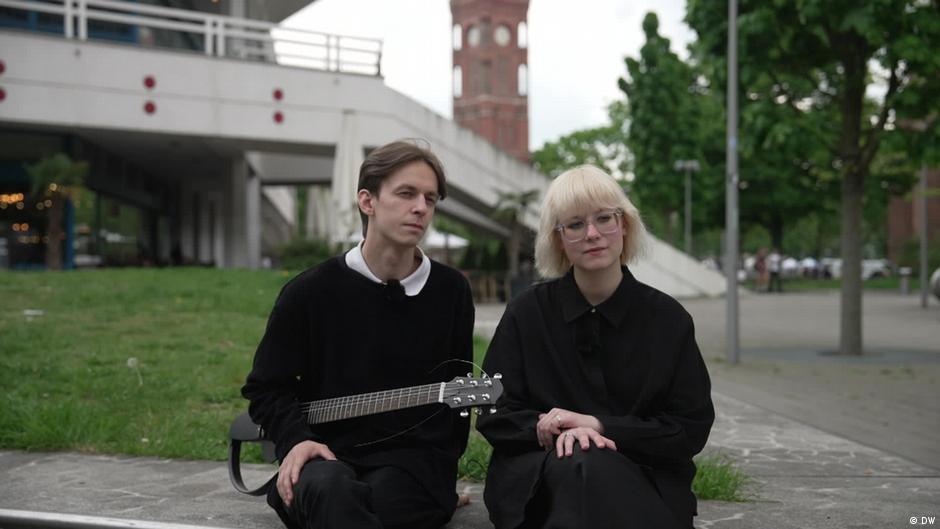
Russia’s Ministry of Justice has added two members of the street-music group StopTime to its register of “foreign agents,” extending a year-long campaign of administrative and regulatory pressure against the performers.
The new designations cover 19-year-old vocalist Diana Loginova, who performs under the name Naoko, and her husband, 23-year-old guitarist Alexander Orlov. The ministry published the decision on its website on Friday, October 16, exactly one year after the musicians received their first administrative detention orders.
For Russia’s independent cultural sector, the case illustrates how regulatory action can reshape an emerging creative venture before it develops into a conventional commercial operation. StopTime built its audience through performances in public spaces and promotion on social media, a low-cost model that allowed the group to attract listeners without relying on established concert promoters, record labels or traditional venues. That strategy also left the musicians exposed to enforcement decisions concerning public gatherings, repertoire and online communications.
Regulatory action raises operating costs
In explaining Loginova’s designation, the Justice Ministry said she had opposed the war in Ukraine, “disseminated false information” about the decisions and policies of the Russian authorities, and interacted with people designated as foreign agents. The ministry alleged that Orlov had, among other things, “actively participated in the dissemination of anti-Russian materials.” These statements represent the ministry’s stated grounds for the decision.
The register was also expanded on October 16 to include the movement Malinovy Klin — Independent Kuban. Authorities alleged that the organization had, among other activities, called for a violation of Russia’s territorial integrity.
Foreign-agent status creates a materially different risk environment for individuals and organizations operating in Russia. In the context of a music project, the designation can affect brand partnerships, access to distribution and venues, dealings with counterparties, and the ability to communicate with audiences. Even when a group’s original model is centered on street performances rather than corporate sponsorship, added compliance demands and reputational exposure can constrain future monetization and growth.
StopTime’s experience shows how a decentralized, social-media-driven cultural project can face escalating legal pressure once its public performances attract both audiences and official scrutiny.
StopTime began performing on the streets of St. Petersburg in spring 2025. Until January 2026, its lineup also included drummer Vladislav Leontiev. The group announced concerts through social networks and performed songs by Noize MC, Monetochka, Zemfira and the band Pornofilmy. All of those artists have been designated “foreign agents” by the Russian Justice Ministry.
During one performance in October 2025, StopTime played Noize MC’s song “Swan Lake Cooperative.” A St. Petersburg court had classified the track in May as information prohibited in Russia. The repertoire therefore became part of a broader operating risk for the musicians, linking artistic programming decisions to potential legal consequences.
Detentions forced a strategic break
The enforcement campaign began after a concert near the Ploshchad Vosstaniya metro station. Police said 70 people attended. Loginova, Orlov and Leontiev were found guilty of organizing a mass event that led to a disturbance of public order and were placed under administrative arrest.
Immediately after the first detention periods expired, authorities drew up additional reports against the group members. These successive cases, sometimes described as “carousel” protocols, kept the musicians in custody almost until the middle of November 2025. The repeated detentions effectively disrupted the group’s ability to perform, maintain a schedule or develop its audience in Russia.
After a third consecutive arrest, Loginova and Orlov left the country. Leontiev remained in Russia and subsequently left StopTime. The outcome amounted to an involuntary restructuring of the group: its core performers relocated abroad, while its drummer separated from the project because he stayed behind.
From a management perspective, relocation can preserve personal safety and offer continuity, but it also changes the economics of an artist-led venture. A group that developed its profile through geographically specific street concerts must rebuild distribution, audience engagement and potential revenue channels from outside its original market. StopTime’s recognition was closely tied to St. Petersburg performances promoted through social media; reproducing that model abroad may require a new network of venues, promoters and collaborators.
The foreign-agent designations deepen that strategic divide. Loginova and Orlov can continue working outside Russia, but their formal status may complicate any attempt to maintain commercial or professional links with the Russian market. Leontiev’s departure, meanwhile, demonstrates how legal exposure can fragment creative teams even without a traditional corporate structure or significant physical assets.
The case also has implications for the competitive landscape around independent Russian music. Artists able to operate within official restrictions may gain easier access to domestic audiences and infrastructure, while performers associated with prohibited material or designated artists face barriers that extend beyond ordinary competition for listeners. Regulatory tolerance is therefore becoming an increasingly important factor in determining which cultural projects can scale inside the country.
For StopTime, the ministry’s decision formalizes a shift already produced by arrests and emigration. What began as a street band using social platforms to assemble audiences has become a cross-border project whose future strategy will depend on whether it can convert political visibility into a sustainable audience and operating model outside Russia.