Putin’s Valdai Nuclear Warning Signals Strategic Pressure on West
The Russian president used a relocated Valdai forum to frame the Ukraine war as a Western-driven confrontation and raise the stakes for NATO capitals.
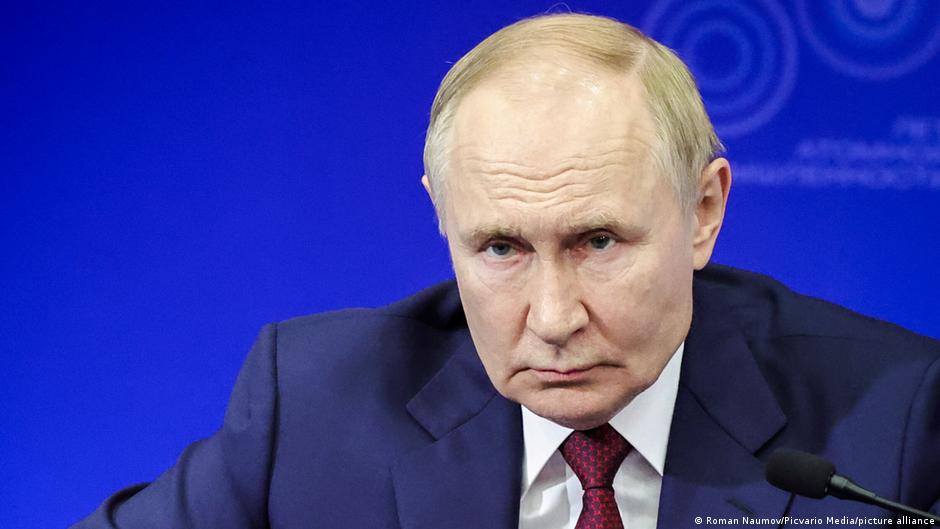
Russian President Vladimir Putin used a high-profile appearance at the Valdai Discussion Club to deliver a message aimed not only at diplomats and domestic audiences, but also at Western governments weighing the next phase of military support for Ukraine. Speaking on Thursday evening, October 1, at the forum’s plenary session, Putin described the situation in Europe and the wider world as “very dangerous” and again accused Western countries of aggression against Moscow.
The venue itself carried strategic significance. This year’s Valdai session was moved from Sochi to the Moscow region, where Russia has concentrated more air-defense assets. The relocation, according to a Financial Times report citing four sources, was driven by security concerns amid intensified Ukrainian attacks. Two of those sources said the move took place at the insistence of Putin’s security service. For a forum traditionally used by the Kremlin to project confidence and intellectual authority, the shift underscored how the war is reshaping even carefully managed elite events.
Putin’s remarks combined nuclear signaling, battlefield claims and a broader attempt to recast responsibility for the war in Ukraine. He warned of the possible use of a scenario that could lead to “fatal consequences” for the world, noting that several countries possess weapons “capable of destroying all living things.” When he posed to himself the question of whether he was confident such weapons would not be used, he answered in the negative.
Nuclear Messaging as Strategic Leverage
In business terms, Putin’s speech was an exercise in risk escalation and stakeholder management. The Kremlin leader compared nuclear weapons to a gun hanging on a theater stage, invoking the dramatic principle that such a gun must eventually fire. He said the laws of the struggle for survival apply not only in nature but also in social communities, while stressing that Russia could be forced into extreme measures. At the same time, he added that it was necessary to ensure that “this gun” does not fire.
“If we want to live — and everyone wants to live — let us live together,” Putin said, warning that further escalation could leave “no school textbooks and no one to study from them.”
The framing was designed to pressure Western decision-makers by tying continued escalation to catastrophic outcomes. For governments and defense industries in Europe, the remarks also served as a warning that Moscow views deeper involvement in strikes on Russian territory as a direct threat. Putin said Russia would “not necessarily” strike military enterprises in Europe, but would “monitor threats.” According to him, Moscow considers Western participation in attacks on Russian territory to be a direct danger.
That formulation leaves room for ambiguity, which is often central to coercive strategy. It does not announce an immediate operational decision, but it broadens the category of actions Russia may classify as threatening. For NATO members, such rhetoric complicates the political calculus around arms transfers, targeting assistance and the expansion of defense production tied to Ukraine.
Reframing the Ukraine War
Putin also repeated the Kremlin’s claim that Russia “did not start the war,” presenting Moscow’s invasion of Ukrainian territory as a response to NATO and Ukrainian actions. He asserted that “the truth is that it was not we who wanted and started fighting, but they started fighting us.” In his account, the West had for years encouraged “aggressive nationalism and Russophobia” in Ukraine to turn the country into an “instrument” against Russia, while “radicals in Kyiv” were pushed toward a “state coup.” He also claimed that NATO had intended to place bases on what he called Russia’s “historical territories.”
This narrative has strategic value for the Kremlin because it attempts to transform Russia from aggressor into a defensive actor in the eyes of domestic audiences and non-Western partners. It also seeks to weaken the legitimacy of Western sanctions, military aid and diplomatic pressure by presenting them as components of a long-running campaign against Moscow.
From a corporate strategy and competitive landscape perspective, the speech highlighted how Russia is managing the war as a long-duration confrontation involving military, industrial, technological and political fronts. Putin’s statements were not limited to battlefield operations. They addressed deterrence, Western defense supply chains, artificial intelligence, and the rules governing future warfare.
Battlefield Claims and Information Competition
Discussing the course of the war, Putin claimed that in the past month Russian forces had seized 3.5 times more territory than in the previous month. He also said Russia now controls 89% of the Donetsk region. The Institute for the Study of War, by contrast, has assessed that Russia controls 81% of Donbas.
Several days earlier, Kyiv said that during three seasons of its “Vivaldi” counteroffensive operation, Ukraine’s armed forces had recaptured 176 square kilometers of Ukrainian territory. Putin nevertheless said at Valdai that he remained confident Russia would capture all of those territories and that Ukraine had no reason to hold on to them.
The competing figures point to the war’s parallel contest over perception. Territorial gains, even when limited, are used by both sides to support strategic narratives: Ukraine to demonstrate resilience and maintain the confidence of partners, Russia to signal inevitability and weaken opposing morale. For Western governments and defense companies, these claims feed into decisions about procurement, production timelines and future aid packages.
AI, Command Decisions and New Rules of War
Putin also called for a new convention on the conduct of hostilities, referring to the rapid development of artificial intelligence technologies. He cited the case of Soviet officer Stanislav Petrov, who in 1983 did not give an order to launch a nuclear strike despite protocol requiring him to do so. In Putin’s view, artificial intelligence would have acted differently.
The comment linked nuclear deterrence with emerging military technology, suggesting that Moscow wants future arms-control discussions to include AI-enabled decision-making. For defense-sector stakeholders, this is a signal that Russia sees technological governance as part of strategic competition, not a separate policy domain.
The Valdai address therefore functioned as more than a political speech. It was a carefully layered message to multiple markets of influence: Russian citizens, Ukraine, NATO governments, the global security community and defense industries. Putin’s combination of nuclear warning, battlefield assertion and technological concern reflected a Kremlin strategy built around pressure, ambiguity and claims of inevitability. The relocation of the forum from Sochi to the Moscow region only sharpened the contrast between the image of control the Kremlin seeks to project and the security pressures created by the war it continues to wage.