EU Rejects Ukraine’s Request to Accelerate Part of €90 Billion Loan
Brussels concluded that front-loading the financing would not close Ukraine’s widening defense funding gap, but would shift pressure into 2027.
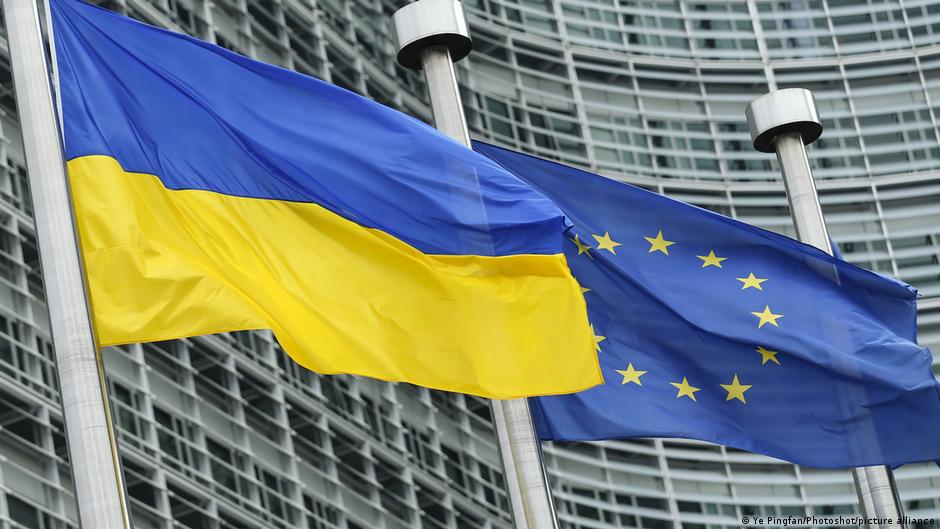
The European Union has rejected Ukraine’s request to receive part of a planned €90 billion loan ahead of schedule, a decision that underscores the growing tension between Kyiv’s urgent wartime cash needs and Brussels’ preference for a more structured, conditional financing strategy.
Ukraine had asked the EU to release a portion of the loan early to help cover a shortfall in military financing this year, after rising defense costs put additional pressure on the state budget. According to people familiar with the matter cited by Bloomberg on Thursday, October 1, the request followed Kyiv’s unexpected acknowledgement over the summer that it faced an additional €27 billion financing gap linked to higher military spending.
For European policymakers, the issue is not only whether Ukraine needs the money. It is also whether accelerating the disbursement would improve the country’s financial position or simply defer a deeper funding problem. Brussels concluded that front-loading the funds now could merely push the same challenge into 2027, rather than resolve the underlying mismatch between Ukraine’s spending needs and available external support.
Brussels views accelerated funding as a measure that could shift the problem into 2027 without solving it.
A Financing Decision With Strategic Consequences
The EU’s decision reflects a broader management challenge in sustaining Ukraine’s war economy. Since Russia’s aggression forced Ukraine into a prolonged defense effort, the country’s fiscal planning has depended heavily on international support. But as military spending rises, the timing, scale and conditions attached to aid have become increasingly important for both Kyiv and its backers.
From a corporate strategy perspective, the situation resembles a high-stakes liquidity management problem. Ukraine is seeking earlier access to committed capital in order to cover near-term operating requirements, while the EU is trying to avoid weakening the structure of a financing package designed to support needs over a longer horizon. In business terms, Brussels is resisting a pull-forward of liquidity that could create a larger refinancing risk later.
European officials have instead turned to Ukraine’s other partners, including Canada, Norway and Japan, with a proposal that they help cover part of the gap. The assumption is that the EU loan can finance two-thirds of Ukraine’s needs, while non-EU countries would provide the remaining share. That approach spreads the burden across a wider group of stakeholders and reduces the risk that the EU alone becomes the default provider of emergency financing whenever Ukraine’s military budget expands.
Bloomberg reported that €45 billion from the loan intended for 2027 would be provided quickly, but not before the start of next year. At the same time, the EU and Ukraine plan to begin work on identifying additional budgetary and defense needs. That process is likely to shape not only the next phase of financing, but also the balance of influence between Kyiv and its international creditors.
Conditional Support and Governance Pressure
The decision also highlights Brussels’ continued use of financial support as a lever for reform. In September, European Commission President Ursula von der Leyen told Ukrainian President Volodymyr Zelensky on the sidelines of the United Nations General Assembly in New York that the EU still had €37 billion in budget support available for 2026. However, she directly linked the release of those funds to Kyiv’s implementation of reforms aimed at fighting corruption and the shadow economy, increasing tax revenue and aligning Ukrainian legislation more closely with EU standards.
That conditionality is important for the EU’s internal politics and for Ukraine’s long-term integration strategy. For Brussels, continued funding must be defensible to member states and taxpayers. For Kyiv, reform compliance is becoming part of the cost of capital. The more Ukraine relies on large external financing packages, the more its budget execution and institutional reforms become tied to the expectations of donors and lenders.
The International Monetary Fund is also playing a central role in the financing landscape. IMF spokesperson Julie Kozak said the fund is discussing with Kyiv and its partners the possible size of Ukraine’s budget deficit. The IMF is also working with Ukraine on combining the second and third reviews of an $8.1 billion financing program, equivalent to €7.23 billion, and expects to submit them to its executive board by December 2026.
Kozak said further financing for Ukraine depends on receiving sufficient and reliable assurances to cover the deficit. That requirement places additional emphasis on coordination among Ukraine’s partners. The IMF’s position signals that future support will depend not only on Ukraine’s reform performance, but also on the credibility of commitments from other governments.
A Competitive Landscape for Donor Capital
The funding debate also points to a competitive landscape among donor priorities. Canada, Norway and Japan are being asked to contribute to a financing architecture in which the EU carries the majority of the burden, but not all of it. That structure may be politically necessary, yet it also creates execution risk. If non-EU partners do not provide the expected share, Ukraine could face renewed pressure to seek additional bridge funding.
At the end of September, the IMF estimated Ukraine’s future financing gap at $30 billion to $35 billion in 2027, $17 billion in 2028 and $2 billion in 2029, according to Bloomberg. Those figures show why Brussels is cautious about using future resources to address current shortfalls. The largest gap is expected next year, and depleting 2027 funding early could leave Ukraine and its partners with fewer options when demands intensify.
For Ukraine, the immediate business reality is that defense spending is outpacing the available funding schedule. For the EU, the management decision is to preserve the integrity of the financing plan while pushing other partners to step in. The result is a more disciplined but potentially slower capital allocation process at a time when Ukraine’s needs remain urgent.
The refusal does not signal a withdrawal of support. Rather, it shows that Ukraine’s backers are moving from emergency disbursement toward portfolio management: sequencing funds, attaching reform conditions, sharing exposure and trying to prevent short-term fixes from creating larger liabilities in the next fiscal cycle.