South Korea’s Ukraine Dispute Tests Seoul’s Strategic Leverage
A confidentiality row over two North Korean prisoners has exposed the political and strategic limits of Seoul’s Ukraine policy.
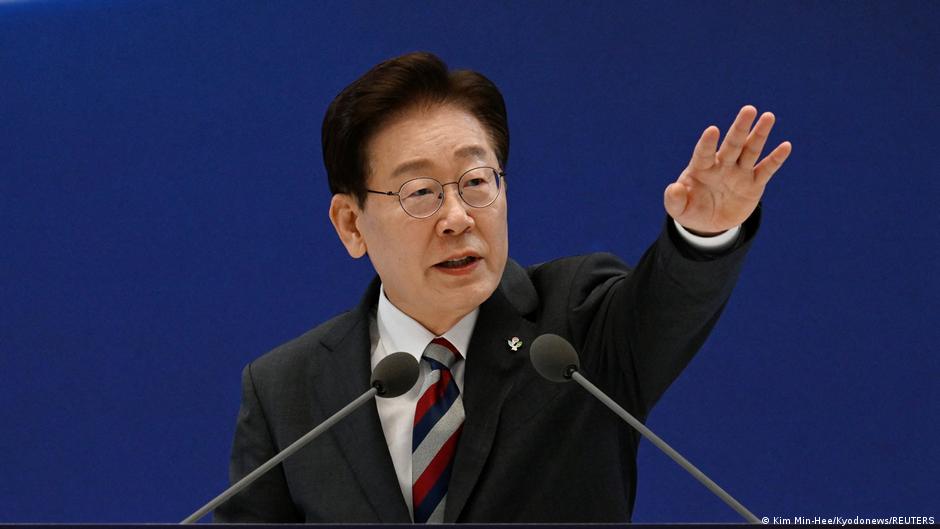
South Korea’s warning of “further measures” against Ukraine has turned a sensitive prisoner-transfer dispute into a test of diplomatic discipline, alliance management and strategic positioning for Seoul. President Lee Jae Myung said South Korea would respond if Kyiv refused to publicly acknowledge the existence of a confidentiality agreement and apologize for disclosing information about the transfer of two captured North Korean soldiers to South Korea.
Lee did not specify what those measures would be. But his statement, posted on X in the early hours of Friday, October 2, framed the matter as more than a procedural disagreement between partners. He accused Kyiv of making Seoul appear to be “a liar” and said the issue involved the honor of the Korean people and state.
“If acknowledgment of the facts and public apologies continue to be rejected, we will take further measures. This is a matter of honor for the Korean people and state that we cannot ignore,” Lee wrote.
For businesses and governments watching the Indo-Pacific security market, the dispute matters because South Korea occupies a pivotal but carefully managed position in the Ukraine war. Seoul has supplied Ukraine mainly with non-lethal military equipment, including demining gear, while several Western countries have recently pressed it to provide lethal weapons, according to Reuters. Any deterioration in trust between Seoul and Kyiv could complicate those conversations and sharpen the trade-offs facing South Korea’s defense and diplomatic leadership.
A Dispute Over Confidentiality Becomes a Strategic Signal
The controversy began after Ukrainian President Volodymyr Zelensky said at the United Nations General Assembly in late September that Kyiv had transferred two North Korean prisoners of war to South Korea. Seoul sharply criticized Ukraine after the disclosure. Lee had previously said that making such information public could endanger relatives of the prisoners in North Korea and negatively affect relations between Seoul and Pyongyang.
South Korea’s first deputy foreign minister, Park Yoon-joo, added that Kyiv’s denial of an agreement undermined mutual trust and demanded official explanations and an apology from Ukraine. In response, Dmytro Lytvyn, an adviser to the Ukrainian president on communications, said there had been no arrangement between Kyiv and Seoul barring disclosure of information about the prisoners’ fate. The South Korean presidential administration expressed “deep regret” over that claim.
The difference between the two positions is not merely semantic. For Seoul, the alleged confidentiality understanding appears connected to national security, the handling of North Korean defectors or prisoners, and the management of a nuclear-armed neighbor. For Kyiv, the disclosure fit into a broader effort to show the internationalization of Russia’s war effort and highlight North Korean involvement. The clash illustrates how wartime communications strategies can collide with the risk controls of partner governments.
Yonhap reported on September 28 that South Korea’s Foreign Ministry summoned Ukraine’s ambassador over Kyiv’s disclosure about the North Korean prisoners. AFP reported on September 30, citing South Korean lawmaker Yoon Kun-young, that both prisoners had arrived in South Korea in mid-September. After questioning and security checks, authorities in Seoul are expected to decide whether to grant them protection and begin a resettlement process.
Ukraine Tries to Contain the Damage
Ukraine’s foreign minister, Andrii Sybiha, signaled that Kyiv wants to move quickly to resolve the diplomatic friction and preserve cooperation with Seoul. Speaking to journalists in Kyiv several hours before Lee’s post, Sybiha avoided calling the matter an incident, instead describing it as a “diplomatic misunderstanding,” according to RBC-Ukraine.
Sybiha said he had been personally speaking every day in recent days with his South Korean counterpart. He emphasized that South Korea is an important country for Ukraine and expressed hope for progress, continuity and concrete results in the relationship.
“I very much want this situation to be resolved in the near future, and we are working on it,” Sybiha said.
That response suggests Kyiv is attempting to prevent the dispute from spilling into broader security cooperation. For Ukraine, South Korea represents a technologically advanced defense industrial power, a major economy and a country with direct experience managing the risks of North Korean military behavior. Even without lethal arms transfers, Seoul’s non-lethal support and political alignment have value for Kyiv.
For South Korea, the business and strategic calculus is more complex. Its defense industry has gained international visibility amid rising demand for artillery, armor and air defense systems, while Seoul has had to balance relations with Washington, European partners, Moscow, Beijing and Pyongyang. A public dispute with Ukraine over confidentiality may strengthen the Lee administration’s argument for caution, especially if domestic audiences view Kyiv’s disclosure as reckless or disrespectful of Korean security concerns.
Domestic Politics and the North Korea Factor
The domestic political context in South Korea could make Seoul’s response more sensitive. Shin Yul, a political science professor at Myongji University, told AFP that Seoul’s approach to the diplomatic conflict with Ukraine “could prove problematic” given the current administration’s cautious position toward its nuclear-armed northern neighbor.
That caution is central to the competitive landscape around South Korea’s Ukraine policy. Western governments may see South Korea as a potential source of advanced military support for Kyiv. Seoul, however, must assess each move against the risk of retaliation or escalation involving North Korea, including risks to individuals connected to the captured soldiers. Lee’s comments indicate that his administration is presenting confidentiality as a governance and credibility issue, not only as a diplomatic preference.
The dispute also comes as Ukraine continues to emphasize North Korea’s role in Russia’s war. Last week, Zelensky wrote on social media that, according to his information, about 8,000 North Korean troops are currently in Russia and another 10,000 are preparing to be sent there and then onward to the war against Ukraine.
Those claims heighten the stakes for all parties. If North Korean personnel are increasingly involved in Russia’s military campaign, Ukraine has an incentive to publicize that involvement and mobilize international pressure. South Korea, by contrast, may prioritize intelligence handling, protection procedures and the effect of disclosures on inter-Korean dynamics.
The immediate question is whether Ukraine will offer the acknowledgment and apology Seoul is demanding. The larger business and strategic question is whether this episode alters South Korea’s willingness to deepen support for Ukraine at a time when allies are urging it to move beyond non-lethal aid. Lee’s unspecified “further measures” leave room for de-escalation, but they also signal that Seoul is prepared to attach reputational and political costs to what it sees as breaches of trust.