Russian Attacks Hit Kyiv Warehouses, Odesa Business Center and Ukraine Power Grid
The September 30 strikes damaged commercial property, housing and energy infrastructure, forcing Ukraine to impose new electricity limits.
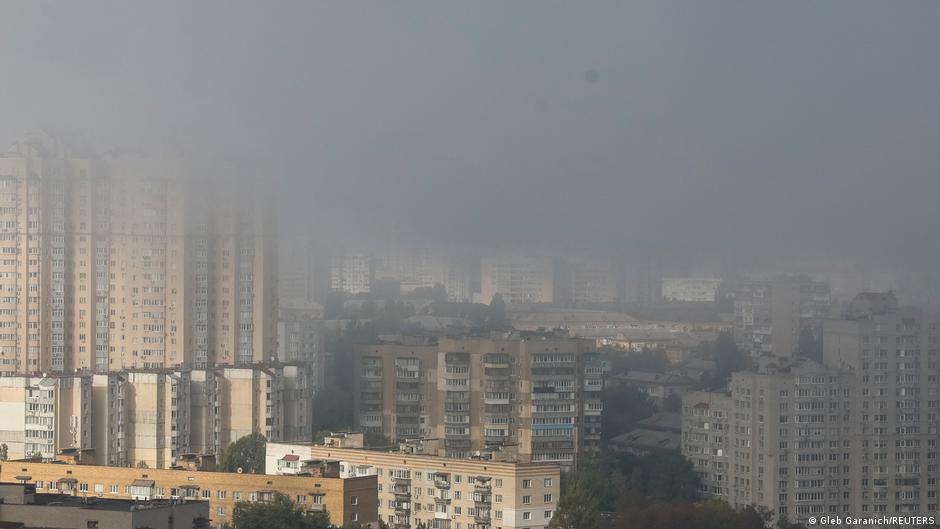
Russian forces continued a wave of attacks on multiple Ukrainian regions on the evening of Wednesday, September 30, striking sites that included warehouse facilities in Kyiv, a business center in Odesa and residential areas in Sumy and the Kyiv region, according to local authorities, emergency services and media reports.
The attacks underscored the broadening operational and economic pressure on Ukraine’s urban centers at a time when companies, utilities and local administrations are trying to preserve continuity in logistics, services and energy supply. While the reported damage varied by location, the pattern of strikes affected assets that matter directly to business activity: storage facilities, commercial premises, vehicles, housing for workers and the power system that supports industrial operations.
In Kyiv, Mayor Vitali Klitschko reported on his Telegram channel that a drone hit warehouse premises in the city’s Obolonskyi district. In the Holosiivskyi district, debris from an unmanned aerial vehicle fell on open ground near a road, setting trees on fire. According to the UNIAN news agency, a Russian drone also struck a multi-story residential building in Kyiv’s Solomianskyi district, where the main damage was caused to a cafe on the ground floor. The blast wave and debris also damaged a number of other establishments, apartment windows and cars parked nearby.
In Odesa, a UAV hit a business center, adding another commercial property to the list of affected sites. The report did not specify the companies operating inside the building or the scale of the business disruption, but for a port city with a significant services and trade role, damage to office property carries implications beyond the immediate physical repair bill.
Commercial Damage Adds Pressure on Urban Economies
For companies operating in Ukraine’s major cities, the latest attacks highlight a management challenge that has become a recurring feature of wartime planning: keeping employees safe, preserving assets and maintaining operations amid sudden damage to infrastructure and property. Warehouses, cafes, offices and vehicles are not only individual assets; they are part of local business ecosystems that connect suppliers, workers, customers and transport routes.
The warehouse damage in Kyiv is particularly relevant for businesses that depend on storage and distribution. Even when a strike affects a single facility, companies may need to reroute inventory, reassign staff, assess insurance and repair needs, and adjust deliveries. In densely populated districts, damage to ground-floor commercial premises and parked vehicles can also affect small businesses whose margins and working capital may already be strained.
The attacks also reached five districts of the Kyiv region, according to Timur Tkachenko, head of the Kyiv Regional Military Administration. He said on Telegram that a woman was injured in the Boryspil district as a result of the enemy attack. Several residential buildings and cars were also damaged in the Bucha, Obukhiv, Fastiv and Bila Tserkva districts. In Bila Tserkva, the building of an educational institution was also damaged, Tkachenko said.
“As a result of the enemy attack in the Boryspil district, a woman was injured,” Tkachenko wrote.
The regional damage adds another layer of risk for businesses that rely on commuter labor, local suppliers and road-based transport around the capital. Damage to homes and vehicles can quickly become a workforce issue, particularly when employees face urgent repairs, displacement, transport problems or family safety concerns.
Energy Restrictions Create a Direct Business Constraint
The clearest systemwide business impact came from the energy sector. Ukraine’s national energy company Ukrenergo said in an evening Facebook statement that measures to limit electricity consumption were being introduced because of Russian attacks on energy facilities. The company said that, due to a difficult situation in the power system, forced consumption restrictions would be applied in certain Ukrainian regions on October 1.
For industry and business, power limitation schedules were set to apply from 8:00 a.m. to 9:00 p.m., Ukrenergo said. Hourly outage schedules for all categories of consumers were set to apply from 8:00 a.m. to 11:00 a.m. and from 4:00 p.m. to 9:00 p.m. In Kyiv and three other Ukrainian regions, local authorities had already applied emergency power outage schedules on September 30.
For corporate management teams, scheduled and emergency power limits are not simply an operational inconvenience. They affect production shifts, refrigeration, office work, retail hours, data systems, customer service and logistics timing. Companies with backup power can absorb some disruption, but the burden is uneven: large firms may be better positioned to maintain continuity, while smaller businesses such as cafes, service providers and local shops face a narrower range of options.
The timing of the restrictions also matters. Power limits running through the main working day, from morning into evening, force businesses to choose between reducing output, shifting work to off-peak hours or investing in alternative power arrangements. In sectors where equipment, staffing or customer flows are time-sensitive, the cost of interruption can extend beyond the hours without electricity.
Sumy Strike Shows Wider Geographic Risk
Russian forces also struck Sumy with guided aerial bombs, according to the Main Directorate of the State Emergency Service in the Sumy region, which reported the attack on Facebook. Preliminary data indicated that six people were injured. Private and apartment residential buildings were damaged in the city, and the roof of one of the buildings caught fire.
The Sumy attack demonstrates that the risk environment extends beyond Ukraine’s largest commercial centers. Damage to housing in regional cities can still carry economic consequences, particularly where local businesses depend on stable neighborhoods, employee availability and municipal emergency capacity. The reported injuries also point to the human cost that sits behind every business-continuity calculation.
From a competitive and strategic perspective, Ukraine’s companies are operating in an environment where resilience has become a core management capability. Firms must make decisions about inventory location, backup energy, remote work, property risk, staff safety and customer communications under conditions that can change within hours. Those choices influence which businesses can continue operating, which must pause activity, and which can adapt quickly when infrastructure is disrupted.
The September 30 attacks therefore carry significance beyond the immediate list of damaged sites. They show how strikes on urban property and energy infrastructure can translate into pressure on commercial real estate, small businesses, industrial users and regional labor markets. As Ukraine moves into the October 1 power restrictions described by Ukrenergo, the business impact will depend not only on the physical damage already reported, but also on how companies and local authorities manage the constrained energy environment that follows.