Mamdani’s Antisemitism Plan Tests New York’s Political Risk Management
New York’s mayor is pairing a major funding increase with institutional outreach as he seeks to manage security, community trust and political pressure.
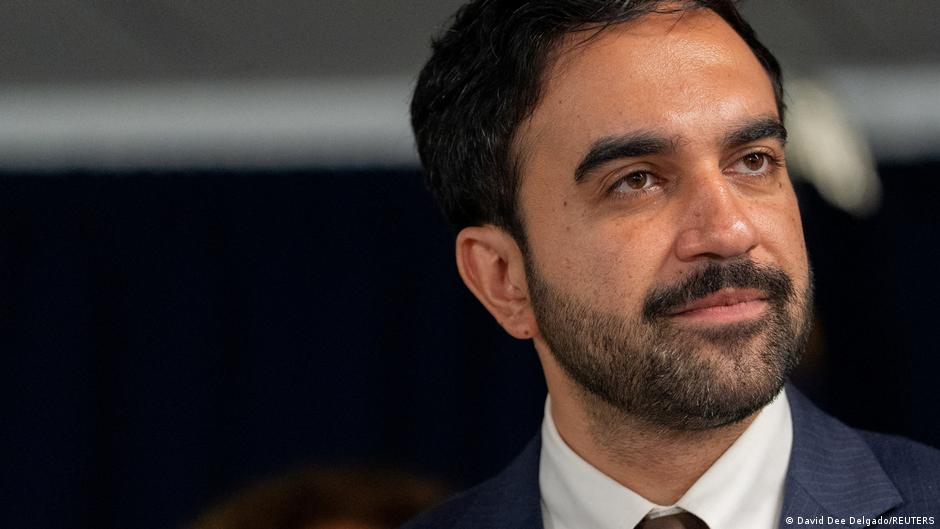
New York Mayor Zohran Mamdani has unveiled a broad city strategy to counter antisemitism and hate crimes targeting Jewish residents, a move that places public safety, community relations and political risk at the center of his administration’s agenda. The plan, presented on Tuesday, September 29, calls for a sharp expansion of the city’s annual budget for combating hate crimes, from $3 million to $29 million.
For City Hall, the proposal is more than a public safety initiative. It is also a management test for an administration led by a mayor known for his pro-Palestinian views and criticism of Israel. Mamdani, the first Muslim mayor of New York, has faced mistrust from parts of the city’s Jewish community, even as other Jewish New Yorkers have supported him. The new strategy appears designed to show that ideological criticism of Israeli policy will not translate into diminished municipal protection for Jewish institutions and residents.
The package includes additional funding for the security of synagogues and the restoration of a working group focused on the safety of Jewish houses of worship. It also calls for citywide public information campaigns against antisemitism and an expansion of educational programs about the Holocaust. Millions of dollars are planned for Jewish cultural centers and nonprofit organizations, including a Holocaust memorial being created in Queens and the Center for New Jewish Culture in Brooklyn.
A Budget Signal With Strategic Weight
The proposed increase in hate-crime funding is the plan’s clearest corporate-style signal: management is reallocating resources toward a reputational and operational risk that can no longer be treated as peripheral. Moving the annual budget from $3 million to $29 million marks a nearly tenfold increase and gives the administration a measurable benchmark against which it can be judged.
In business terms, Mamdani is attempting to convert a politically volatile liability into a governed program with funding lines, institutional partners and visible implementation points. The investment in synagogues addresses immediate physical security concerns, while the education and cultural components aim at longer-term prevention and community resilience.
“Although our Jewish neighbors make up only 12% of New York’s population, police statistics show that antisemitic crimes account for more than half of all registered hate crimes. This is not only unacceptable; it is something we are obliged to change, and city authorities will take the lead,” Mamdani said in a video address posted on X.
That message is aimed at several constituencies at once: Jewish residents concerned about security, progressive supporters watching how the mayor balances civil-rights priorities, and critics who question whether his views on Israel affect his approach to antisemitism. The statement also frames the issue as an operational failure requiring executive intervention, rather than only as a matter of rhetoric.
Stakeholder Management Under Pressure
Mamdani’s political challenge is unusually complex. His pro-Palestinian stance and criticism of Israel are central to how many voters and critics understand his public identity. Those positions have prompted rejection from part of New York’s Jewish community. At the same time, the city’s Jewish electorate is not monolithic, and some Jewish New Yorkers have backed him.
The antisemitism plan therefore functions as stakeholder management in a highly fragmented market. City Hall must reassure Jewish institutions, maintain credibility with civil-rights advocates, and avoid allowing the administration’s foreign-policy views to overshadow its local governance commitments. The decision to direct money toward synagogues, Holocaust education, cultural centers and nonprofits suggests an attempt to build a coalition around practical outcomes rather than ideological alignment.
For a city government, partnerships with nonprofit and cultural institutions can resemble a public-sector version of strategic alliance building. These organizations often have community trust, local knowledge and established networks that municipal agencies may lack. By funding them, the administration can extend its reach while signaling that Jewish civic life is a public asset worthy of protection and investment.
The creation of a Holocaust memorial in Queens and support for the Center for New Jewish Culture in Brooklyn also carry competitive implications within the civic landscape. New York’s boroughs compete for cultural investment, institutional prestige and philanthropic attention. Public backing for these projects may strengthen local cultural infrastructure while giving the administration visible proof points beyond policing.
The Netanyahu Factor
The plan arrives against a backdrop of international controversy. Israeli Prime Minister Benjamin Netanyahu, speaking at the United Nations General Assembly in New York, called Mamdani an antisemite. That accusation sharpened the political stakes around any city initiative touching Jewish safety and identity.
During the 2026 election campaign, Mamdani said that if Netanyahu visited New York, he would seek his arrest based on a warrant issued by the International Criminal Court in 2024. After taking office as mayor, however, he acknowledged that he did not have the authority to do so. That reversal matters for the management profile of the administration: it shows the boundary between campaign positioning and the legal constraints of governing.
For business readers, the episode illustrates a familiar leadership problem. Executives and public officials alike can use forceful rhetoric to build support, but once in office they must operate within compliance frameworks, legal authority and institutional limits. Mamdani’s antisemitism plan can be read as an effort to shift from campaign identity to administrative execution.
The competitive landscape is also unforgiving. In New York politics, public safety, religious-community relations and foreign-policy symbolism often intersect. Rivals and critics are likely to scrutinize whether the $29 million allocation produces measurable results, whether synagogue security funds are distributed effectively, and whether education campaigns change public behavior. Supporters will point to the scale of the investment as evidence that the administration is taking antisemitism seriously despite external criticism.
The ultimate test will be implementation. A large budget announcement can reset the conversation, but it also creates new expectations. Mamdani’s administration will need to demonstrate that restored working groups meet regularly, that funds reach vulnerable institutions, that cultural projects advance, and that police data on hate crimes is monitored transparently.
In strategic terms, the mayor is attempting to defend two positions at once: his long-standing political critique of Israel and his responsibility to protect Jewish New Yorkers from antisemitism. The success of the plan will depend on whether City Hall can turn that distinction into credible governance, backed by money, institutional discipline and measurable outcomes.