Zelensky Says North Korea Plans to Send 10,000 More Troops to Russia
The Ukrainian president’s claim points to a deepening Moscow-Pyongyang military partnership with strategic costs for Seoul and Kyiv.
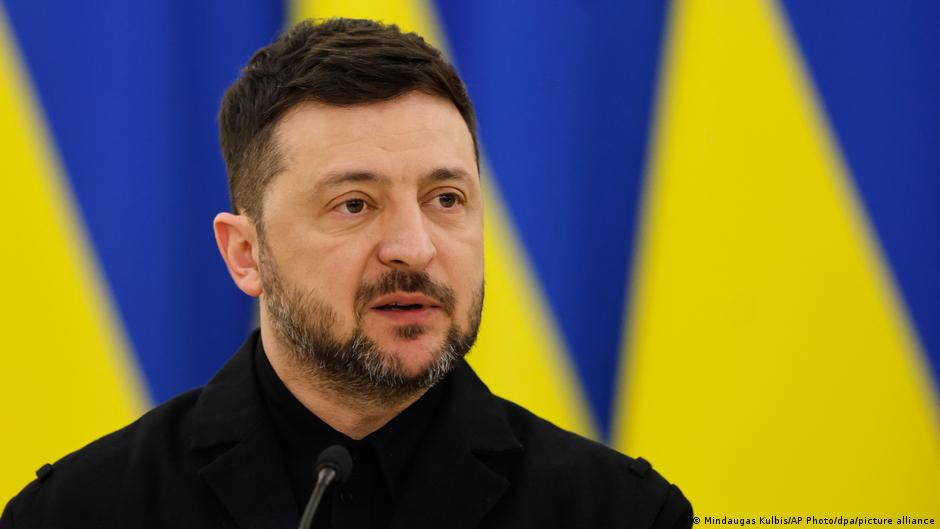
Ukrainian President Volodymyr Zelensky said North Korea is preparing to transfer about 10,000 additional military personnel to Russia, citing new intelligence from Ukraine’s military intelligence directorate. The claim, made in his evening address on Monday, September 28, adds another layer to the expanding wartime relationship between Moscow and Pyongyang, a partnership that Kyiv says is already supplying Russia with manpower for the war against Ukraine.
According to Zelensky, more than 8,000 North Korean soldiers are already on Russian territory. He said personnel are currently being “selected for training and subsequent transfer to Russia,” framing the development not as an isolated deployment but as part of a broader Russian strategy to increase the use of foreign recruits in its campaign against Ukraine.
“It is important that the governments of the countries from which Russia attracts people into its army counteract this. We will inform every government,” Zelensky said.
For business and policy observers, the latest allegation underscores how Russia’s war effort is increasingly shaped by international supply chains of labor, technology, funding, and political guarantees. The Moscow-Pyongyang axis is not a conventional corporate alliance, but its logic resembles a high-stakes strategic partnership: one side supplies scarce operational resources, while the other offers compensation that may include money, military technology and security assurances.
A Strategic Partnership Built Around Scarcity
The reported North Korean troop transfers come as Russia continues to seek ways to sustain manpower for a prolonged war. Zelensky asserted that Russian authorities “plan to increase” the hiring of foreigners for participation in the war against Ukraine. If accurate, that approach would represent a management decision driven by resource constraints: Russia is attempting to diversify its sources of personnel while limiting domestic political costs.
South Korean intelligence has estimated that North Korea has already sent around 15,000 military personnel to support Russia in the war. In return, Pyongyang is believed to receive money, military technologies and security guarantees from Moscow. Those elements matter because they suggest a reciprocal arrangement with long-term strategic value for both governments, not simply a transactional transfer of troops.
For North Korea, the arrangement may offer access to resources and capabilities that are difficult to obtain under sanctions and diplomatic isolation. For Russia, it could provide additional manpower and deepen ties with a partner willing to absorb reputational and geopolitical risk. The competitive landscape around the war is therefore shifting beyond battlefield capacity alone and into the structure of international partnerships sustaining each side.
In August, Zelensky said North Korea intended to deploy between 30,000 and 50,000 fighters on Russian territory. The latest figure of about 10,000 additional personnel, alongside the assertion that more than 8,000 are already in Russia, fits within Kyiv’s broader warning that Moscow is building a larger pipeline of foreign manpower.
Kyiv, Seoul and the Cost of Disclosure
Zelensky’s remarks came against the backdrop of a diplomatic dispute between Kyiv and Seoul that erupted several days earlier. South Korean President Lee Jae Myung sharply criticized Ukrainian authorities after Zelensky publicly disclosed the transfer to Seoul of two North Korean soldiers captured during fighting involving the Armed Forces of Ukraine in Russia’s Kursk region.
Lee said Zelensky had “violated an agreement on confidentiality.” The Ukrainian president’s office responded that no agreement between the countries existed to keep that information undisclosed. Seoul rejected that response, calling it a lie.
On September 28, South Korea’s foreign ministry summoned Ukraine’s acting ambassador. According to Yonhap, South Korea’s deputy foreign minister conveyed Seoul’s “firm position” to the Ukrainian diplomat. The episode illustrates a management problem facing wartime governments: intelligence and captured-personnel disclosures can serve political, diplomatic and information objectives, but they can also strain relations with partners that operate under different security calculations.
For Seoul, the issue is especially sensitive. South Korea must manage the implications of North Korean involvement in Russia’s war while weighing its own security posture on the Korean Peninsula. Public details about captured North Korean soldiers, troop transfers or intelligence cooperation can have consequences for Seoul’s diplomacy, domestic politics and deterrence strategy.
For Kyiv, publicizing North Korean involvement may be intended to increase pressure on third countries and build a case that Russia’s war is being internationalized through external manpower and support. Zelensky’s pledge to inform every government whose citizens are being drawn into Russia’s army suggests Ukraine is attempting to turn intelligence claims into diplomatic leverage.
Competitive Implications of the Moscow-Pyongyang Axis
The reported arrangement between Russia and North Korea has implications beyond the immediate troop numbers. If North Korea is receiving money, military technology and security guarantees, the partnership could strengthen Pyongyang’s capabilities over time. That would affect the security balance in Northeast Asia and complicate calculations for South Korea and its allies.
From a strategic-management perspective, Russia appears to be building resilience by expanding its supplier base for war-related inputs. Personnel, weapons, munitions, technology exchange and diplomatic cover all function as assets in a prolonged conflict. North Korea, meanwhile, may be using the war to monetize its military capacity, gain operational experience and secure Russian support.
The business analogy has limits, but the underlying logic is familiar: a constrained organization seeks external partners to fill critical gaps, while the partner uses the relationship to acquire capital, technology and strategic protection. The risks are also familiar. Alliances built under pressure can create dependency, reputational exposure and escalation costs.
For Ukraine, the challenge is to convince governments that the recruitment or deployment of foreign nationals into Russia’s army is not a peripheral matter but a structural component of Moscow’s war model. Zelensky’s statement that each government will be informed signals an attempt to broaden accountability beyond Russia and North Korea alone.
The immediate facts remain contested in parts, particularly around the confidentiality dispute with Seoul. But the direction of travel is clear from Kyiv’s account: North Korea’s role in Russia’s war is expanding, and the political fallout is no longer confined to the battlefield. It is now shaping relations among Kyiv, Seoul, Moscow and Pyongyang, with consequences for defense strategy, alliance management and the competitive balance across two regions.