Lithuania Backs Property Curbs on Russian and Belarusian Citizens
The proposed restrictions would limit real estate purchases near strategic assets as Vilnius widens its security-led regulatory approach.
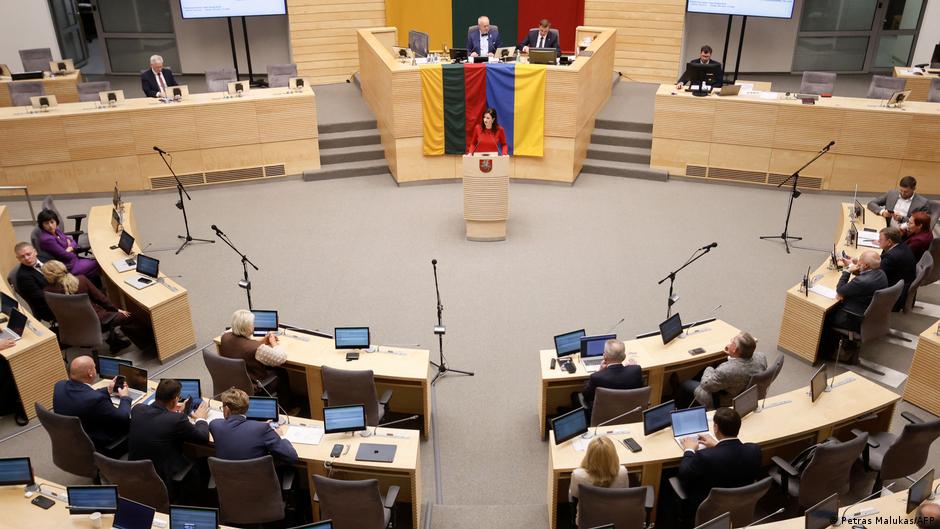
Lithuania’s government has approved a draft law that would bar citizens of Russia and Belarus, including those with valid residence permits, from buying real estate near strategically important sites. The measure, presented as part of a broader campaign against espionage, would add another layer to Vilnius’s sanctions regime and reshape the risk environment for property ownership, cross-border mobility and investment exposure in the Baltic market.
Lithuanian National Radio and Television reported on Wednesday, September 30, that the government had backed the bill, which targets districts located close to facilities of strategic significance. The restrictions would also apply to Russian and Belarusian nationals who hold temporary or permanent residence rights in Lithuania. The bill provides one significant carveout: it would not apply when ownership rights are acquired through inheritance.
For businesses, investors and property intermediaries, the proposal signals a further tightening of the compliance landscape in a country where national security policy is increasingly shaping market access. If approved by Lithuania’s national parliament, the Seimas, the amendments would enter into force on January 1, 2027.
Security Policy Becomes Market Policy
The draft law states that the ban is intended to “significantly reduce” intelligence activity and “hybrid operations” in the country, including surveillance of military exercises or the tracking of troop movements. That framing matters for corporate strategy: the measure is not a narrow property rule, but part of a wider policy shift in which real estate ownership, residency status and proximity to critical infrastructure are being treated as security variables.
According to the bill, the proposed ban is intended to significantly reduce intelligence activity and hybrid operations in Lithuania.
Comparable restrictions are already in force in Latvia and Finland, while Estonia is still planning to introduce a similar prohibition. For regional companies, banks, law firms and real estate platforms, this points to a converging Baltic and Nordic approach in which Russian and Belarusian capital faces increasingly formalized barriers near sensitive assets. The competitive landscape for property transactions is therefore being shaped not only by interest rates and local demand, but also by geopolitical screening and national security tests.
The business implications are practical. Real estate brokers would need to assess buyer nationality, residence status, transaction geography and potential inheritance exemptions. Lenders and notaries would face heightened scrutiny around due diligence. Property owners and prospective buyers from Russia and Belarus would need to consider whether assets near strategic sites could become harder to acquire, finance or transfer through ordinary commercial channels.
Existing Ownership Shows the Scale of Exposure
Data from Lithuania’s Central Register for May of this year show that 5,104 Russian citizens and 2,781 Belarusian citizens with temporary or permanent residence permits had acquired property in Lithuania, including near strategically important facilities. Those figures help explain why the government is moving through legislation rather than relying only on administrative controls. The existing base of ownership creates a measurable exposure for policymakers and a due diligence challenge for market participants.
The proposed curbs also arrive against the background of tighter residency policy in the region. In June, the Seimas in neighboring Latvia approved restrictions on issuing residence permits to citizens of Russia and Belarus. The result is a regional market in which access to residence, asset ownership and legal status is becoming more conditional. Companies with Russian or Belarusian executives, shareholders, staff or clients will need to factor these constraints into relocation planning, real estate strategy and long-term operating decisions.
Lithuania has already extended its sanctions law against citizens of Russia and Belarus. In late April, the Seimas voted by 95 to six to prolong the law until December 31, 2027. The law was originally adopted on May 3, 2023. Under it, Lithuania suspended the acceptance of applications from Russian and Belarusian citizens for Schengen and national visas. Russian citizens are prohibited from acquiring real estate in Lithuania, bringing cash Ukrainian hryvnias into the country and obtaining electronic resident status.
The legislation also affects mobility. Temporary residence permits for Russian citizens are annulled if authorities establish that they visited Russia or Belarus more than once during the previous three calendar months, unless the trip was caused by objective reasons or related to work in international transport. For employers, especially those in logistics and cross-border services, this creates a management issue around travel documentation, employee eligibility and continuity of work.
A Broader Defense Posture
The real estate proposal sits within a wider hardening of Lithuania’s defense and security policy. On September 22, members of the Lithuanian Seimas supported a proposal to remove the constitutional ban on storing weapons of mass destruction, including nuclear weapons, on the country’s territory. According to LRT, 99 lawmakers supported the decision, 13 opposed it and five abstained. For the amendment to be adopted, it must pass several rounds of voting. The first is scheduled for October 6, and the final vote is planned for January 12, 2027.
That debate adds important context for business leaders assessing Lithuania’s operating environment. The country remains positioned as a front-line NATO member state with an increasingly assertive security agenda. Regulation of property ownership near strategic sites is therefore best understood as one element of a larger policy architecture that includes sanctions, military posture, constitutional change and allied troop rotations.
Lithuanian President Gitanas Nauseda has also said on X that U.S. service members scheduled to rotate in after the earlier departure of American troops from Lithuania are already on their way to the country. He wrote that he had just received confirmation that a new contingent of U.S. military personnel was heading to Lithuania and thanked U.S. President Donald Trump for the decision.
For corporate decision-makers, the direction of travel is clear. Lithuania is aligning property regulation with national security priorities, and the approach is likely to affect transaction screening, residency planning and risk assessments well beyond the real estate sector. The immediate legislative question is whether the Seimas approves the bill. The broader business question is how quickly companies adapt to a market where geopolitical exposure is becoming a central factor in asset ownership and management decisions.