Lithuania, Poland, and France Conduct Joint Military Exercises Near Suwałki Corridor to Strengthen NATO's Strategic Defense
The trilateral drills aim to enhance operational coordination and reinforce protection of the Suwałki Corridor, a key NATO-EU strategic link.
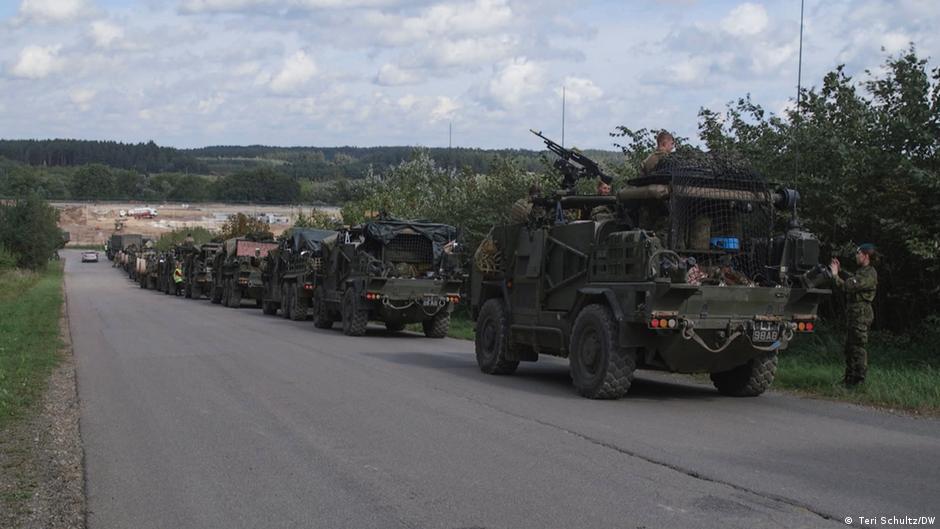
Strategic Military Collaboration Around the Suwałki Corridor
From June 16 to 26, Lithuania, Poland, and France are conducting joint military exercises named "Gallant Boar 2026" near the Suwałki Corridor, a critical 100-kilometer stretch bordering Kaliningrad Oblast and Belarus. These drills focus on collaborative infantry operations and the refinement of defensive tactics crucial for safeguarding this narrow land bridge that connects the Baltic states to the rest of the European Union and NATO.
Lithuania’s contribution includes the mechanized Dragoon battalion of Grand Duke Butigeidis alongside the infantry brigade Žemaitija. The exercises emphasize synchronization of allied actions and operational interoperability, reflecting the heightened security concerns over potential Russian attempts to sever this vital corridor.
"The Suwałki Corridor represents a strategic choke point whose defense is imperative for NATO's eastern flank and the territorial integrity of the Baltic states," military analysts note.
Geopolitical Significance and NATO’s Forward Defense Strategy
The Suwałki Corridor holds exceptional geopolitical significance as it forms the only direct land connection between the Baltic States—Lithuania, Latvia, and Estonia—and the rest of the European Union and NATO. The corridor’s narrow geography makes it a potential target in any escalation involving Russia, as its capture would effectively isolate the Baltic states from allied reinforcements.
Recognizing this threat, Poland and Lithuania have stepped up military presence and infrastructure development in the region. Notably, Lithuania’s parliament approved the construction of a new military training ground near the corridor, with capacity for up to 4,000 troops, expected to be operational by 2028. This investment underlines the long-term strategic commitment to secure NATO's eastern flank.
Additionally, NATO plans to establish a new command structure aimed at accelerating troop deployments to Estonia and Latvia in case of a crisis, further bolstering alliance readiness in the region.
Russian Military Posturing and Regional Security Outlook
Despite setbacks in its war against Ukraine, Russia is reportedly intensifying military preparations along its western borders. Satellite imagery released by Scandinavian and Baltic media shows expansion of military bases near the European frontier, with defense experts estimating a deployment of approximately 115,000 troops in these areas.
German Bundeswehr Inspector General Carsten Breuer has indicated that Russian forces are concentrating westward and increasing their military capabilities, suggesting that any potential escalation could peak around 2029. These developments are fueling concerns within NATO about Russia’s long-term strategic intentions.
However, General Christopher G. Cavoli, NATO's Supreme Allied Commander Europe, remains confident that Moscow is deterred from open conflict with the alliance due to NATO’s significant asymmetrical military advantages.
In this context, the joint exercises by Lithuania, Poland, and France not only serve as a demonstration of collective defense but also as a practical measure to enhance rapid response capabilities and operational cohesion among NATO members safeguarding one of its most vulnerable sectors.