Italy and Germany Call for Compliance with International Law After Israel Halts Gaza Aid Flotilla
Rome and Berlin urge restraint and adherence to international law amid Israel’s interception of humanitarian convoy headed to Gaza.
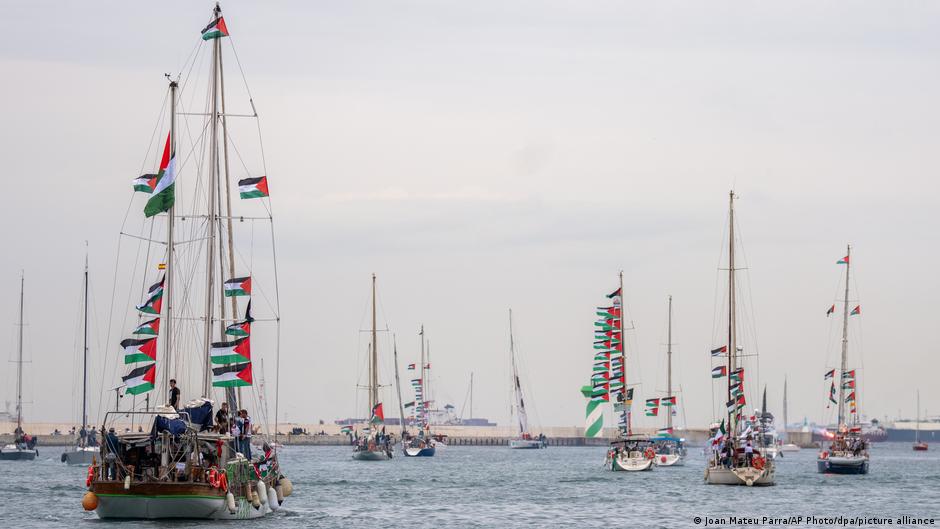
Italy and Germany have jointly expressed serious concern over Israel’s interception of a humanitarian flotilla bound for the Gaza Strip, emphasizing the need for strict compliance with international law and caution against irresponsible actions.
Geopolitical Tensions and Humanitarian Aid Delivery
On April 30, the two European nations issued a joint statement highlighting their vigilance regarding the developments surrounding the Global Sumud Flotilla, which was stopped by the Israeli Navy in international waters off the coast of Greece near the island of Crete. The flotilla, consisting of over 20 vessels, was carrying humanitarian aid intended for the Gaza Strip, an area under a maritime blockade enforced by Israel since 2007, with Egypt’s support.
“We call for the unconditional respect of existing international law and a rejection of irresponsible actions,” the statement read, underscoring the commitment of the international community to facilitate humanitarian assistance to Gaza in accordance with legal frameworks and recognized standards.
The Israeli naval forces detained dozens of activists aboard these vessels during the interception. While some vessels continued their journey within Greek territorial waters along Crete’s coast, the flotilla’s organizers initially refrained from announcing their subsequent plans.
The operation disrupted what was described by organizers as the largest flotilla attempt to reach Gaza to date. The convoy had departed from a Sicilian port on April 26 with the declared objective of breaking the longstanding naval blockade and establishing a permanent humanitarian corridor into the enclave.
“The objective is not only to deliver aid but to open a sustained humanitarian corridor for ongoing assistance,” stated representatives of the Global Sumud Flotilla.
The flotilla’s activities also relate to broader geopolitical dynamics, including earlier ceasefire agreements between Israel and Hamas brokered in October 2025 under a U.S.-led peace plan. That plan involved multiple international guarantors, including the United States, Turkey, Qatar, and Egypt, and sought to stabilize the region through a phased de-escalation of hostilities and political management changes in Gaza.
Notably, the flotilla has attracted global attention, with high-profile figures such as Swedish environmental activist Greta Thunberg confirming participation in the August 2025 humanitarian aid initiative. Her involvement highlighted the flotilla’s dual mission of delivering assistance and advocating for an open humanitarian corridor.
Strategic Implications for Regional Stability and International Humanitarian Efforts
The interception of the flotilla has significant implications for the international humanitarian strategy and regional geopolitical stability. Italy and Germany’s call for adherence to international law reflects their strategic interest in upholding diplomatic norms and ensuring humanitarian access while preventing escalation of tensions in the Eastern Mediterranean.
The blockade and the associated restrictions on Gaza remain a highly contested issue, balancing Israel’s security concerns against the international community’s humanitarian imperatives. The flotilla’s attempt to breach this blockade represents a direct challenge to the status quo and puts pressure on all stakeholders to find sustainable solutions.
In parallel, the U.S.-led peace initiative continues to unfold, with plans announced in January for a National Committee to administer Gaza during a transitional phase before transferring governance to the Palestinian National Authority. This political framework aims to consolidate peace and improve conditions on the ground but faces numerous operational and diplomatic challenges. The flotilla incident underscores the complexity of navigating humanitarian needs amid entrenched political conflicts.
As the situation evolves, Italy and Germany’s advocacy for lawful conduct and responsible diplomacy highlights the critical role European nations play in mediating Middle Eastern conflicts and supporting international humanitarian law.