EU Shelves High-Level Defence Panel After German and Italian Pushback
The aborted initiative highlights management tensions inside EU defence policy as Brussels weighs faster capability building against NATO-led planning.
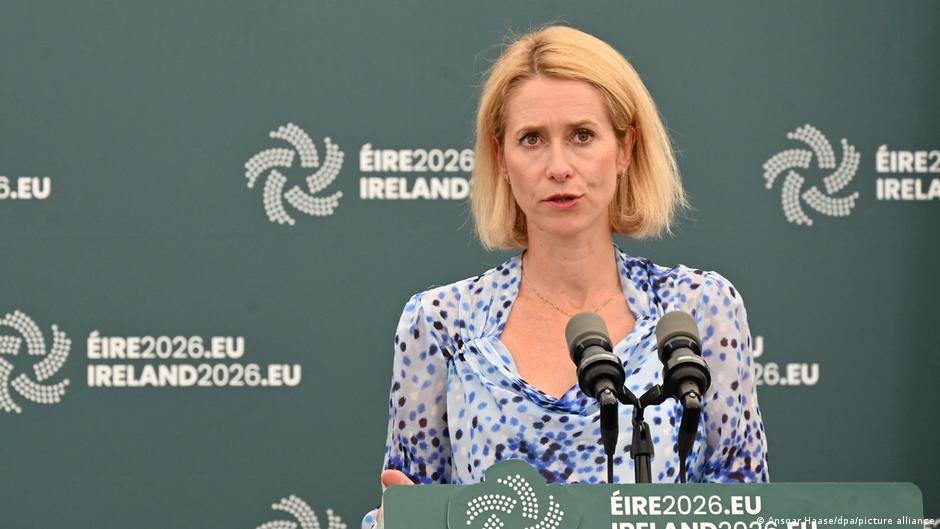
EU foreign policy chief Kaja Kallas has cancelled, at the last minute, the planned launch of a high-level expert group on defence after resistance from several member-state governments, according to dpa. The group had been due to be presented on Monday, September 7, as part of an effort to strengthen European defence policy and accelerate work on closing gaps in the continent’s military capabilities.
The decision marks more than a procedural setback for Brussels. For EU institutions, defence has become an increasingly urgent policy area, but also one where governance, national prerogatives, NATO processes and institutional rivalries collide. The cancellation underlines the difficulty of turning strategic urgency into a workable management structure accepted by major capitals.
An EU official in Brussels told dpa late on September 6 that “some member states considered that this was not the right step at the moment.” After discussions with EU defence ministers, officials decided not to proceed with this particular initiative, the official said.
“The diagnosis remains the same: Europe must move faster in defence,” the EU source said, according to dpa.
A Governance Dispute Behind a Defence Initiative
The expert group was intended to operate under Kallas’s leadership and develop proposals on how Europe could eliminate military capability shortfalls more quickly and effectively. It was expected to produce a report with concrete recommendations. Its composition was to include senior political and military representatives from several EU countries, as well as the United Kingdom and Ukraine.
From a corporate strategy perspective, the proposal resembled an attempt to create a senior advisory board around a critical transformation agenda: identify capability gaps, bring in external operational expertise and compress the time between diagnosis and execution. But in EU defence policy, authority is distributed across national governments, EU institutions and NATO-linked planning processes. That makes even expert-level coordination politically sensitive.
According to dpa, the governments of Germany and Italy were among those that opposed the creation of the group. Their objections matter because both countries are central to Europe’s defence industrial base, procurement decisions and political legitimacy. Without support from such shareholders in the EU project, a high-level group risks becoming another advisory vehicle with limited implementation power.
The planned start-up event on the morning of September 7 was expected to unveil the group’s members. Instead, the initiative was halted before launch, indicating that resistance had reached a level where proceeding would have carried reputational and operational costs for Kallas and the European External Action Service.
Germany’s Preference for NATO Planning
One possible reason for Berlin’s refusal, dpa reported, is Germany’s critical stance toward Kallas personally as head of the EU’s foreign policy service. More structurally, German authorities tend to rely on NATO planning processes in defence policy. That preference reflects a broader strategic calculation: many EU members are also NATO members, and duplicating planning channels can create confusion over command, procurement priorities and accountability.
Germany is also currently advocating the merger of a significant part of the European External Action Service, overseen by Kallas, with the European Commission. That institutional debate gives the cancelled group a wider management context. The issue is not only whether Europe needs faster defence delivery, but which executive structure should own that delivery.
For Brussels, this is a classic coordination challenge. The EU can set ambition, pool political attention and mobilize funding tools, but military capability development still depends heavily on national budgets, defence ministries, industrial suppliers and alliance planning. A new expert group could have helped set priorities, but it could also have been seen by major governments as bypassing or complicating existing channels.
Ukraine’s Role in Europe’s Defence Innovation Debate
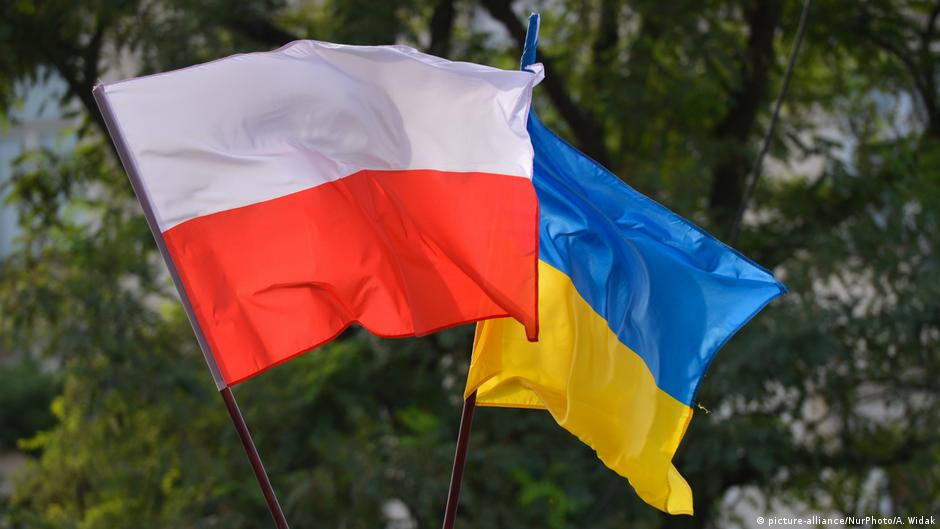
Kallas had announced on September 1, after an informal meeting of EU defence ministers in Wicklow, Ireland, that Ukraine would be involved in finding solutions to strengthen Europe’s defence capabilities. Kyiv was expected to join a “new high-level group” alongside senior politicians and military officials from EU countries and the United Kingdom.
At that meeting, a DW correspondent asked Kallas who exactly would represent Ukraine in the new group, noting that former Ukrainian defence minister Mykhailo Fedorov had been brought in by Italy as a defence adviser. Kallas did not name the Ukrainian representative or representatives, saying instead that the full composition of the group would be presented on September 7.
The inclusion of Ukraine was strategically significant. Kallas argued that although most EU countries are also NATO members, gaps remain in the alliance’s defence capabilities and European countries must fill them. She said Europe had acted too slowly despite the growing level of threat. Ukraine, in her account, was to be included because of its extensive experience; she described Kyiv as a world leader in battlefield innovation.
For the European defence sector, Ukraine’s involvement would have added a real-time operational perspective to a policy process often criticized for slow cycles and fragmented procurement. It also would have strengthened the link between battlefield lessons, industrial adaptation and future capability planning.
Strategic Urgency, Institutional Friction
The European External Action Service still intends to explore new opportunities for cooperation with EU countries on defence policy. The EU source cited by dpa framed the concern in terms of timing: Brussels does not want to look back in several years and conclude that Europe was so focused on where it needed to be by 2035 that it missed what had to be done in 2027.
That statement captures the business problem facing European defence policy. Long-range capability planning is necessary, but the competitive environment is moving faster than the institutions designed to manage it. Russia’s war against Ukraine, the growing importance of drones and battlefield software, and pressure on European militaries have all increased demand for quicker decision-making.
The cancellation therefore does not remove the underlying requirement. It exposes the management gap between strategic consensus and execution. EU leaders broadly agree that Europe must strengthen defence capabilities. The contested questions are who sets priorities, how quickly institutions can act, how NATO planning is integrated, and whether EU-level structures can command the confidence of major national governments.
For Kallas, the episode is a visible setback in her effort to make EU defence policy more agile. For Germany and Italy, it signals continued insistence that new Brussels-led structures must fit existing national and alliance frameworks. For Europe’s defence industry and military planners, the practical challenge remains unchanged: capability shortfalls must still be identified, financed and closed faster than current processes have allowed.