Witkoff Plans Ukraine and Russia Talks as US Tests Diplomatic Strategy
The proposed meetings in Oslo and Russia would bring key stakeholders into a new round of discussions, though Washington has not confirmed the plans.
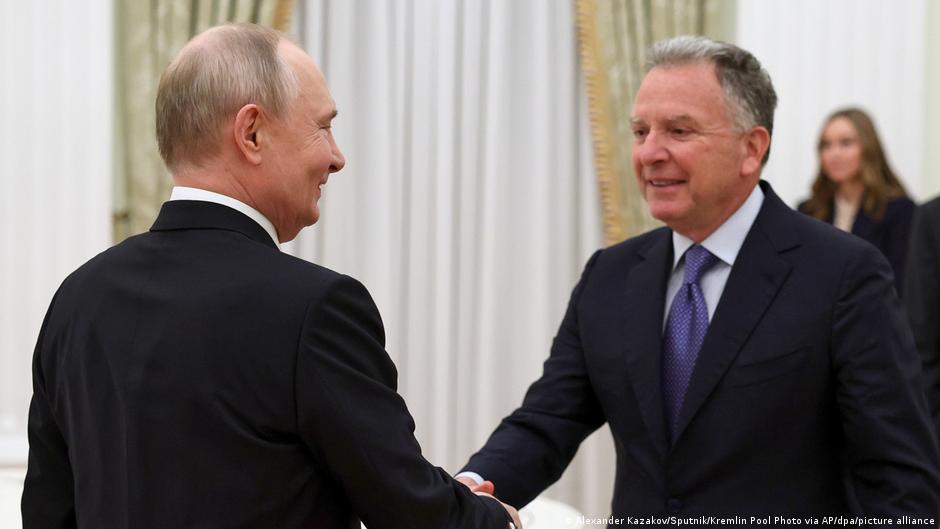
US presidential special envoy Steven Witkoff intends to hold fresh, in-person talks with Ukrainian President Volodymyr Zelensky and Russian President Vladimir Putin in the coming days, Reuters reported, citing anonymous sources. The preliminary itinerary would place Witkoff at the center of a two-stage diplomatic effort involving Ukraine’s European partners before a separate meeting in Russia.
The plans, reported overnight on Tuesday, October 20, have not been officially confirmed by the US authorities. The sources characterized the proposed schedule as preliminary, leaving open the possibility that participants, timing or formats could change.
Talks are expected to take place in Oslo during the week of October 19-25. According to the report, Zelensky and Witkoff are expected there alongside representatives of Norway, the United Kingdom, France, Germany, Poland, the European Union and NATO. The breadth of the anticipated attendance would make the Norwegian discussions a multilateral coordination exercise as well as a potential venue for direct Ukrainian-US engagement.
A two-track diplomatic approach
Witkoff then intends to travel to Russia for a meeting with Putin, the sources said. The sequence suggests an effort to consult Ukraine and its principal European supporters before engaging directly with the Russian president. From a management perspective, that structure could help Washington gather positions from multiple stakeholders while keeping the subsequent Russia meeting in a narrower format.
The central subject of the talks would be Russia’s war against Ukraine. The possible release of Stephen Hubbard, a 73-year-old American imprisoned in Russia, may also be discussed. Hubbard was convicted of mercenary activity and serving in the Ukrainian armed forces.
The plans remain preliminary, and US officials have not publicly commented on the reported meetings.
The unconfirmed nature of the itinerary is significant. High-level diplomatic initiatives require coordination among governments with different priorities, security considerations and negotiating positions. In this case, the proposed Oslo gathering would include national governments, the EU and NATO, creating a broad coalition around the consultation process but also increasing the complexity of reaching a common approach.
For businesses assessing geopolitical risk, the reported meetings are relevant less as evidence of an immediate policy shift than as an indication that direct channels remain active. Companies exposed to energy markets, sanctions, logistics, defense spending and cross-border trade typically monitor such diplomatic contacts for signals about policy direction. However, the report contained no announcement of agreements, sanctions changes or an agreed negotiating framework.
Kushner’s absence changes the negotiating team
Jared Kushner, the US president’s son-in-law, usually accompanies Witkoff during negotiations but is currently ill, according to one of the sources. He will not attend the meetings in person, though he may participate online.
His absence would alter the composition of the US team at a sensitive stage, placing greater responsibility on Witkoff as the principal face-to-face representative. Kushner’s possible remote involvement would preserve some continuity while leaving Witkoff to manage the in-room discussions and relationships with the assembled officials.
The arrangement highlights the importance of personnel and delegation in high-level diplomacy. Witkoff would potentially need to navigate two different settings: a large coalition meeting in Oslo and a direct encounter with Putin in Russia. Each format demands a different management approach. The first involves aligning multiple parties; the second concentrates responsibility and reduces the number of participants.
Zelensky said on October 19 that Ukrainian and US negotiators could meet in Norway in the coming days. He did not say that he would personally take part in those consultations. His statement therefore supports the possibility of a Norway meeting without confirming the full attendance described by Reuters’ sources.
The Ukrainian president had spoken by telephone with Witkoff and Kushner on October 18. That call provides immediate context for the reported plans and indicates that communication among the parties preceded discussion of the proposed in-person meetings.
Competitive interests remain in view
The anticipated participation of Britain, France, Germany, Poland, the EU and NATO reflects the number of institutions with strategic interests in the outcome of the war. Their presence could allow closer coordination, but it also underscores the range of national and institutional considerations that any US initiative must accommodate.
For Washington, the reported schedule would test whether a compact negotiating team can manage a wide stakeholder network while maintaining a separate channel to Moscow. For Ukraine and its European partners, the Oslo stage would offer an opportunity to communicate their positions before Witkoff’s proposed trip to Russia.
Until the governments involved confirm the meetings, the initiative remains a developing diplomatic plan rather than a settled process. The immediate signals to watch are whether Zelensky confirms his participation, whether the Oslo meeting proceeds with the reported international delegation, and whether Witkoff subsequently travels to Russia for direct talks with Putin.