Canada Military Fire Puts Crisis Management and Oversight Under Scrutiny
The deadly Wainwright base fire raises urgent questions about operational risk, leadership decisions and institutional resilience.
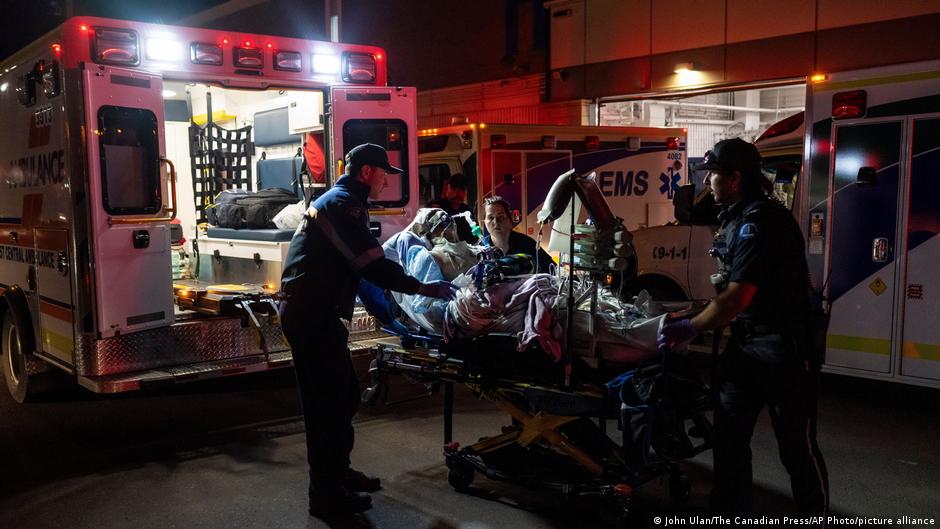
At least four Canadian Army personnel were killed and dozens were injured after a wildfire swept toward soldiers during a training exercise at Canadian Forces Base Wainwright in Alberta, placing the military’s operational risk controls and command decisions under intense scrutiny.
Prime Minister Mark Carney confirmed the deaths at a news conference in Ottawa on Sunday, October 18. The families of the four service members had been notified, he said. Nineteen people injured in the fire were in critical condition, while about 20 others suffered less severe injuries, according to authorities.
“This is one of the worst tragedies faced by the Canadian Armed Forces on Canadian soil in peacetime,” Carney said.
The immediate priority is the human toll: the deaths, the large number of casualties and the consequences for their families and fellow service members. From an organizational perspective, however, the incident also presents a major test of leadership accountability, emergency planning and the Canadian military’s capacity to learn from a catastrophic operational failure.
A consequential management decision
The wildfire began during the afternoon of October 18, but military leadership decided not to halt the exercise. That decision is likely to become the central focus of any examination of the disaster. Strong winds subsequently drove the flames rapidly across the prairie toward the soldiers. Generals said the fire covered one kilometre in 36 seconds.
That extreme rate of advance illustrates the narrow margin available once conditions deteriorated. It also sharpens the distinction between the immediate cause of the casualties—the fast-moving fire—and the management framework governing whether training should continue as the hazard developed.
For any large organization, particularly one operating in dangerous environments, crisis preparedness depends on clear thresholds for suspending activity, reliable information reaching decision-makers and the authority to act quickly when risk changes. Military training necessarily involves exposure to danger, but commanders must continually balance the value of realism and operational readiness against threats that may exceed established controls.
The available information does not establish why commanders continued the exercise, what forecasts or field reports they possessed, or whether evacuation options were considered. Those unanswered questions matter. A credible review would need to reconstruct the timeline, identify who held decision-making authority and determine how the wildfire threat was assessed before the wind accelerated its spread.
Governance, accountability and institutional risk
The episode resembles a severe corporate crisis in one important respect: the quality of the response will be judged not only by what happened in the field but also by how leadership handles accountability afterward. In business, a fatal operational incident can expose weaknesses across governance, safety systems, escalation protocols and organizational culture. Comparable issues are now likely to confront Canada’s military leadership.
Senior officials face the challenge of supporting the injured and bereaved while preserving evidence and establishing an accurate account of events. Public confidence will depend on whether the institution can explain the basis for continuing the exercise and whether existing procedures were followed. If policies were inadequate, the focus will turn to who was responsible for designing and approving them. If procedures were sufficient but not applied, attention will shift toward execution, supervision and command culture.
The scale of the casualties also creates broader operational consequences. Dozens of injured personnel, including 19 in critical condition, represent a substantial burden for medical care, unit cohesion and future readiness. The tragedy may require the military to reassess how exercises are planned when wildfire conditions can change rapidly, especially in exposed prairie terrain.
Strategic implications for the Canadian Armed Forces
For the Canadian government, the incident is a test of civilian oversight as well as military management. Carney’s description of the fire as one of the armed forces’ worst peacetime tragedies on Canadian soil sets a high level of public significance. It also increases pressure for a response proportionate to the scale of the loss.
The competitive landscape here is not commercial, and no merger or acquisition is involved. Yet the strategic principles familiar to corporate boards remain relevant: leaders must identify material risks, challenge assumptions, ensure that warnings travel quickly through the organization and stop operations when the downside becomes unacceptable.
The most consequential question is therefore not simply how rapidly the flames moved, but whether the organization had a workable system for responding before the fire became impossible to outrun. The reported speed—one kilometre in 36 seconds—shows how quickly a manageable hazard can become a mass-casualty event.
Further findings will be needed before responsibility can be assigned. Based on the facts disclosed so far, the decision to continue training after the wildfire began will remain at the centre of scrutiny. How transparently military and political leaders address that decision may shape confidence in the Canadian Armed Forces’ management, safety governance and capacity for institutional reform.