Russian Strikes Disrupt Ukraine Infrastructure and German Auto Supplier
Attacks across several Ukrainian regions killed two people, destabilized power supplies and halted production at a German-owned factory.
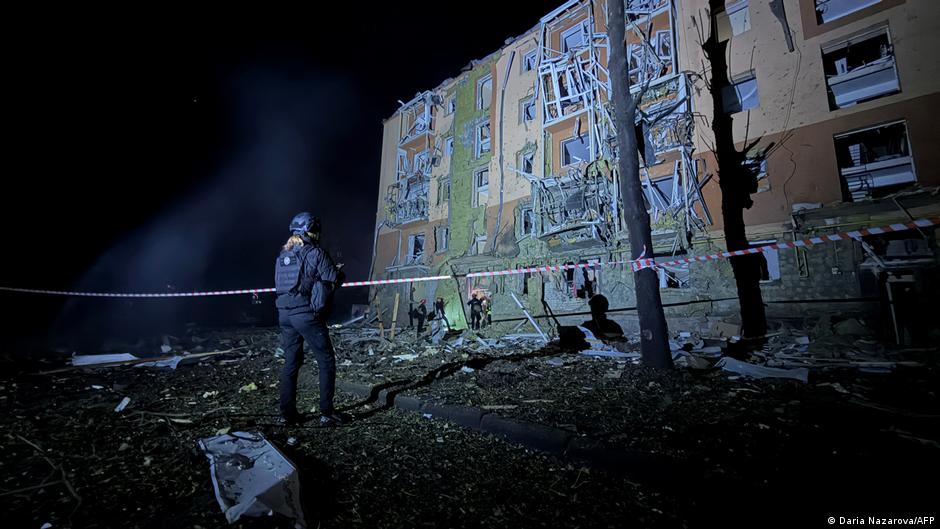
Russian drone and missile attacks across several Ukrainian regions late on Saturday, October 17, and overnight into October 18 killed two people, injured others and damaged critical infrastructure, according to local authorities. The strikes also forced a German-owned automotive components plant in Lutsk to suspend operations, highlighting the continuing risks facing industrial companies and essential service providers in Ukraine.
The human toll was reported in Poltava and Zaporizhzhia. In Poltava, one person was killed and four others were injured during an evening drone attack, regional military administration head Vitaliy Diakivnych wrote on Telegram. Four private homes were damaged in the city, while another five were damaged in the Tereshky rural community.
In Zaporizhzhia, a drone struck a multistory residential building overnight, regional military administration head Mykhailo Semikin said. A 27-year-old woman was killed, and another woman was injured.
Kharkiv also came under attack on Saturday evening, with ballistic strikes hitting two districts of the city. Mayor Ihor Terekhov said three people were injured. According to the head of the Kharkiv regional military administration, men aged 66 and 42 were wounded in the Slobidskyi district and hospitalized, while a 26-year-old woman was injured in the Osnovianskyi district.
Energy disruption adds pressure on regional operations
The attacks extended beyond residential areas to infrastructure underpinning regional economic activity. In the Vinnytsia region, critical infrastructure was damaged and emergency electricity outages followed, regional military administration head Nataliia Zabolotna said on Telegram.
“In the near future, the electricity supply situation will remain unstable,” Zabolotna said.
The warning signals potential short-term disruption for households, public services and companies that depend on predictable power supplies. Unstable electricity can complicate production planning, logistics and workforce scheduling, while forcing businesses to rely on backup generation where available.
In the Chernihiv district of the region of the same name, 19,000 customers were left without electricity after the evening strikes, according to representatives of local power supplier Chernihivoblenergo. Critical infrastructure in Dnipro was also attacked, regional military administration head Oleksandr Hanzha said.
Taken together, the reported damage illustrates the operational challenge confronting Ukraine’s utilities: restoring service after individual attacks while protecting a network exposed to repeated strikes across multiple regions. For corporate managers, the immediate issue is not limited to direct physical damage. Interruptions to electricity, transport links or local communications can affect suppliers and customers well beyond the facilities that are hit.
German supplier halts Lutsk factory
The most direct corporate impact reported after the attacks was in Lutsk, where a factory operated by German company Kromberg & Schubert suspended work following a strike. The company produces electrical wiring systems for vehicles, placing the facility within an industrial supply chain in which production continuity and delivery schedules are important to customers.
The suspension demonstrates how the war continues to shape management decisions for international manufacturers with Ukrainian operations. Executives must balance employee safety, asset protection and customer commitments while assessing when production can safely resume. A stoppage at a component plant can also create uncertainty for connected operations if inventories or alternative sourcing arrangements are limited, although no details were provided about the duration of the halt or its effect on customers.
Russia’s Defense Ministry said the enterprise was targeted because it was being used for the “repair of automotive equipment in the interests of the Armed Forces of Ukraine.” The source report provided no response from Kromberg & Schubert to that assertion and no independent confirmation of the Russian ministry’s characterization.
From a competitive and strategic perspective, the incident underscores the higher operating costs and risk controls required of foreign companies maintaining production in Ukraine. Management teams must account for possible shutdowns, infrastructure instability and damage to surrounding communities, alongside conventional considerations such as labor, capacity and customer demand.
The attacks also show how risks can spread across sectors. Damage to energy infrastructure affects industrial facilities even when they are not directly struck, while attacks on factories can reverberate through procurement and delivery networks. Companies operating in affected regions may need to reassess contingency plans, backup power, inventory buffers and alternative production routes as part of routine management rather than temporary crisis planning.
For Ukraine’s broader business environment, the latest strikes reinforce a persistent constraint on investment and industrial recovery. The deaths and injuries remain the gravest consequences, but the simultaneous damage to homes, electricity networks, critical infrastructure and a foreign-owned manufacturing site also carries economic implications. Regional authorities and corporate operators face the combined task of protecting people, restoring essential services and preserving production capacity amid continuing attacks.