Wadephul Presses Kyiv to Factor German Industry Into Defense Procurement
Germany’s foreign minister says Berlin’s support for Ukraine must also deliver benefits for German defense manufacturers.
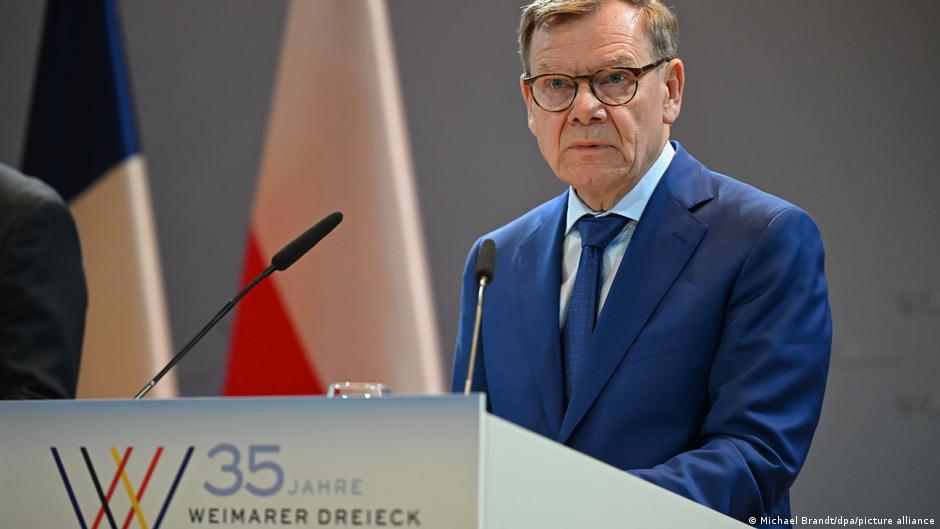
German Foreign Minister Johann Wadephul has publicly urged Kyiv to pay closer attention to Germany’s interests, linking Berlin’s continued financial and military backing for Ukraine to opportunities for German defense companies. In an interview with Bild published on Tuesday, September 8, Wadephul criticized Ukrainian President Volodymyr Zelensky and said Germany’s defense industry should benefit from the scale of German support.
The remarks point to a harder-edged business and industrial-policy dimension in Berlin’s Ukraine strategy. Germany has positioned itself as one of Kyiv’s most important backers, but Wadephul’s comments suggest that the government also wants a clearer role for domestic manufacturers in procurement connected to that support. For German companies operating in defense, air protection, energy security, medical supply chains and counter-drone systems, the message is that Ukraine-related spending should not be treated only as foreign aid, but also as an industrial opportunity.
“At the moment, we are Ukraine’s strongest supporter in terms of financial and military support,” Wadephul said, adding that “naturally, the German defense industry must benefit from this.”
According to Wadephul, he raised the issue directly with Zelensky during a recent visit to Kyiv. He said his argument to the Ukrainian leadership was that Germany stands with Ukraine and supports it, but that this support must also be explainable to German taxpayers. At a minimum, he said, German defense industry should participate in all procurement processes.
Berlin Links Support to Industrial Participation
Wadephul’s intervention reflects a management challenge facing governments that have committed major resources to Ukraine: sustaining public and parliamentary support while also demonstrating that aid packages strengthen domestic strategic capacity. In Germany’s case, the foreign minister framed the issue as both political accountability and industrial participation. His comments suggest that Berlin wants Ukraine-related procurement to include German suppliers as a baseline condition, rather than leaving German industry outside contracts financed or enabled by German support.
That approach has implications for the competitive landscape among European and transatlantic defense producers. Ukraine’s wartime procurement needs have made the country a central customer for air defense systems, counter-drone technologies, ammunition, protection systems, logistics and energy infrastructure support. If Germany insists that its companies take part in all relevant procurement, it could intensify competition with suppliers from other partner countries and sharpen the commercial dimension of aid diplomacy.
The comments also show how support for Ukraine is becoming intertwined with the future of Europe’s defense industrial base. German defense manufacturers have an interest in securing demand, scaling production and proving their systems under operational conditions. For Berlin, ensuring that domestic firms are represented in procurement can help justify spending at home while reinforcing Germany’s role as a long-term security supplier to Ukraine.
Recent Aid Commitments Set the Context
Wadephul visited Kyiv on August 22. During a joint press conference with Ukrainian Foreign Minister Andrii Sybiha, he announced an additional 60 million euros in assistance for Ukraine. The package adds to Germany’s wider financial and military support and came alongside further commitments through NATO-linked channels.
Germany will also transfer another 10 million euros to a NATO fund whose resources are used, among other purposes, for deliveries of energy supplies, medical equipment and systems designed to protect against drones. These categories indicate that Berlin’s support is not limited to conventional weapons. It also covers infrastructure resilience, battlefield medical capacity and defensive systems against unmanned threats, all areas in which procurement decisions can have significant commercial consequences.
Wadephul also announced further talks with partners from various countries on supplying Ukraine with additional air defense systems. Air defense remains one of the most strategically important and commercially sensitive areas of assistance to Kyiv, involving high-value platforms, interceptors, sensors, maintenance networks and long-term training obligations. For companies, participation in such programs can mean not just one-off sales, but continuing service, replenishment and modernization contracts.
The business logic behind Wadephul’s statement is therefore straightforward: if Germany is a leading financier and supplier, Berlin wants its industrial base present when contracts are awarded. The political logic is equally clear. By tying assistance to domestic industrial participation, the German government can argue that Ukraine aid supports both European security and German economic interests.
A More Transactional Phase of Ukraine Support
The tone of Wadephul’s remarks indicates a more transactional phase in Western support for Ukraine. The foreign minister did not question Germany’s backing for Kyiv; instead, he emphasized that support must be structured in a way that German taxpayers and companies can see as defensible. That distinction matters. Berlin is not signaling withdrawal, but it is signaling that management of aid flows, procurement access and industrial return will receive greater scrutiny.
For Kyiv, the comments create a strategic balancing act. Ukraine needs to maintain broad support from multiple partners while preserving flexibility in procurement. Giving German companies a role in all purchases could help sustain Berlin’s commitment, but it may also require careful coordination with existing suppliers and other governments offering military and financial assistance.
For German industry, Wadephul’s position could be read as a call for more systematic inclusion in Ukraine-related procurement. The potential benefits include contract access, production scale, and stronger positioning in the European security market. The risks are also real: defense companies may face pressure to deliver quickly in a wartime environment, while policymakers will have to manage public expectations around cost, timelines and industrial capacity.
Wadephul’s criticism of Zelensky and his appeal to Kyiv underline how Ukraine aid is no longer only a matter of diplomacy and security policy. It has become a test of corporate strategy, procurement governance and political management. Germany’s message is that continued support should be matched by visible participation for German defense manufacturers, especially as Berlin seeks to explain its commitments to taxpayers and sustain its influence in a crowded defense marketplace.